
Changpeng Zhao Reveals the Unstoppable Crypto Trends: Asset Tokenization, Payments, and AI Dominate Davos 2025
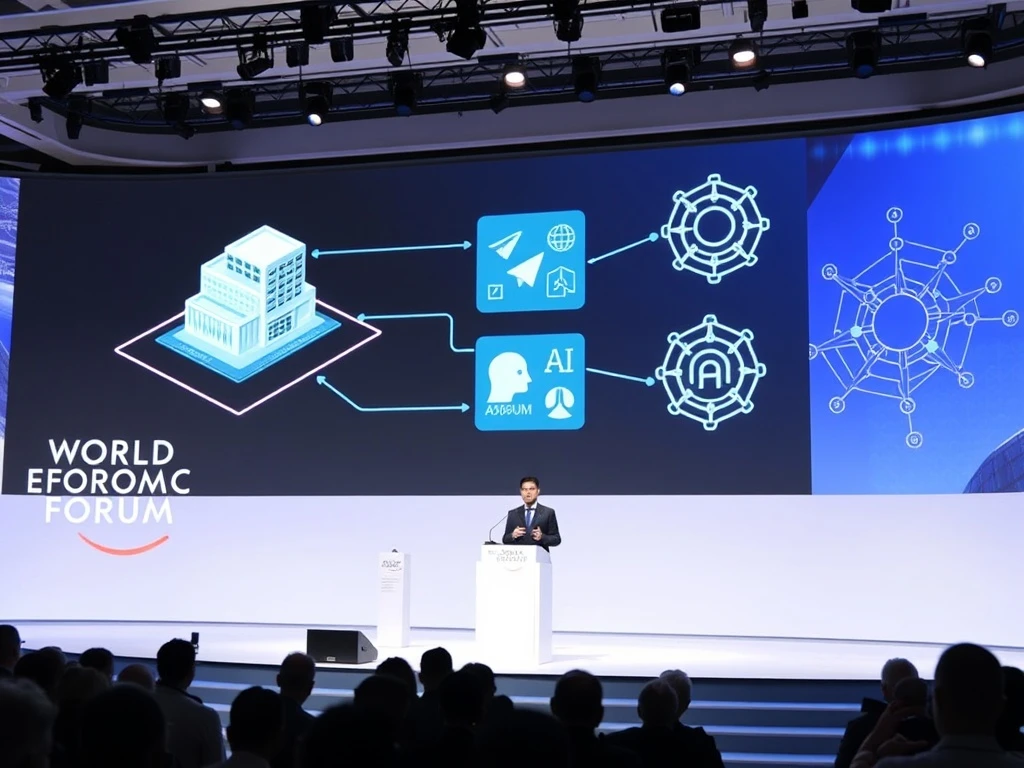
DAVOS, SWITZERLAND – JANUARY 22, 2025: In a pivotal address that captivated global financial leaders, Binance founder Changpeng Zhao outlined the definitive crypto trends set to reshape economies. Speaking at the World Economic Forum, Zhao pinpointed asset tokenization, payment system convergence, and AI agent applications as the sector’s most powerful forces. His analysis arrives as governments and institutions accelerate their blockchain adoption, signaling a profound shift from speculative trading to foundational utility.
Changpeng Zhao Frames the Future of Finance at Davos
The World Economic Forum in Davos has long served as a barometer for global economic priorities. Consequently, the inclusion of a detailed cryptocurrency roadmap by a figure like Changpeng Zhao marks a significant milestone. Zhao, often known as CZ, founded Binance, which grew to become the world’s largest cryptocurrency exchange by trading volume. His perspective carries substantial weight within both crypto-native circles and traditional finance. During his session, he moved beyond Bitcoin price discussions to focus on tangible, infrastructure-level developments. These developments promise to bridge the digital and physical economies. His three core trends—asset tokenization, payment integration, and AI—represent a maturation of the entire blockchain sector.
The Government-Led Surge in Asset Tokenization
Changpeng Zhao emphasized that national governments are now leading the charge into asset tokenization. This process involves converting rights to a physical or financial asset into a digital token on a blockchain. Historically, private projects dominated this space, tokenizing everything from art to real estate. However, Zhao highlighted a decisive shift toward public-sector adoption. For instance, the European Union’s pilot for a digital securities ledger and Hong Kong’s tokenized green bond issuance exemplify this trend. Governments recognize blockchain’s potential for enhancing transparency, reducing settlement times, and increasing liquidity in traditionally illiquid markets.
The implications are vast. Tokenizing sovereign bonds, real estate titles, or even carbon credits can create more efficient, accessible, and fraud-resistant markets. A tokenized system allows for fractional ownership, enabling smaller investors to participate in major asset classes. Moreover, smart contracts can automate compliance and dividend payments. This governmental embrace provides the regulatory clarity and institutional trust that earlier crypto ventures lacked. It fundamentally alters the narrative from one of disruption to one of modernization and integration within existing financial frameworks.
From Niche to Mainstream: The Payment System Convergence
Regarding payments, Changpeng Zhao presented a nuanced view. He acknowledged that direct cryptocurrency payments for everyday coffee purchases have not achieved mass adoption. The volatility and user experience hurdles remain significant barriers. However, he identified a more subtle and powerful trend: backend integration. Major payment processors and traditional banking rails are now actively incorporating blockchain technology into their infrastructure. This convergence aims to make cross-border transactions faster, cheaper, and more transparent.
Companies like PayPal and Stripe have integrated crypto on-ramps and off-ramps. Meanwhile, central bank digital currencies (CBDCs) are being designed to interoperate with private stablecoins and legacy systems. This hybrid model leverages blockchain’s strengths for settlement while maintaining familiar front-end interfaces for users. The goal is not to replace the dollar or euro overnight but to streamline the archaic plumbing of global finance. Zhao’s observation suggests the future of crypto payments is not a parallel system but an embedded layer within the existing one, enhancing its efficiency from the inside out.
AI Agents: The Next Frontier for Blockchain Utility
Perhaps the most forward-looking trend Zhao highlighted involves artificial intelligence. He predicted that as AI agents become more autonomous and capable, they will require robust systems for value exchange and verifiable action. Blockchain technology is uniquely positioned to serve this need. An AI agent managing a portfolio, negotiating a contract, or purchasing a service needs a trustless, auditable, and programmable way to transact. Cryptocurrencies and smart contracts can provide exactly that.
Consider an AI that rents computing power, pays for data access, or executes micro-transactions within a digital ecosystem. A blockchain provides an immutable record of these transactions, ensuring the AI’s actions are transparent and its resources are securely managed. Furthermore, decentralized AI projects are exploring how to train models on tokenized data sets, rewarding data providers directly. This fusion addresses critical issues in AI development: provenance, compensation, and trust. Zhao’s insight positions blockchain not merely as a financial tool but as essential infrastructure for the coming autonomous digital economy.
The Davos Context: Crypto’s Evolving Narrative
The significance of Zhao’s Davos appearance cannot be overstated. Just a few years prior, cryptocurrency discussions at such forums were often defensive, focusing on regulation and risk. The 2025 dialogue, as evidenced by Zhao’s reception, has shifted toward practical implementation and partnership. This evolution reflects broader market maturation. Following the industry’s consolidation after the 2022-2023 market downturn, surviving projects and leaders have doubled down on building usable technology with clear economic value. Zhao’s trends align perfectly with the World Economic Forum’s own research into the Fourth Industrial Revolution, framing blockchain as a key enabler rather than a niche curiosity.
The presence of multiple central bank governors and finance ministers in these discussions confirms the trend. Their engagement moves the conversation from “if” to “how” and “when.” This institutional momentum creates a feedback loop: increased regulatory clarity encourages more serious development, which in turn demonstrates further utility, leading to more supportive policy. It is a marked departure from the antagonistic relationship that once defined crypto and traditional finance.
Conclusion
Changpeng Zhao’s analysis at Davos provides a coherent framework for understanding the next phase of cryptocurrency evolution. The trends of asset tokenization, payment system convergence, and AI agent applications are interconnected. They all point toward blockchain technology becoming deeply embedded in the global economic infrastructure. Tokenization creates new digital asset classes, integrated payments facilitate their exchange, and AI will automate and interact within these new markets. For investors, developers, and policymakers, the message is clear: the focus is shifting from currency speculation to building the foundational layers of a more efficient, transparent, and programmable financial world. The insights from Davos 2025 suggest this transition is not only underway but accelerating with decisive institutional support.
FAQs
Q1: What is asset tokenization, and why are governments interested?
A1: Asset tokenization is the process of converting ownership rights of a physical or financial asset (like real estate, bonds, or art) into a digital token on a blockchain. Governments are interested because it can increase market liquidity, reduce fraud through transparent ownership records, lower transaction costs, and enable fractional ownership, making high-value assets accessible to more investors.
Q2: How are crypto payments becoming integrated with traditional systems?
A2: Instead of replacing credit cards or bank transfers, crypto is being integrated into the backend of existing payment processors. This allows for faster and cheaper cross-border settlements. Users may not even know blockchain is involved; they simply experience quicker, less expensive international transactions through their usual apps or banks.
Q3: What role could blockchain play in the development of AI?
A3: Blockchain can provide a secure, transparent, and automated way for AI agents to conduct transactions, pay for resources (like data or computing power), and prove their actions. It also enables new models for decentralized AI training, where data providers are directly compensated via tokens, ensuring provenance and fair value exchange.
Q4: Why was Changpeng Zhao’s appearance at Davos significant?
A4: His detailed, utility-focused presentation at a premier gathering of traditional finance and political leaders signals a major shift in perception. It shows cryptocurrency is being seriously discussed as a tool for solving real-world economic inefficiencies rather than just as a speculative asset class, lending the sector greater legitimacy and attracting institutional interest.
Q5: Are these trends relevant for the average person?
A5: Absolutely. In the future, these trends could mean easier access to investment opportunities (via tokenized assets), cheaper international money transfers, and interactions with autonomous AI services that handle tasks like scheduling or shopping on your behalf, using blockchain in the background to execute transactions securely and efficiently.