Chainlink Price Analysis: Whales Accumulate Below $12 as Bearish Technical Pattern Emerges
As Chainlink (LINK) continues trading below critical Fibonacci levels, cryptocurrency whales have initiated significant accumulation patterns below $12, raising questions about the decentralized oracle network’s near-term trajectory amid evolving market conditions in early 2026.
Chainlink’s Extended Consolidation Phase
Chainlink has remained in a prolonged consolidation phase since losing the psychologically significant $20 level throughout 2025. The decentralized oracle network, which provides critical off-chain data to smart contracts across multiple blockchain ecosystems, has faced persistent downside pressure despite brief relief rallies. Market analysts note that this extended consolidation mirrors patterns observed near previous cycle peaks, creating uncertainty about whether current price action represents accumulation or distribution.
Also read: Ethereum's $2,500 Challenge: Market Data and the Rise of Pepeto
Historical context reveals that Chainlink has demonstrated resilience through previous cryptocurrency market downturns. However, the current technical structure presents unique challenges. The network’s fundamental role in decentralized finance (DeFi) and various blockchain applications continues to expand, creating a complex dynamic between utility adoption and market valuation. Industry experts emphasize that oracle networks face increasing competition while maintaining critical infrastructure status.
Market Structure and Historical Parallels
On-chain metrics indicate that LINK has spent extended periods at unrealized losses for many holders, a condition that typically precedes significant market movements. This pattern resembles accumulation phases from previous cycles but occurs within a different macroeconomic context. The Federal Reserve’s monetary policy, regulatory developments, and institutional adoption rates all contribute to the current market environment.
Also read: Crypto Listing Scams: Binance CEO Changpeng Zhao Issues Critical Warning to Investors
Whale Accumulation Patterns Below $12
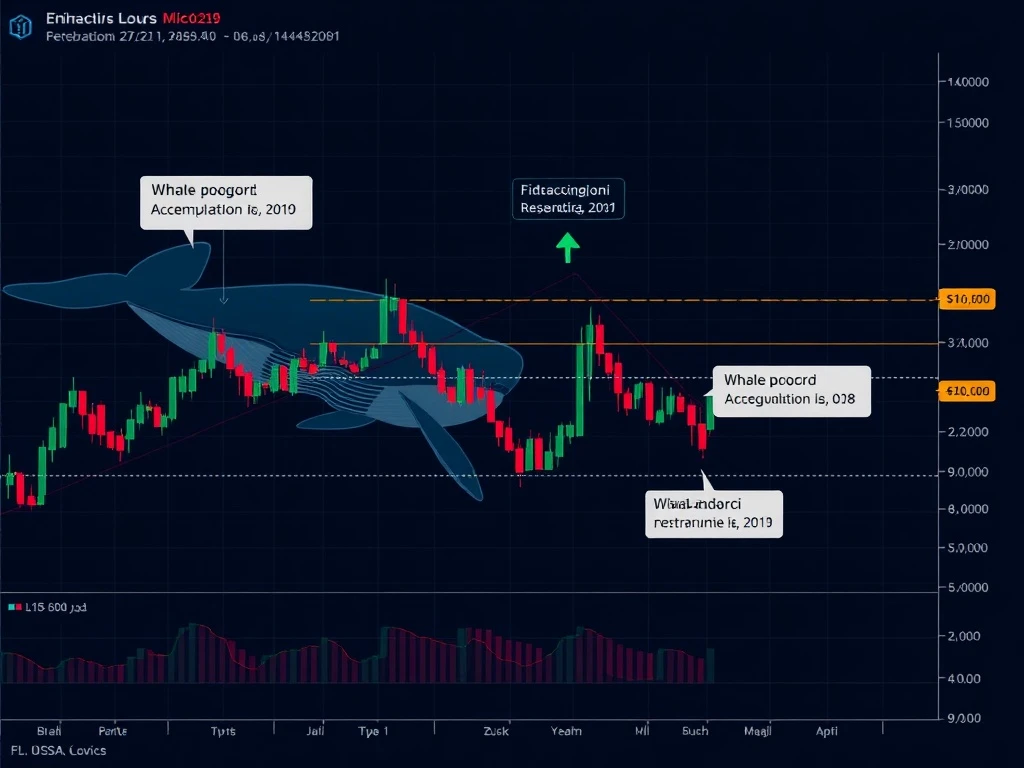
Large cryptocurrency holders, commonly referred to as whales, have demonstrated aggressive accumulation behavior as LINK declined below $14. Data from multiple analytics platforms confirms that these substantial investors have focused their buying activity around the $12 level. This accumulation pattern suggests strategic positioning rather than speculative trading, though motivations remain diverse across different whale categories.
Analysts categorize whale behavior into several distinct patterns:
- Strategic Accumulators: Long-term investors building positions for future cycles
- Opportunistic Traders: Capitalizing on volatility and liquidity opportunities
- Institutional Entities: Portfolio allocation and infrastructure exposure
- Market Makers: Providing liquidity during high-volatility periods
Despite this accumulation, the absence of sustained bullish momentum raises questions about whether whale activity represents genuine confidence or tactical positioning. Historical data shows that whale accumulation doesn’t always precede immediate price appreciation, particularly during broader market uncertainty.
Technical Analysis: Critical Levels and Patterns
Technical indicators present a complex picture for Chainlink’s price action. On January 29, 2026, the 4-hour chart revealed several concerning developments. The Relative Strength Index (RSI) declined to 36.44, approaching oversold territory while maintaining room for further downward movement. More significantly, LINK failed to maintain support at vital Fibonacci retracement levels.
| Level | Price Range | Significance |
|---|---|---|
| 50% Retracement | $12.99–$13.00 | Major psychological and technical support |
| 61.8% Retracement | $12.00–$12.50 | Golden ratio support level |
| Primary Support | $11.37–$11.64 | Historical accumulation zone |
The loss of these Fibonacci levels suggests weakening market structure. Technical analysts emphasize that markets unable to maintain these key retracement levels often experience extended corrective phases. The $11.37–$11.64 support zone now represents a critical battleground for bulls and bears.
Bearish Head and Shoulders Formation
The daily timeframe reveals a concerning technical pattern that has developed over recent months. A clear bearish head and shoulders formation has emerged, with the pattern’s neckline positioned near $10.06. This technical setup, characterized by three distinct peaks with the middle peak (head) reaching the highest point, typically indicates potential trend reversal when confirmed.
Pattern measurements suggest that a confirmed break below the neckline could project downward movement toward the $4.91 region. The formation developed beneath repeated rejections near the $27 resistance level, reinforcing the pattern’s validity through multiple test points. Market technicians note that such patterns require confirmation through volume analysis and subsequent price action.
Market Context and Comparative Analysis
Chainlink’s current situation occurs within a broader cryptocurrency market context. Several factors influence LINK’s price action beyond technical patterns and whale behavior. The decentralized oracle sector has expanded significantly since Chainlink’s initial dominance, with competitors offering alternative solutions and pricing models.
Key market factors include:
- DeFi Growth Rates: Decentralized finance expansion directly impacts oracle demand
- Cross-Chain Integration: Multi-blockchain adoption increases utility but dilutes concentration
- Institutional Adoption: Enterprise blockchain implementations require oracle services
- Regulatory Environment: Evolving regulations affect infrastructure providers differently than pure cryptocurrencies
Comparative analysis with previous market cycles reveals both similarities and distinctions. The 2022–2023 bear market demonstrated Chainlink’s resilience as essential infrastructure, but current market conditions incorporate additional variables including increased institutional participation and regulatory clarity developments.
Fundamental Network Developments
Despite challenging market conditions, Chainlink continues to advance its technological infrastructure and partnership network. Recent developments include enhanced cross-chain interoperability protocols, improved data verification mechanisms, and expanded service offerings. The network’s fundamental value proposition remains intact, though market valuation often diverges from utility growth during transitional periods.
Network metrics provide additional context for evaluating Chainlink’s position. Active addresses, transaction volumes, and partnership announcements continue to demonstrate organic growth. However, market participants must distinguish between network utility expansion and speculative price action, as these factors frequently demonstrate imperfect correlation during market transitions.
Expert Perspectives and Market Sentiment
Industry analysts offer diverse perspectives on Chainlink’s current situation. Some emphasize the network’s fundamental strength and historical resilience, while others highlight technical deterioration and competitive pressures. Most experts agree that oracle networks represent critical blockchain infrastructure with growing importance as smart contract adoption expands across industries.
Market sentiment indicators reveal cautious optimism tempered by technical concerns. Social media analysis, derivatives positioning, and institutional flow data all suggest divided opinions about near-term direction. This divergence typically precedes significant market movements as positions consolidate and new information emerges.
Risk Factors and Potential Catalysts
Several risk factors and potential catalysts could influence Chainlink’s price trajectory in coming months. Understanding these elements provides context for evaluating both bearish and bullish scenarios.
Key Risk Factors:
- Broader cryptocurrency market correlation during volatility events
- Increased competition within the oracle service sector
- Regulatory uncertainty affecting decentralized infrastructure
- Technical breakdown below critical support levels
Potential Catalysts:
- Major partnership announcements with enterprise or government entities
- Technological breakthroughs in oracle security or efficiency
- Positive regulatory developments for decentralized infrastructure
- Sustained accumulation by institutional investors
Conclusion
Chainlink faces a critical juncture as whale accumulation below $12 coincides with deteriorating technical patterns. The decentralized oracle network’s price action reflects broader market uncertainty while maintaining fundamental utility across blockchain ecosystems. Market participants must monitor both technical levels and fundamental developments, recognizing that infrastructure projects often demonstrate different valuation dynamics than pure cryptocurrency assets. The coming weeks will likely determine whether current accumulation represents strategic positioning for future growth or temporary stabilization before further movement.
FAQs
Q1: What does whale accumulation below $12 indicate for Chainlink?
Whale accumulation typically suggests large investors see value at current levels, but it doesn’t guarantee immediate price appreciation. Historical patterns show that such accumulation often precedes significant moves, though direction and timing vary based on broader market conditions.
Q2: How significant is the bearish head and shoulders pattern for LINK?
The head and shoulders pattern represents a concerning technical development that often precedes downward movement when confirmed. However, patterns require volume confirmation and subsequent price action to validate projections. Technical analysis should complement fundamental evaluation rather than replace it.
Q3: What fundamental factors support Chainlink’s long-term value proposition?
Chainlink provides critical oracle services connecting smart contracts with real-world data. As blockchain adoption expands across finance, insurance, supply chain, and other industries, demand for reliable oracle solutions continues growing regardless of short-term price fluctuations.
Q4: How does Chainlink’s current situation compare to previous market cycles?
Current conditions share similarities with previous consolidation phases but occur within different contexts including increased institutional participation, regulatory developments, and expanded competition. Historical resilience suggests potential for recovery, though past performance doesn’t guarantee future results.
Q5: What key levels should traders monitor for Chainlink price action?
Critical levels include the $10.06 neckline of the head and shoulders pattern, the $11.37–$11.64 support zone, and Fibonacci retracement levels at $12–$12.50 and $12.99–$13. Reclaiming these levels would suggest strengthening structure, while breaks could indicate further weakness.

This article was produced with AI assistance and reviewed by our editorial team for accuracy and quality.