Chainlink’s Key Moment: 67% of Binance Traders Bet on LINK Rebound to $14.15
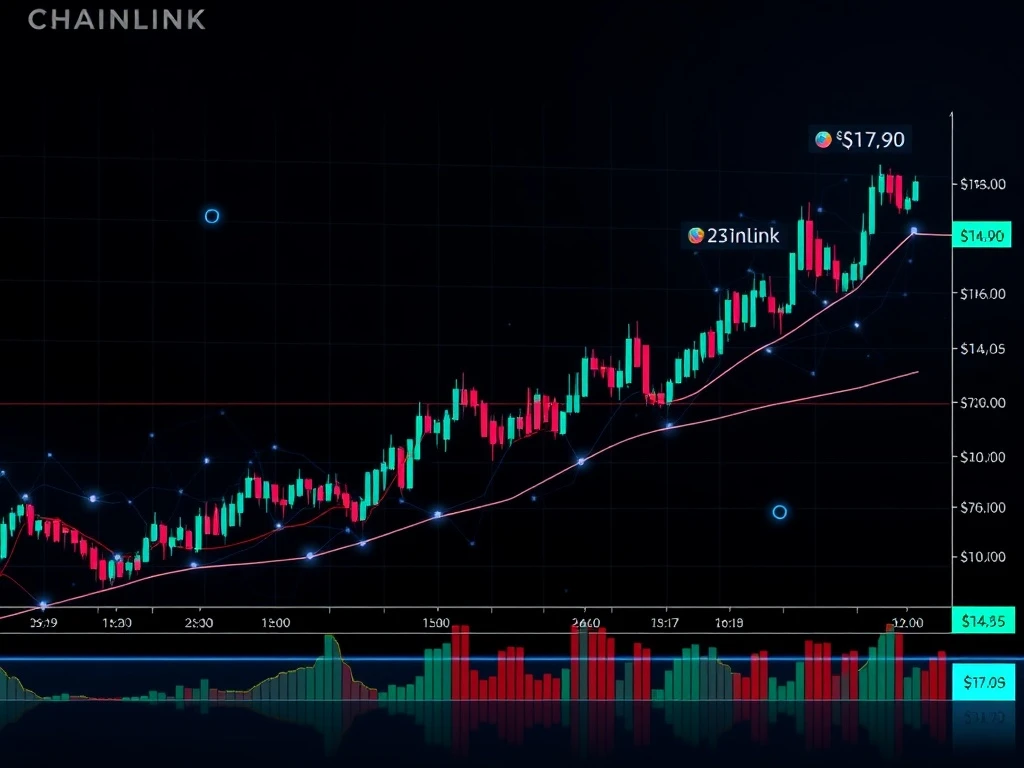
As cryptocurrency markets manage January 2026 volatility, Chainlink (LINK) presents a compelling technical setup that has captured significant trader attention. The decentralized oracle network’s native token currently trades near critical support at $11.90 while Binance derivatives data reveals substantial long positioning among traders. This combination creates a decisive moment for LINK’s price trajectory, potentially determining whether the asset can reclaim the $14.15 resistance level that has proven significant in recent months.
Binance Derivatives Data Reveals Strong Long Bias
Recent data from CoinGlass shows remarkable positioning among Chainlink traders on the Binance exchange. The LINK/USDT Long/Short Ratio reached 2.06 on January 25, 2026, indicating that long positions significantly outnumber short positions. Specifically, 67.34% of accounts maintain long positions while only 32.66% hold short positions. This substantial imbalance suggests that a majority of traders anticipate upward price movement despite broader market uncertainty.
Also read: Ethereum's $2,500 Challenge: Market Data and the Rise of Pepeto
However, use concentrations introduce important risk considerations. The LINK Exchange Liquidation Map identifies overleveraged clusters around $11.85 and $12.45, creating potential volatility zones. These levels represent areas where forced liquidations could accelerate price movements in either direction. Traders monitoring these thresholds can better understand near-term risk parameters.
Market Context and Volume Analysis
Chainlink currently trades at $12.06, representing a modest 1% decline over the past 24 hours. More notably, trading volume has decreased by 35% to $181.35 million. This volume contraction typically indicates reduced market participation and potential consolidation. Several factors contribute to this market behavior:
Also read: Crypto Listing Scams: Binance CEO Changpeng Zhao Issues Critical Warning to Investors
- Broader cryptocurrency market hesitancy following recent regulatory developments
- Seasonal trading patterns common in January following year-end positioning
- Technical indecision at key support and resistance levels
- Institutional capital flows showing preference for Bitcoin and Ethereum
Technical Analysis: Support and Resistance Dynamics
Chainlink’s price action reveals critical technical levels that will likely determine its near-term direction. The $11.90 level has historically functioned as a demand zone, providing support during previous market corrections. LINK has maintained sideways movement around this area for multiple trading sessions, suggesting consolidation rather than aggressive selling pressure.
The technical setup presents two primary scenarios. First, if LINK maintains support above $11.90, historical price structure suggests potential upward movement toward $14.15 resistance. This represents approximately 16% upside from current levels. Second, a sustained break below $11.90 could invalidate the bullish setup and expose deeper support levels near $10.50.
| Level | Type | Significance |
|---|---|---|
| $11.90 | Support | Historical demand zone, current consolidation area |
| $12.45 | Resistance | Liquidation cluster, near-term hurdle |
| $14.15 | Resistance | Previous swing high, psychological level |
| $16.13 | Resistance | Analyst-identified target, institutional interest level |
Momentum Indicators and Analyst Perspectives
The Average Directional Index (ADX) currently registers at 25.42, exceeding the key threshold of 25 that indicates a strong directional trend. This reading suggests that whichever direction LINK breaks from its current consolidation could develop significant momentum. Additionally, several prominent analysts have shared perspectives on Chainlink’s potential.
Crypto analyst Marzell recently described Chainlink as an “institutional sleeping giant” in social media commentary. The analyst identified $16.13, $20.09, and $24.52 as key resistance levels should bullish momentum return. This perspective aligns with higher-timeframe analysis showing LINK’s historical tendency to rebound sharply after defending similar base ranges.
Fundamental Context: Chainlink’s Ecosystem Development
Beyond technical factors, Chainlink’s fundamental developments provide important context for price analysis. The decentralized oracle network continues expanding its enterprise partnerships and technological capabilities. Recent developments include:
- Cross-Chain Interoperability Protocol (CCIP) adoption by major financial institutions
- Enhanced data feeds for decentralized finance applications
- Enterprise adoption in traditional finance for settlement and verification
- Research initiatives exploring blockchain integration with artificial intelligence
These developments contribute to Chainlink’s long-term value proposition as critical infrastructure for the blockchain ecosystem. The network’s role in providing reliable external data to smart contracts remains fundamentally important despite market volatility.
Comparative Market Analysis
Chainlink’s performance should be considered within broader cryptocurrency market context. While Bitcoin has remained relatively stable despite Federal Reserve policy signals, altcoins like LINK often demonstrate higher volatility. This relationship creates both opportunities and risks for traders. Several market dynamics influence this relationship:
- Bitcoin dominance fluctuations affecting capital rotation into altcoins
- Ethereum network upgrades impacting decentralized application ecosystems
- Regulatory developments specifically affecting oracle networks and data providers
- Institutional investment patterns shifting between infrastructure and application tokens
Risk Assessment and Trader Psychology
The current 67% long positioning on Binance introduces important psychological considerations. When a majority of traders lean in one direction, contrarian indicators sometimes suggest potential reversals. However, this positioning must be evaluated alongside other factors including:
- Position sizes relative to account equity
- Time horizons for long positions (short-term vs. long-term holds)
- Market structure supporting or contradicting trader sentiment
- External catalysts that could alter price trajectories
Professional traders typically monitor such sentiment extremes while maintaining disciplined risk management protocols. The concentration of liquidation levels between $11.85 and $12.45 represents a particular area of focus for risk assessment.
Historical Precedents and Pattern Recognition
Chainlink has demonstrated specific price behaviors during previous consolidation periods. Analysis of 2024 and 2025 price action reveals patterns that may inform current expectations. Historically, LINK has shown:
- Strong rebounds from the $11-$12 support zone
- Consolidation periods lasting 2-4 weeks before directional moves
- Correlation breaks with broader altcoin markets during infrastructure developments
- Volume expansions preceding significant price movements
These historical tendencies provide context but cannot guarantee future performance given evolving market conditions.
Conclusion
Chainlink stands at a technical crossroads with 67% of Binance traders positioned for upward movement. The cryptocurrency’s ability to maintain support above $11.90 will likely determine whether it can challenge the $14.15 resistance level. While derivatives data shows strong long bias, reduced trading volume and liquidation clusters introduce volatility considerations. Traders should monitor both technical levels and fundamental developments within Chainlink’s expanding ecosystem. The coming sessions will reveal whether current positioning reflects prescient market insight or excessive optimism amid uncertain conditions.
FAQs
Q1: What does a 67% long position mean for Chainlink?
A 67% long position indicates that approximately two-thirds of traders on Binance expect Chainlink’s price to increase. This sentiment measurement comes from derivatives trading data and reflects trader positioning rather than guaranteed price direction.
Q2: Why is the $11.90 level important for Chainlink?
The $11.90 level represents historical support where buying interest has previously emerged. This price zone has functioned as a demand area, making it technically significant for determining near-term price direction.
Q3: What are liquidation clusters and why do they matter?
Liquidation clusters occur where many traders have placed stop-loss orders or where leveraged positions become vulnerable. When price reaches these levels, forced selling or buying can accelerate movements, creating volatility zones.
Q4: How does trading volume affect price analysis?
Declining trading volume often indicates reduced market participation and potential consolidation. Volume expansions typically accompany significant price movements, making volume an important confirmation indicator for breakouts or breakdowns.
Q5: What fundamental factors support Chainlink’s long-term value?
Chainlink provides critical oracle services that connect smart contracts with real-world data. Its expanding enterprise partnerships, cross-chain capabilities, and role in decentralized finance infrastructure contribute to its fundamental value proposition.

This article was produced with AI assistance and reviewed by our editorial team for accuracy and quality.