Cboe’s Bold Relaunch of All-or-Nothing Options Shakes Up Prediction Markets
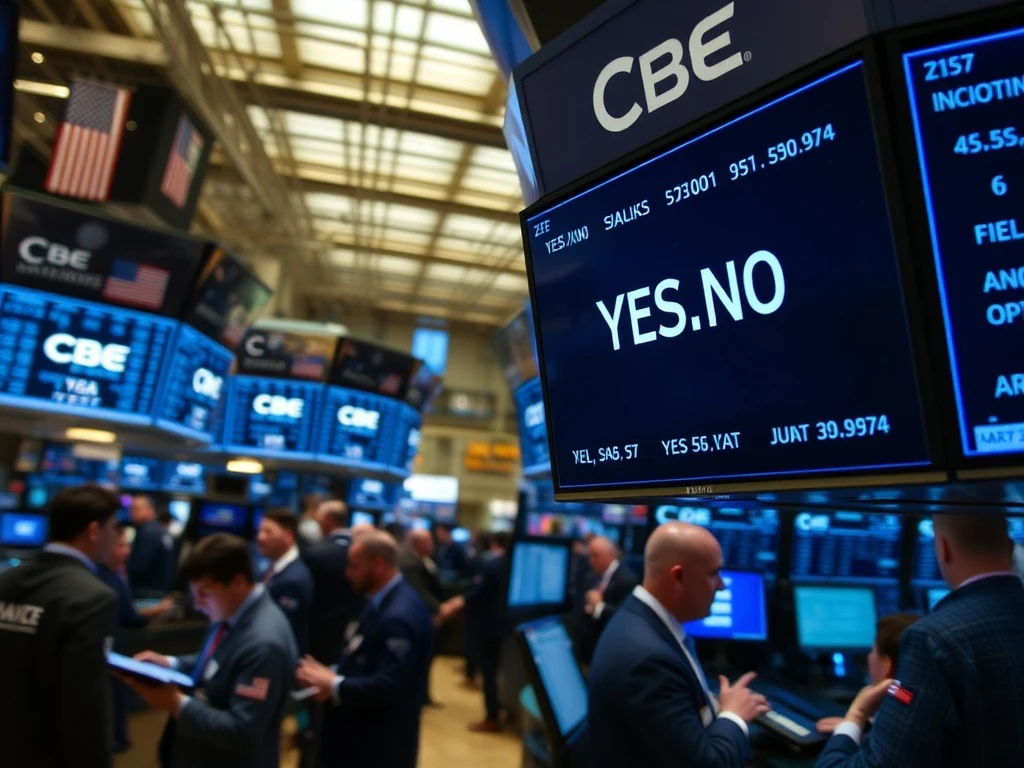
In a strategic move that signals a major shift in the retail derivatives sector, Cboe Global Markets announced plans to relaunch its all-or-nothing options contracts. This initiative, first reported exclusively by The Wall Street Journal, directly targets the surging retail interest in binary, yes-no style contracts and positions the regulated exchange giant as a formidable competitor to emerging prediction markets. The relaunch represents a calculated effort to reclaim a controversial product under a new, strong regulatory framework designed to address past concerns over fraud and excessive risk.
Cboe’s All-or-Nothing Options: A Regulated Reboot
Cboe Global Markets, a cornerstone of the U.S. financial infrastructure, is preparing to reintroduce a modernized version of all-or-nothing options. These contracts, often called binary options, offer a fixed payout if a specific condition is met at expiration and nothing if it is not. For instance, a contract might pay $100 if the S&P 500 closes above a certain level on a given Friday. Consequently, this structure provides clear, defined risk and reward, which appeals to retail traders seeking simplicity.
Also read: Algorand Soars: ALGO's 50% Surge Fueled by Google Quantum AI Security Endorsement
The new contracts will operate exclusively on Cboe’s regulated exchange platforms, a critical distinction from their past iterations. Previously, over-the-counter binary options were frequently associated with unregulated offshore platforms, which were notorious for fraudulent practices and manipulative software. By bringing these instruments onto a regulated exchange, Cboe aims to provide transparency, centralized clearing, and investor protections that were historically absent. This framework directly addresses the high-risk concerns that led regulators like the SEC and CFTC to issue repeated warnings in the past decade.
The Evolution from Niche Product to Mainstream Instrument
The journey of binary-style contracts in the U.S. has been complex. Cboe initially listed binary options on the CBOE Futures Exchange (CFE) in 2008, but retail adoption remained limited. Meanwhile, a parallel ecosystem of event-based prediction markets began to grow, applying blockchain technology and operating in a regulatory gray area. Cboe’s decision to relaunch now is not accidental; it is a direct response to measurable demand. Retail trading volumes in derivatives have exploded since 2020, and the success of platforms offering simplified, event-driven contracts has demonstrated a clear market gap.
Also read: Major US Bill Aims to Classify Bitcoin, XRP, and Solana as Digital Commodities
Direct Competition with Prediction Market Platforms
Cboe’s relaunch sets the stage for a head-to-head competition with prediction market leaders like Kalshi and Polymarket. These platforms allow users to trade on the outcome of real-world events, from election results to economic data releases. However, they have operated under intense regulatory scrutiny, with the CFTC challenging Kalshi’s specific political event contracts. Cboe’s entry with exchange-listed products creates a significant competitive threat based on three key advantages: regulatory clarity, institutional trust, and existing market infrastructure.
Key Advantages of Cboe’s Regulated Approach:
- Regulatory Legitimacy: Contracts are listed on a registered national securities exchange, subject to SEC oversight.
- Central Counterparty Clearing: Cboe Clearing assumes the counterparty risk, eliminating the risk of platform default.
- Price Transparency: All bids, offers, and trades are publicly disseminated, unlike many peer-to-peer prediction markets.
- Established Brokerage Access: Retail investors can access the contracts through their existing brokerage accounts (e.g., Fidelity, Charles Schwab).
The following table contrasts the two models:
| Feature | Cboe All-or-Nothing Options | Prediction Markets (e.g., Kalshi, Polymarket) |
|---|---|---|
| Regulatory Venue | SEC-Regulated National Exchange | CFTC-Regulated (Kalshi) / Decentralized (Polymarket) |
| Asset Class | Securities-Based (Indices, ETFs) | Event Contracts (Economics, Politics) |
| Counterparty Risk | Mitigated by Central Clearinghouse | Platform or Smart Contract Dependent |
| Access Channel | Traditional Brokerage Accounts | Dedicated Platform Account |
Addressing the Legacy of Fraud and Risk
The shadow of past binary options scandals looms large over this relaunch. Throughout the 2010s, the CFTC and SEC brought numerous enforcement actions against unregistered offshore binary options platforms that defrauded U.S. investors out of hundreds of millions of dollars. These platforms often manipulated trading software to ensure client losses. Cboe’s strategy explicitly seeks to differentiate its product from this toxic history. By emphasizing its status as a regulated exchange with a 50-year track record, Cboe is marketing safety and reliability as primary features.
Industry experts note this is a major moment. “Cboe is not just launching a product; it’s attempting to rehabilitate an entire product category,” observes a derivatives analyst at a major financial research firm. “Their success hinges on convincing both regulators and the public that a binary outcome contract can be a legitimate hedging and trading tool, not a gambling instrument. The full weight of their compliance and legal teams is behind this rollout.” This expert perspective underscores the high-stakes nature of the initiative, which balances innovation with stringent oversight.
The Retail Demand Driving the Move
Ultimately, the relaunch is fueled by demonstrable retail investor behavior. The rise of zero-commission trading, social media-driven investing, and a desire for simplified, high-conviction trades has created a perfect environment for all-or-nothing contracts. Retail traders increasingly seek tools that offer defined, short-term exposure to market views without the complex Greeks of traditional options. Cboe’s move can be seen as a formalization of a trend that prediction markets identified and capitalized on earlier. By providing a regulated alternative, Cboe potentially captures a vast, existing demand while setting the standard for how these instruments should operate.
Conclusion
Cboe’s planned relaunch of all-or-nothing options contracts marks a significant evolution in the derivatives market. It represents a bold attempt to channel retail trading innovation into a regulated, transparent, and secure environment. By doing so, Cboe directly challenges the prediction market sector, tapping into its institutional credibility and solid infrastructure. The success of this venture will depend on retail adoption, regulatory comfort, and the ability to clearly distinguish these exchange-listed products from their problematic predecessors. This move could very well redefine the boundary between speculative trading and event-based hedging for a new generation of investors.
FAQs
Q1: What are all-or-nothing options?
All-or-nothing options, also known as binary options, are a type of derivative that pays a fixed, predetermined amount if a specific condition is met at expiration (e.g., an index closing above a certain price). If the condition is not met, the contract expires worthless, resulting in a total loss of the premium paid.
Q2: How is Cboe’s new offering different from past binary options?
Cboe’s new contracts will be listed and traded on its regulated national exchange, with prices transparently reported and cleared through a central counterparty. This contrasts with the unregulated, often fraudulent offshore platforms that previously dominated binary options trading, offering critical protections for investors.
Q3: Who are the main competitors to Cboe’s new contracts?
The primary competitors are event-based prediction market platforms like Kalshi (CFTC-regulated) and decentralized platforms like Polymarket. These platforms allow trading on real-world outcomes but operate under different regulatory frameworks and with different risk profiles than a traditional securities exchange.
Q4: What are the main benefits of a regulated exchange listing for these contracts?
Key benefits include elimination of counterparty default risk via central clearing, full price transparency, oversight by the SEC, integration with existing brokerage accounts, and access to established investor protection rules and dispute resolution mechanisms.
Q5: When will Cboe’s all-or-nothing options be available to trade?
While Cboe has announced its preparation to relaunch the product, a specific public launch date has not yet been set. The rollout will follow necessary regulatory processes and technical integration with member brokerages, a timeline typically measured in months following an official filing.

This article was produced with AI assistance and reviewed by our editorial team for accuracy and quality.