Cardano’s $100M Treasury Rescue Deployed as Taurox Presale Sells Out in 24 Hours
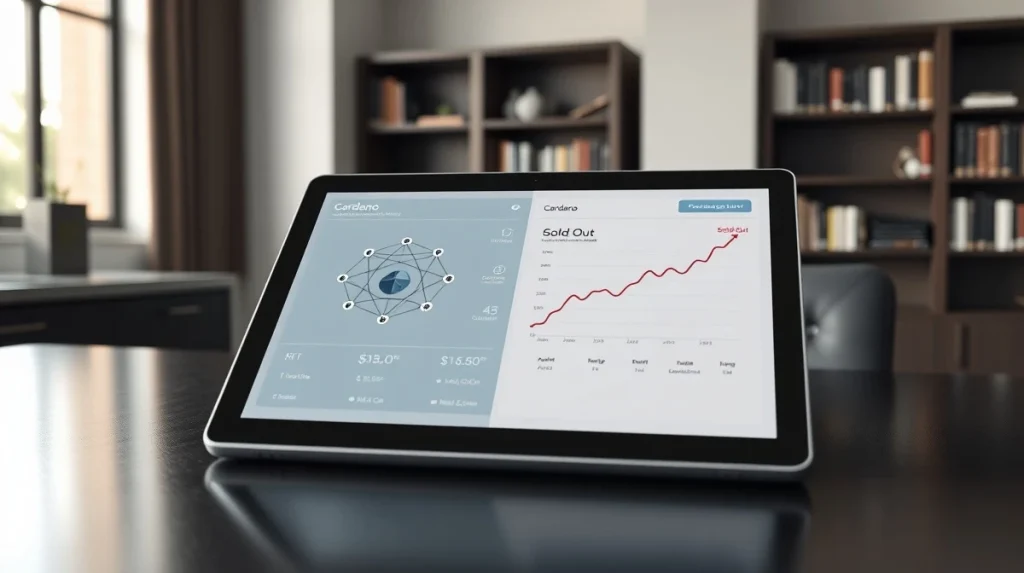
In a significant development for cryptocurrency markets, Cardano founder Charles Hoskinson has activated a $100 million treasury rescue initiative while the new digital asset Taurox (TAUX) achieved a complete phase one presale sell-out within 24 hours. These simultaneous events, occurring against a backdrop of broader market volatility, highlight contrasting strategies within the blockchain sector as established projects address treasury management and new tokens attract rapid investor interest. Market analysts are closely monitoring these developments for potential implications across major cryptocurrencies including XRP and Solana, both experiencing notable price movements and revised projections.
Cardano’s Treasury Management Strategy
Charles Hoskinson, the founder of Cardano, announced the deployment of $100 million from the project’s treasury reserves on March 18, 2026. This strategic move aims to stabilize the ecosystem amid fluctuating market conditions that have affected numerous blockchain projects. The Cardano treasury, funded through a portion of transaction fees and block rewards, represents one of the largest decentralized treasuries in the cryptocurrency space. Historically, treasury funds have supported development grants, ecosystem growth initiatives, and research projects within the Cardano network.
Also read: M Series ANC Token Presale Launches with Detailed Vesting
Industry observers note that treasury management has become increasingly significant for blockchain projects facing extended bear market conditions. The Cardano community previously approved treasury allocation mechanisms through its on-chain governance system. This recent activation follows several months of community discussion regarding optimal treasury utilization during periods of market stress. Treasury reserves provide projects with operational runway independent of external funding, a feature particularly valuable during capital-constrained environments.
Market Context and Historical Precedents
The decision to deploy treasury funds coincides with broader cryptocurrency market movements that have seen significant volatility throughout early 2026. Major cryptocurrencies have experienced substantial price corrections from their all-time highs, prompting various ecosystem responses. Cardano’s approach mirrors strategies employed by other blockchain foundations during previous market cycles, where treasury resources helped maintain development momentum despite unfavorable market conditions.
Also read: Pepeto Presale Attracts Investor Interest Amid Meme Coin Rally
Analysts point to historical data showing that well-managed treasury deployments during market downturns have sometimes preceded ecosystem strengthening during subsequent recovery periods. The $100 million allocation represents approximately 8% of Cardano’s total treasury holdings based on publicly available blockchain data. The funds will reportedly support core development teams, decentralized application projects within the ecosystem, and strategic partnerships that advance Cardano’s technological roadmap.
Taurox Presale Achieves Rapid Sell-Out
Concurrently, the Taurox (TAUX) cryptocurrency project completed its phase one presale within 24 hours of launch, distributing 30 million tokens to early participants. This rapid sell-out occurred despite generally cautious investor sentiment across cryptocurrency markets. The Taurox project positions itself as a blockchain platform focusing on cross-border payment solutions, drawing comparisons to established payment-focused cryptocurrencies like Ripple’s XRP.
Presale dynamics in cryptocurrency markets often serve as indicators of investor appetite for new technological approaches or market niches. The Taurox team has emphasized its technical architecture differences from existing payment networks, though detailed technical documentation remains limited at this early stage. Rapid presale completions typically generate immediate liquidity for new projects while establishing initial token distribution patterns that can influence future market behavior.
Comparative Analysis with Established Payment Cryptocurrencies
The Taurox presale success invites comparison with Ripple’s XRP, which has experienced significant market movements in recent months. Since November 2025, large XRP holders have transferred over 1 billion tokens to exchanges, according to blockchain analytics firms. During this same period, XRP’s price declined from $3.65 to $1.51, representing a decrease of approximately 59%. This price movement occurred despite optimistic public statements from some industry figures regarding XRP’s future potential.
Market data reveals contradictory signals within the XRP ecosystem. Exchange balances for XRP recently reached a seven-year low of approximately 1.6 billion tokens, which some analysts interpret as accumulation by long-term holders rather than immediate selling pressure. However, the relationship between exchange balances and price action remains complex, with multiple factors influencing market dynamics including regulatory developments, partnership announcements, and broader cryptocurrency trends.
Broader Cryptocurrency Market Conditions
The Cardano treasury deployment and Taurox presale occur within a cryptocurrency market experiencing divergent technical signals and revised analyst projections. Shiba Inu (SHIB), for instance, recently experienced what technical analysts describe as a failed golden cross pattern. In September 2025, SHIB’s moving averages formed a golden cross that quickly reversed into a death cross, creating what market participants term a “bull-bear crossfire” that trapped traders on both sides of the technical signal.
Historical analysis reveals inconsistent outcomes following golden cross patterns on SHIB. Previous occurrences have produced gains as high as 234% in some instances while preceding declines of up to 97% in others. This variability demonstrates the limitations of relying solely on technical indicators in highly volatile cryptocurrency markets. As of March 19, 2026, SHIB trades at $0.00000535, with trading volumes reflecting continued retail interest despite ambiguous technical signals.
Dogecoin’s Supply Dynamics and Market Position
Dogecoin (DOGE) continues to face challenges related to its inflationary tokenomics. The network adds approximately 5 billion new DOGE tokens to circulating supply annually through block rewards, with no predetermined supply cap. Reaching the psychologically significant $1 price point would require a market capitalization of roughly $168.5 billion based on current circulating supply, representing an 11-fold increase from present valuation levels.
Trading activity shows daily volumes consistently above $2 billion, though market structure analysis indicates declining spot market participation as derivatives increasingly dominate DOGE trading. The inflationary supply schedule creates persistent selling pressure that works against significant price appreciation, a fundamental consideration for long-term investment theses. Despite these challenges, Dogecoin maintains one of the most recognizable brands in cryptocurrency, supported by continued community engagement and occasional high-profile endorsements.
Solana’s Revised Price Projections
Analysts have recently adjusted price targets for Solana (SOL) in response to changing market conditions. Standard Chartered analyst Geoff Kendrick revised his 2026 Solana price target from $310 to $250 while maintaining a $2,000 projection for 2030. This adjustment reflects reassessed growth timelines rather than diminished long-term confidence in the ecosystem’s potential. Solana currently trades at $94, representing a 69% decline from its all-time high reached during the previous market cycle.
The revised $250 target still implies approximately 2.6 times potential appreciation from current levels, though achieving this would require dealing with continued market volatility. Analyst projections for blockchain platforms increasingly incorporate extended timelines as the industry matures beyond initial hype cycles toward sustainable utility development. Solana’s ecosystem continues to demonstrate resilient developer activity and application deployment despite price volatility, with network upgrades addressing previous stability concerns.
Investment Implications and Risk Considerations
The simultaneous occurrence of Cardano’s treasury deployment and Taurox’s rapid presale completion highlights the diverse strategies and risk profiles present in cryptocurrency markets. Established projects like Cardano utilize accumulated resources to weather market cycles, while new entrants like Taurox seek to capitalize on identified market opportunities. Investors must distinguish between fundamentally different value propositions when evaluating these developments.
Market participants should consider several key factors when analyzing such events:
- Treasury transparency: Publicly verifiable blockchain data regarding fund allocation and utilization
- Presale structure: Token distribution mechanisms and lock-up periods for early participants
- Technical differentiation: Genuine innovation versus incremental improvements on existing solutions
- Market timing: Launch conditions relative to broader cryptocurrency cycles
- Regulatory compliance: Adherence to evolving digital asset regulations across jurisdictions
Conclusion
The Cardano treasury rescue deployment and Taurox presale completion represent significant developments within evolving cryptocurrency markets. These events highlight contrasting approaches to ecosystem development and capital formation as the blockchain industry navigates complex market conditions. While established projects like Cardano tap into accumulated resources to maintain development momentum, new entrants like Taurox test market appetite for alternative technological solutions. Concurrent developments affecting XRP, Shiba Inu, Dogecoin, and Solana demonstrate the interconnected nature of cryptocurrency markets, where technical signals, supply dynamics, and revised analyst projections collectively influence investor behavior. As the industry progresses through 2026, treasury management strategies and presale dynamics will continue to provide valuable insights into project sustainability and market sentiment evolution.
FAQs
Q1: What is the purpose of Cardano’s $100 million treasury deployment?
Cardano founder Charles Hoskinson activated $100 million from the project’s treasury to support ecosystem stability during volatile market conditions. The funds will reportedly support core development, decentralized applications, and strategic partnerships within the Cardano network.
Q2: How does Taurox’s rapid presale compare to other cryptocurrency launches?
Taurox’s 24-hour presale completion demonstrates strong initial investor interest, though similar rapid sell-outs have occurred with other projects during various market cycles. The long-term significance depends on subsequent development milestones and market adoption.
Q3: Why has XRP’s price declined despite decreasing exchange balances?
XRP’s price decline from $3.65 to $1.51 since November 2025 reflects multiple factors including broader market trends, regulatory uncertainty, and selling pressure from large holders despite decreasing exchange balances that some interpret as accumulation.
Q4: What are the implications of Dogecoin’s inflationary tokenomics?
Dogecoin’s uncapped supply adds approximately 5 billion new tokens annually, creating persistent selling pressure that challenges significant price appreciation. Reaching $1 would require an 11-fold market capitalization increase to approximately $168.5 billion.
Q5: Why did analysts revise Solana’s price target for 2026?
Standard Chartered analyst Geoff Kendrick revised Solana’s 2026 target from $310 to $250 while maintaining the 2030 projection of $2,000, reflecting extended growth timelines rather than diminished confidence in the ecosystem’s long-term potential.

This article was produced with AI assistance and reviewed by our editorial team for accuracy and quality.