Breaking: Cardano Price Faces 10% Correction Risk as Market Pressure Weakens
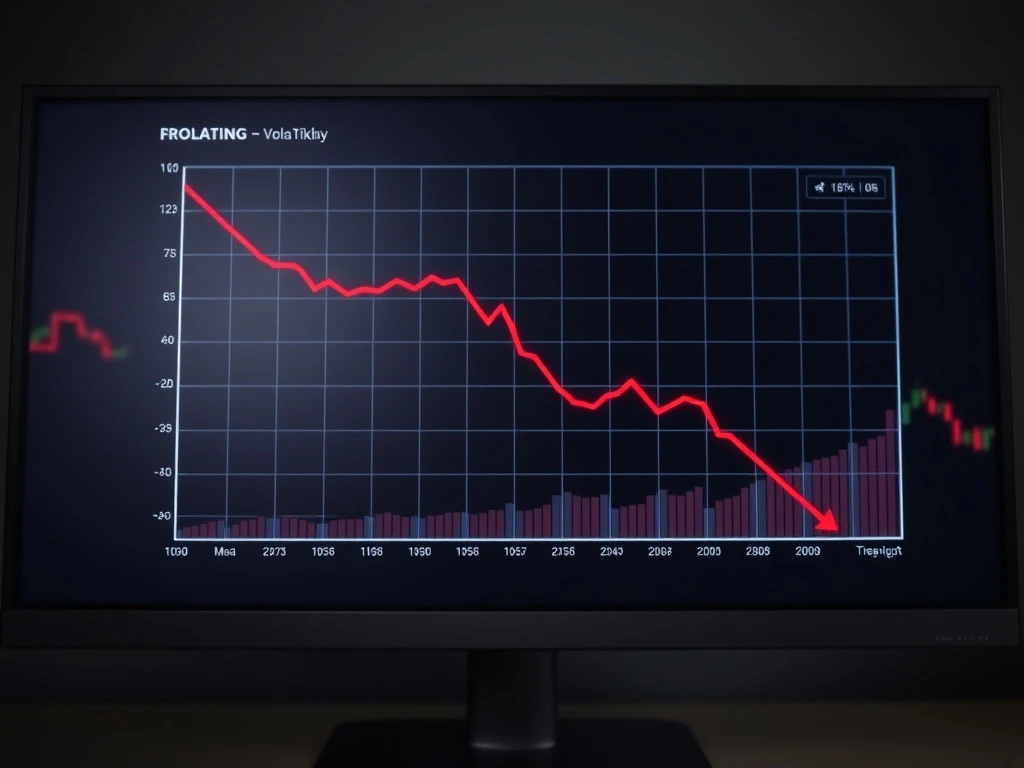
March 15, 2026 — Global cryptocurrency markets show renewed volatility as Cardano (ADA) faces significant selling pressure across major exchanges. The digital asset, currently trading at $0.42, has declined 6.3% over the past 48 hours according to real-time data from CoinMarketCap. Market analysts at IntoTheBlock report weakening accumulation patterns among large ADA holders, suggesting institutional interest may be waning during this critical consolidation phase. This price movement comes amid broader cryptocurrency market uncertainty following recent regulatory developments in the European Union and shifting Federal Reserve interest rate expectations. Technical indicators now point toward a potential 10% correction if current support levels fail to hold through the weekend trading sessions.
Cardano Technical Analysis Reveals Critical Support Breakdown
Technical analysts at CryptoQuant identified a concerning pattern in ADA’s on-chain metrics this week. The Network Value to Transactions (NVT) ratio, which measures network valuation relative to transaction volume, has reached its highest level since November 2025. This divergence typically signals overvaluation relative to actual network usage. Meanwhile, exchange netflow data shows consistent outflows from major trading platforms, indicating reduced immediate selling pressure but also diminished trading interest. The 24-hour trading volume for ADA has dropped 28% compared to last week’s average, falling to approximately $450 million across global exchanges. This volume contraction often precedes significant price movements as liquidity thins and volatility increases.
Historical data from Santiment reveals similar patterns preceded ADA’s 14% correction in August 2025. During that period, declining social dominance metrics and reduced developer activity contributed to the downward pressure. Currently, Cardano’s development activity remains robust with 125 GitHub commits in the past week, but social sentiment has turned negative according to LunarCrush’s AltRank analysis. The Relative Strength Index (RSI) currently sits at 38, approaching oversold territory but not yet signaling a definitive reversal. Critical support at $0.40 represents a psychological barrier for traders, with approximately 45,000 addresses having purchased ADA between $0.39 and $0.41 according to IntoTheBlock’s In/Out of the Money analysis.
Market Impact and Broader Cryptocurrency Context
The potential Cardano correction arrives during a pivotal moment for the broader cryptocurrency market. Bitcoin dominance has increased to 52.3% as investors seek relative safety in the largest digital asset. This capital rotation away from altcoins like Cardano reflects typical risk-off behavior during periods of market uncertainty. The total cryptocurrency market capitalization has declined 4.2% this week, with particular weakness in proof-of-stake assets following proposed European regulatory changes. Cardano’s proof-of-stake consensus mechanism faces specific scrutiny under the EU’s Markets in Crypto-Assets (MiCA) framework implementation, scheduled for full enforcement in July 2026.
- Exchange Impact: Binance, Kraken, and Coinbase have all reported increased ADA sell orders relative to buys during Asian and European trading hours
- Institutional Response: Grayscale’s Digital Large Cap Fund reduced its ADA allocation by 3.2% in its most recent rebalancing
- Network Effect: Daily active addresses on Cardano have declined 12% week-over-week to approximately 65,000
Expert Analysis from Industry Researchers
Lucas Outumuro, Head of Research at IntoTheBlock, provided specific context about the current market dynamics. “Our data shows large transaction volume for ADA has decreased by 40% compared to last month’s average,” Outumuro explained in a research note published Thursday. “This reduction in whale activity often precedes periods of increased retail-driven volatility. The concentration metric indicates the top 100 addresses now hold 32.8% of circulating ADA, down from 34.1% in February, suggesting some distribution is occurring.” Meanwhile, Markus Thielen, CEO of 10x Research, noted the technical breakdown in his morning briefing. “Cardano has broken below its 50-day moving average of $0.445, which served as reliable support throughout January and February. The next critical level is the 200-day moving average at $0.385, representing a potential 8.3% decline from current prices.”
Comparative Analysis of Proof-of-Stake Assets
Cardano’s performance must be evaluated within the broader proof-of-stake cryptocurrency sector. Ethereum, despite its larger market capitalization and established ecosystem, has faced similar pressures with a 5.1% weekly decline. Solana, however, has shown relative strength with only a 2.3% decrease, potentially benefiting from its high throughput and growing decentralized finance activity. The divergence highlights how specific network fundamentals and ecosystem development can provide insulation during market downturns. Cardano’s upcoming Chang hard fork, scheduled for Q2 2026, represents a potential catalyst that could alter current market dynamics if successfully implemented.
| Cryptocurrency | Weekly Change | Market Cap | 30-Day Volatility |
|---|---|---|---|
| Cardano (ADA) | -6.3% | $14.9B | 68% |
| Ethereum (ETH) | -5.1% | $420.3B | 52% |
| Solana (SOL) | -2.3% | $82.7B | 85% |
| Avalanche (AVAX) | -7.8% | $12.1B | 79% |
Forward-Looking Market Projections and Catalysts
The immediate technical outlook depends heavily on whether ADA can maintain the $0.40 support level through Monday’s trading session. Options market data from Deribit shows increased put option buying at the $0.38 strike price for March expiry, indicating traders are hedging against further downside. The futures funding rate has turned slightly negative across major perpetual swap markets, suggesting short-term bearish sentiment among leveraged traders. However, Cardano’s staking yield remains attractive at 3.2% annually, potentially providing some price support from long-term holders seeking passive income. The network’s total value locked in decentralized applications has remained stable at approximately $250 million despite the price decline, indicating continued utility usage.
Community and Developer Response Patterns
Cardano’s development community has maintained its regular cadence of updates despite market volatility. Input Output Global, the company behind Cardano’s development, confirmed this week that work continues on the Voltaire governance phase and Hydra scaling solution. Charles Hoskinson, Cardano’s founder, addressed market concerns during his regular YouTube update, emphasizing the long-term roadmap rather than short-term price movements. “Network fundamentals continue to improve regardless of market cycles,” Hoskinson stated. “Monthly active developers increased 15% in February, and we’re seeing genuine utility growth in Africa through our partnerships.” Community sentiment on social platforms remains divided, with some investors viewing the potential correction as a buying opportunity while others express concern about prolonged weakness.
Conclusion
Cardano faces genuine technical headwinds as buying pressure diminishes and critical support levels test investor resolve. The potential for a 10% correction reflects both specific ADA weakness and broader cryptocurrency market dynamics. However, Cardano’s robust development activity, upcoming network upgrades, and real-world adoption initiatives provide fundamental counterweights to short-term price movements. Market participants should monitor the $0.40 support level closely, with a breach potentially triggering stop-loss orders and accelerating declines. Conversely, successful defense of this level could establish a foundation for recovery once broader market sentiment improves. The coming week will prove decisive for Cardano’s near-term trajectory as technical factors and fundamental developments converge.
Frequently Asked Questions
Q1: What specific indicators suggest Cardano could face a 10% correction?
The primary indicators include weakening buying pressure shown by declining large transaction volume, breakdown below the 50-day moving average, reduced exchange volume, and negative funding rates in perpetual markets. Technical analysis identifies $0.385 as the next major support level, representing approximately 8-10% downside from current prices.
Q2: How does Cardano’s current situation compare to previous corrections?
Current patterns resemble the August 2025 correction where similar volume declines and support breakdowns preceded a 14% price drop. However, development activity remains stronger now, and staking participation is higher at 65% of circulating supply compared to 58% last August.
Q3: What upcoming events could change Cardano’s price trajectory?
The Chang hard fork scheduled for Q2 2026 represents the most significant near-term catalyst. Successful implementation of improved governance and scaling features could positively impact sentiment. Additionally, broader cryptocurrency market movements and regulatory developments will influence price action.
Q4: Should investors be concerned about Cardano’s long-term prospects?
Short-term price movements rarely reflect long-term fundamentals. Cardano continues to show growth in developer activity, decentralized application deployment, and real-world partnerships. The network’s scientific approach and peer-reviewed development provide distinctive characteristics in the cryptocurrency space.
Q5: How are other proof-of-stake cryptocurrencies performing during this period?
Most proof-of-stake assets face similar pressures, though with varying severity. Ethereum has declined 5.1%, Solana 2.3%, and Avalanche 7.8% over the same period. Cardano’s performance sits in the middle of this range, reflecting both sector-wide trends and asset-specific factors.
Q6: What practical steps should Cardano holders consider during market volatility?
Investors should assess their risk tolerance, consider dollar-cost averaging strategies if adding to positions, ensure proper portfolio diversification, and avoid emotional decisions based on short-term movements. Monitoring network fundamentals alongside price action provides more complete information for investment decisions.