Cardano ADA Price Revisits Critical $0.14-$0.18 Zone: Will History Repeat for the Astonishing Rally?

Cardano’s ADA token has returned to a historically significant trading range between $0.14 and $0.18, a price zone that previously ignited explosive rallies of 600% and 2100% during previous market cycles. This development, observed in global cryptocurrency markets on March 15, 2025, has captured intense attention from technical analysts and institutional investors who monitor historical patterns for potential future movements. The current positioning raises fundamental questions about market psychology, technical repetition, and Cardano’s evolving ecosystem fundamentals.
Cardano ADA Price Enters Historically Significant Territory
Technical analysts across major trading platforms have identified the $0.14-$0.18 range as a critical inflection point for ADA’s price action. Historical data from 2018-2020 and 2020-2021 market cycles demonstrates this zone’s importance. Specifically, ADA consolidated within this range for approximately four months in late 2020 before initiating a 2100% ascent that peaked above $3.00 in September 2021. Similarly, the token found support near these levels in March 2020 before rallying 600% over subsequent months.
Also read: Operation Atlantic: Global Law Enforcement Shatters $45M Crypto Fraud Ring
Market participants now scrutinize whether similar conditions exist today. Several factors contribute to this analysis. First, trading volume patterns show similarities to previous accumulation phases. Second, the relative strength index (RSI) currently mirrors readings from past consolidation periods. Third, on-chain metrics indicate reduced exchange reserves, suggesting decreased selling pressure. However, analysts emphasize that historical patterns never guarantee future results, as market conditions constantly evolve.
Technical Indicators and Market Structure Analysis
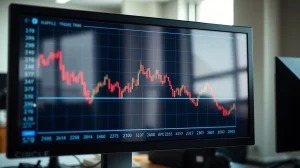
Professional chart analysts employ multiple frameworks to assess ADA’s current position. The weekly chart reveals that ADA has tested the $0.14 support level three times since November 2024, establishing what technicians call a “triple bottom” pattern. This structure often precedes significant upward movements when accompanied by increasing volume. Additionally, the 200-week moving average currently sits at $0.19, creating a potential resistance zone just above the current trading range.
Also read: Spartans.com Shatters Norms with $7 Million Leaderboard Launch, Rewriting Online Gambling Rules
Key technical levels to monitor include:
- Immediate support: $0.14 (tested multiple times since Q4 2024)
- Primary resistance: $0.18-$0.20 (previous breakdown zone)
- Volume profile: Highest trading activity between $0.15-$0.17
- Fibonacci retracement: Current price at 0.786 retracement from 2021 highs
| Time Period | Starting Price | Peak Price | Percentage Gain | Duration |
|---|---|---|---|---|
| March 2020 – August 2020 | $0.15 | $0.11 | 600% | 5 months |
| November 2020 – September 2021 | $0.18 | $3.10 | 2100% | 10 months |
| Current Position (March 2025) | $0.14-$0.18 | TBD | TBD | TBD |
Fundamental Developments Supporting Cardano’s Ecosystem
Beyond technical patterns, Cardano’s fundamental developments provide essential context for evaluating potential price movements. The network has implemented several significant upgrades since 2023 that enhance its competitive positioning. The Vasil hard fork, completed in September 2022, improved network capacity and smart contract efficiency. Subsequently, the Valentine upgrade in February 2023 strengthened cross-chain communication security.
More recently, Cardano’s development activity metrics consistently rank among the highest in the cryptocurrency sector. GitHub commit data shows continuous protocol improvement throughout 2024. Additionally, the total value locked (TVL) in Cardano decentralized applications has grown steadily, reaching approximately $350 million by early 2025. This represents a 40% increase from the previous year despite broader market conditions.
Network adoption metrics also show positive trends. Daily active addresses have maintained levels between 60,000 and 80,000 throughout early 2025. Transaction volume remains robust, averaging $500 million daily. Furthermore, the number of native tokens on Cardano has surpassed 9 million, while Plutus smart contracts exceed 5,000. These fundamental factors create a different backdrop than previous cycles when the ecosystem was less developed.
Market Psychology and Historical Pattern Recognition
Behavioral finance principles help explain why specific price levels gain psychological significance. The $0.14-$0.18 range represents a “memory zone” where previous market participants experienced significant gains. When prices revisit these levels, collective memory can influence trading decisions. Some investors may view this as a buying opportunity based on past successes, while others remain cautious about different macroeconomic conditions.
Market structure analysis reveals that approximately 45% of ADA’s circulating supply last changed hands between $0.10 and $0.20. This creates a substantial concentration of investors near current prices who may influence future price action. If prices rise above this zone, minimal historical resistance exists until the $0.30-$0.35 range. Conversely, a breakdown below $0.14 could trigger stop-loss orders and test the $0.10 support level.
Macroeconomic Factors Influencing Cryptocurrency Markets
The broader financial environment presents both challenges and opportunities for cryptocurrency assets in 2025. Interest rate policies from major central banks continue to impact risk asset valuations. Inflation trends, geopolitical developments, and regulatory clarity all contribute to market sentiment. Unlike previous cycles, institutional participation has increased substantially, with traditional finance firms now offering cryptocurrency products to clients.
Regulatory developments specifically affect Cardano’s positioning. The European Union’s Markets in Crypto-Assets (MiCA) regulation, fully implemented in 2024, provides clearer guidelines for cryptocurrency operations. In the United States, legislative progress continues toward comprehensive digital asset frameworks. These developments reduce regulatory uncertainty that previously constrained institutional investment.
Technological adoption metrics also show accelerating integration. Payment processors increasingly support cryptocurrency transactions, while decentralized finance applications gain mainstream attention. Cardano’s research-driven approach positions it favorably within these evolving frameworks. The network’s academic partnerships and peer-reviewed development methodology appeal to institutions seeking compliant blockchain solutions.
Risk Factors and Counterarguments to Historical Repetition
While historical patterns provide valuable context, several factors suggest current conditions differ substantially. The total cryptocurrency market capitalization has grown from approximately $200 billion during ADA’s 2020 consolidation to over $1.6 trillion in early 2025. This increased scale may diminish the magnitude of potential percentage gains. Additionally, correlation between cryptocurrency assets and traditional markets has increased, reducing isolation from broader financial conditions.
Competition within the smart contract platform sector has intensified significantly. Ethereum maintains dominant market share, while newer layer-1 networks continue launching. Cardano faces substantial competition in developer attention, user adoption, and institutional partnerships. Network effects create challenges for any platform seeking to capture market share from established leaders. These competitive dynamics didn’t exist in their current form during previous ADA rallies.
On-chain metrics provide additional perspective. The MVRV (Market Value to Realized Value) ratio, which compares market capitalization to realized capitalization, currently sits near 1.0 for ADA. This suggests the token trades near its “fair value” based on historical acquisition costs. During previous rally initiations, this ratio was significantly lower, indicating more undervalued conditions. This metric suggests different starting fundamentals despite similar price levels.
Conclusion
Cardano’s ADA price has indeed returned to the historically significant $0.14-$0.18 trading range that preceded previous substantial rallies. Technical analysts monitor this development closely while considering substantially different market conditions in 2025. The Cardano ecosystem demonstrates stronger fundamentals than during previous cycles, with increased development activity, network adoption, and institutional integration. However, the expanded cryptocurrency market scale and intensified competition create distinct challenges. While historical patterns provide valuable context, market participants should consider the unique combination of technical, fundamental, and macroeconomic factors influencing current price action. The coming months will reveal whether ADA can capitalize on its historical positioning or if evolving market dynamics will dictate a different trajectory.
FAQs
Q1: What specific price levels define the critical zone for Cardano’s ADA?
The critical historical zone ranges between $0.14 and $0.18, where ADA consolidated before previous major rallies of 600% and 2100%.
Q2: How do current market conditions differ from previous ADA rally periods?
Current conditions feature a larger total cryptocurrency market capitalization, increased institutional participation, more developed network fundamentals, and greater competition among smart contract platforms.
Q3: What technical indicators support potential upward movement from this zone?
Analysts note the triple bottom pattern at $0.14 support, RSI readings similar to previous accumulation phases, decreasing exchange reserves, and high volume concentration between $0.15-$0.17.
Q4: What fundamental developments strengthen Cardano’s current position?
Recent network upgrades, consistently high development activity, growing total value locked in dApps, increasing native tokens and smart contracts, and progressive regulatory clarity support Cardano’s ecosystem.
Q5: What are the main risks to historical pattern repetition?
Primary risks include different macroeconomic conditions, increased correlation with traditional markets, intensified platform competition, and higher starting valuation metrics compared to previous cycles.

This article was produced with AI assistance and reviewed by our editorial team for accuracy and quality.