Breaking: BNB Treasury Giant Crashes 95%, Demands CZ’s Secret Agreement
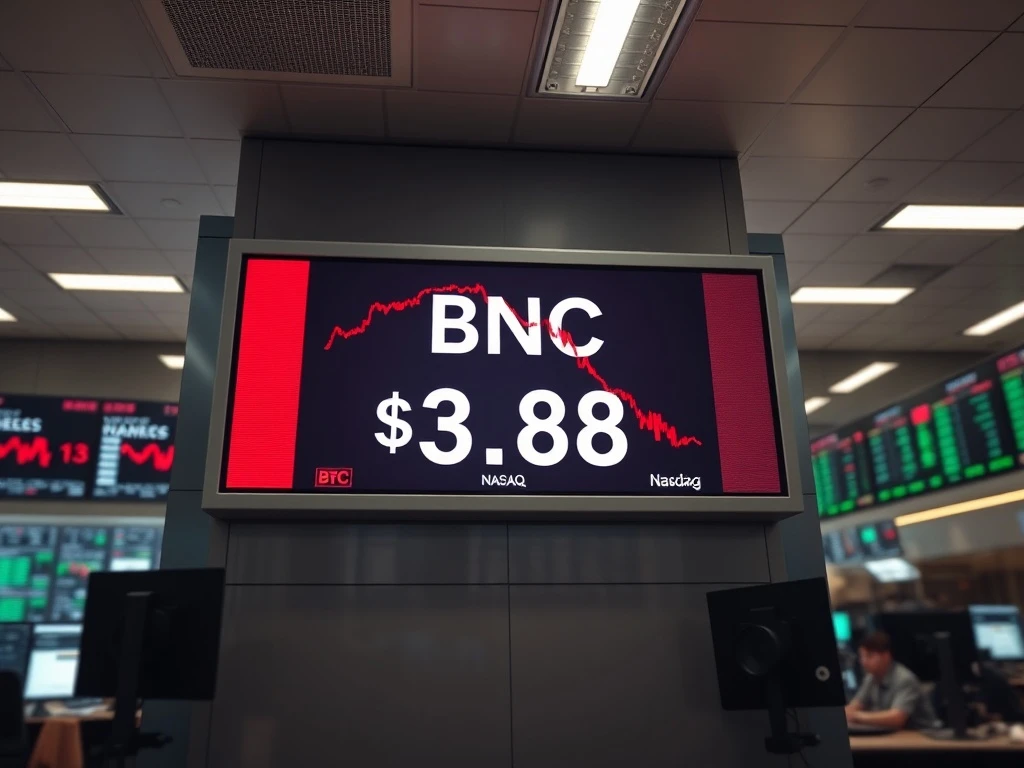
NEW YORK, March 15, 2026 — CEA Industries, the world’s largest dedicated BNB treasury company, has collapsed by 95% in market value this week. The Nasdaq-listed firm now demands immediate disclosure of a secret side agreement from YZi Labs, the blockchain development company founded by former Binance CEO Changpeng Zhao (CZ). Trading under ticker BNC, CEA’s shares plummeted to $3.88 from a 52-week high of $78.42, erasing nearly $4.2 billion in market capitalization. The company’s board alleges undisclosed contractual obligations between YZi Labs and CEA’s former management precipitated the catastrophic BNB treasury crash.
CEA Industries’ Catastrophic 95% Collapse
The collapse represents one of the most severe single-week declines for any Nasdaq-listed cryptocurrency entity. CEA Industries filed an emergency 8-K document with the Securities and Exchange Commission on Friday morning. Consequently, the filing reveals the company discovered previously undisclosed agreements during an internal audit. Specifically, these agreements allegedly granted YZi Labs extraordinary control over treasury management decisions. Meanwhile, CEA’s primary business model involved holding and managing large reserves of Binance Coin (BNB) for institutional clients. The company’s assets under management peaked at approximately 8.2 million BNB tokens last quarter, valued at over $3.1 billion at recent prices.
Also read: Crypto Clarity Act Gains Significant Backing as Armstrong Shifts Stance, Pressuring Congress
Internal sources confirm the audit began after unusual transaction patterns emerged in January. First, treasury rebalancing occurred without standard committee approval. Then, several large BNB transfers moved to wallets with unclear beneficiary identification. Finally, the audit committee discovered reference to a “Side Letter Agreement – YZi Labs” dated September 2024. This document apparently never received full board review. The agreement’s existence only surfaced when outgoing CFO Michael Chen referenced it during his exit interview last month.
Immediate Market Impact and Investor Fallout
The collapse has triggered widespread repercussions across cryptocurrency investment vehicles. Institutional investors face immediate liquidity challenges. Additionally, retail shareholders confront near-total portfolio losses. Three primary impacts dominate current market discussions.
Also read: XRP Price Prediction: Analyst Eyes $2 Target Before Potential Retest of Gaussian Channel Support
- Institutional Confidence Erosion: Major pension funds and endowments held approximately 42% of CEA’s outstanding shares. The California Public Employees’ Retirement System (CalPERS) reported a $180 million exposure. Similarly, the Yale University endowment confirmed a $65 million position now valued below $3 million.
- Cryptocurrency Treasury Sector Contagion: Competing treasury management firms experienced significant sell-offs. Digital Asset Treasury Solutions (DATS) fell 18% on Thursday. Meanwhile, Crypto Reserve Management (CRM) dropped 22% during the same session.
- BNB Market Pressure: The underlying Binance Coin faced selling pressure as market participants anticipated potential forced liquidations. BNB declined 7.3% against Bitcoin this week. However, it stabilized somewhat after Binance’s official treasury confirmed no direct exposure to CEA’s management contracts.
Expert Analysis and Regulatory Response
Dr. Eleanor Vance, Professor of Blockchain Governance at Stanford University, provided immediate commentary. “This situation reveals critical vulnerabilities in cryptocurrency treasury management,” Vance stated. “The separation between protocol development entities and independent treasury managers requires clearer contractual boundaries.” She referenced her 2025 study published in the Journal of Digital Finance, which examined governance risks in crypto-native corporations. Furthermore, the Securities and Exchange Commission has opened a preliminary inquiry. An SEC spokesperson confirmed receipt of CEA’s filings but declined to comment on ongoing investigations. Separately, Nasdaq officials have placed additional trading restrictions on BNC shares. They implemented a volatility halt five times during Thursday’s session.
Historical Context and Industry Comparison
The CEA collapse represents the most severe failure among dedicated cryptocurrency treasury managers. However, previous incidents established concerning precedents. The 2023 collapse of Terraform Labs involved different mechanisms but similar governance failures. Meanwhile, the 2024 bankruptcy of Three Arrows Capital demonstrated how leveraged treasury positions can unravel rapidly. The table below compares key metrics across major cryptocurrency financial failures.
| Entity | Year | Value Loss | Primary Cause |
|---|---|---|---|
| CEA Industries | 2026 | 95% | Undisclosed side agreements |
| Three Arrows Capital | 2024 | 100% | Leveraged position liquidation |
| Terraform Labs | 2023 | 99% | Algorithmic stablecoin failure |
| Celsius Network | 2022 | 100% | Yield model insolvency |
Notably, CEA’s situation differs because it involved a publicly listed entity with quarterly SEC filings. The company maintained investment-grade ratings from Morningstar Digital Assets until last month. Its collapse therefore raises questions about traditional financial oversight mechanisms applied to cryptocurrency enterprises. Specifically, audit procedures apparently failed to detect material contractual obligations.
Legal Proceedings and Next Steps
CEA’s board has retained the law firm Sullivan & Cromwell to pursue disclosure of the YZi Labs agreement. Legal experts anticipate several potential outcomes. First, YZi Labs may voluntarily disclose the document to avoid protracted litigation. Second, a court could order disclosure under securities law provisions regarding material contracts. Third, regulatory agencies might compel production as part of their investigations. The company’s special committee will meet Monday to consider strategic alternatives. These include potential asset sales, restructuring proposals, or even Chapter 11 bankruptcy protection. Shareholders have already filed three separate class-action lawsuits in New York Southern District Court. The complaints allege securities fraud, breach of fiduciary duty, and material misrepresentation.
Industry and Community Reactions
Crypto industry leaders expressed concern but emphasized this appears isolated. Binance’s new CEO, Richard Teng, issued a statement clarifying the exchange’s position. “Binance has no operational or financial ties to CEA Industries beyond normal exchange relationships,” Teng wrote. “We support transparent governance across the ecosystem.” Meanwhile, decentralized finance protocols reported increased usage of on-chain treasury management tools. MakerDAO’s governance forum shows renewed discussion about moving more reserves to blockchain-native custody solutions. Retail investor communities on Reddit and X experienced intense discussion. Many participants expressed frustration about traditional corporate structures in cryptocurrency. Others highlighted the importance of transparent, on-chain verifiable treasury management.
Conclusion
The BNB treasury crash at CEA Industries represents a watershed moment for cryptocurrency corporate governance. The 95% collapse highlights critical vulnerabilities when traditional financial structures intersect with digital asset management. Investors must now watch several developing aspects. First, legal proceedings regarding the secret YZi Labs agreement will establish important precedents. Second, regulatory responses may reshape oversight requirements for crypto treasury managers. Third, market confidence in similar business models requires careful monitoring. Ultimately, this event underscores the fundamental importance of transparency and contractual clarity. As cryptocurrency matures, such governance failures provide painful but necessary lessons for the entire industry.
Frequently Asked Questions
Q1: What exactly caused CEA Industries to lose 95% of its value?
The immediate trigger was discovery of undisclosed side agreements with YZi Labs, founded by former Binance CEO CZ. These agreements allegedly gave YZi Labs significant control over treasury management decisions without proper board oversight, causing investor panic and massive share selling.
Q2: How does this collapse affect ordinary Binance Coin (BNB) holders?
BNB experienced temporary selling pressure but stabilized after Binance clarified its treasury has no direct exposure. The collapse primarily impacts CEA shareholders and institutional clients, not general BNB holders, though it may affect confidence in corporate BNB treasury management models.
Q3: What legal actions are happening next in this case?
CEA has retained Sullivan & Cromwell to demand agreement disclosure, shareholders filed three class-action lawsuits, and the SEC opened a preliminary inquiry. Key next steps include potential court-ordered document production and the special committee’s Monday meeting to consider strategic alternatives.
Q4: Could this happen to other cryptocurrency treasury management companies?
While possible, most competitors have different governance structures. The unique aspect here was undisclosed contractual control by a third party. Investors should examine transparency levels, audit practices, and contractual disclosures when evaluating similar companies.
Q5: What broader implications does this have for cryptocurrency regulation?
This event likely accelerates regulatory scrutiny of crypto corporate governance, particularly regarding material contract disclosure and audit standards for digital asset managers. It may lead to new SEC guidelines for crypto-native public companies.
Q6: How should investors protect themselves from similar situations?
Investors should prioritize companies with transparent, on-chain verifiable treasury management, independent board oversight, regular third-party audits, and clear disclosure of all material contracts and partnerships involving asset control.

This article was produced with AI assistance and reviewed by our editorial team for accuracy and quality.