BlockDAG’s Genesis Price Vanishes, Leaving XRP and Polygon Predictions in Uncertain Limbo
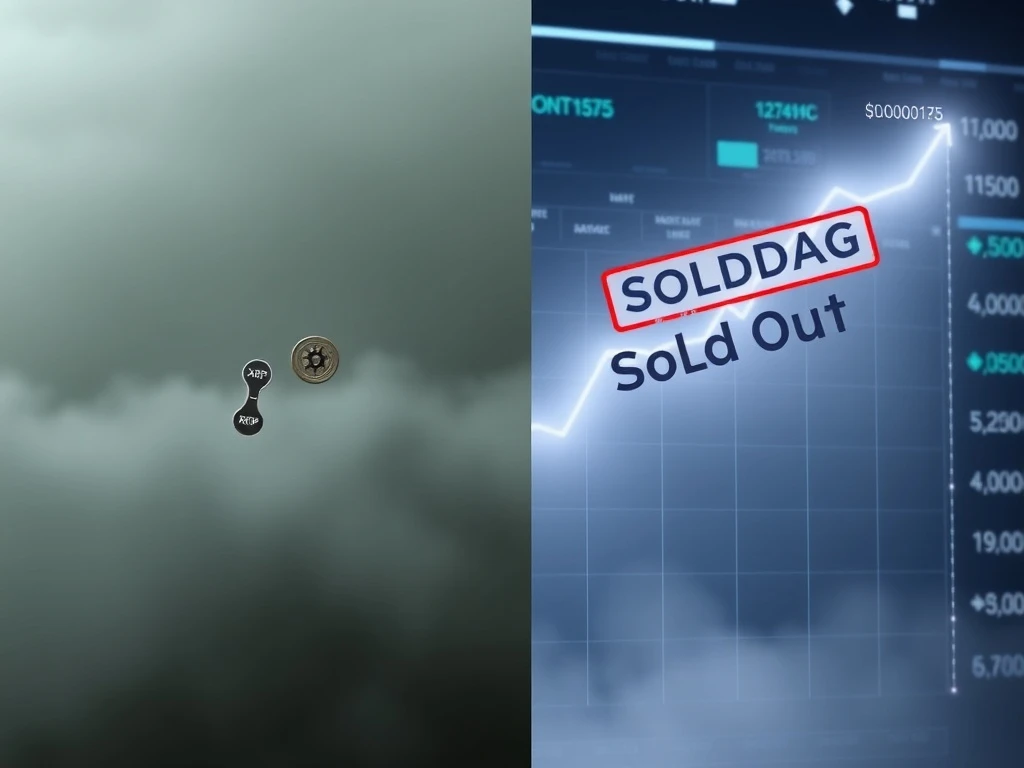
March 4, 2025 – The cryptocurrency market witnessed a decisive event today as BlockDAG’s foundational $0.000125 genesis price officially vanished, selling out completely. This rapid depletion starkly contrasts the current market sentiment surrounding established assets like XRP and Polygon (MATIC), whose long-term price trajectories for 2026 remain mired in uncertainty. Consequently, BlockDAG now dominates conversations among today’s top crypto gainers, highlighting a significant shift in investor focus from legacy projects to new, high-potential entrants.
BlockDAG’s Genesis Sell-Out: A Market Phenomenon
The complete sell-out of BlockDAG’s genesis offering at $0.000125 per coin represents a significant milestone in the 2025 crypto arena. Market analysts immediately recognized this event as a powerful signal of pent-up demand for innovative blockchain architectures. Unlike traditional blockchains, Directed Acyclic Graph (DAG) technology promises enhanced scalability and faster transaction speeds. This technological promise, combined with the accessible entry point, created a compelling value proposition for a broad spectrum of investors. The sell-out occurred against a backdrop of cautious trading in major cryptocurrencies, making its speed and finality particularly noteworthy. Data from the project’s dashboard showed a rapid acceleration of purchases in the 72 hours leading to March 4, culminating in the depletion of all genesis-phase coins. This event transitions BlockDAG from its initial offering phase into its next developmental and listing stages, setting a definitive baseline for its market entry.
Also read: Tokenization: The IMF's Ambitious 2026 Blueprint for Reshaping Global Finance
Understanding the DAG Architecture Advantage
BlockDAG’s underlying technology provides important context for its early demand. While traditional blockchains like Bitcoin and Ethereum process transactions in sequential blocks, a DAG structure allows for parallel processing. This fundamental difference addresses two chronic pain points in the crypto space: network congestion and high transaction fees. Experts from blockchain research firms, such as Messari, have published reports indicating that scalable Layer-1 solutions are a primary investment thesis for 2025. BlockDAG’s model positions it directly within this sought-after category. The genesis sell-out, therefore, is not merely a speculative frenzy but can be interpreted as a vote of confidence in a specific technological roadmap aimed at solving real-world usability issues.
XRP Price Prediction for 2026: Handling Legal and Market Headwinds
Conversely, formulating a reliable XRP price prediction for 2026 requires dealing with a complex web of unresolved factors. The asset continues to grapple with the long-tail effects of its legal confrontation with the U.S. Securities and Exchange Commission (SEC). Although Ripple secured a partial victory in 2023, the case’s implications on institutional adoption in the United States remain a overhang. Analysts at firms like CoinShares and JPMorgan have consistently noted that regulatory clarity is the single largest determinant for XRP’s medium-term price trajectory. Furthermore, the token’s utility is tightly coupled with RippleNet’s adoption by financial institutions for cross-border payments. While partnerships continue to be announced, the translation of these deals into substantial, sustained on-demand for the XRP token is difficult to quantify. The following table summarizes the key bullish and bearish factors influencing the 2026 outlook:
Also read: Drift Protocol Exploit Sparks Crisis Across 20 Solana Projects
| Bullish Factors for XRP | Bearish Factors for XRP |
|---|---|
| Growing RippleNet institutional adoption | Ongoing regulatory uncertainty in key markets |
| Potential for a full, favorable legal resolution | Competition from other payment-focused cryptocurrencies and CBDCs |
| High transaction speed and low cost vs. traditional systems | Market perception still tied to legal case outcomes |
This confluence of variables creates a wide band of potential outcomes, leaving the 2026 price prediction in a state of limbo. Most institutional forecasts refrain from offering a precise figure, instead highlighting the binary nature of the risks and opportunities.
Polygon Price Prediction Stalls Amid Ecosystem Evolution
Similarly, the Polygon price prediction has entered a phase of consolidation and reassessment. After a period of explosive growth driven by its role as a primary scaling solution for Ethereum, the network now faces a new competitive environment. The successful implementation of Ethereum’s own scaling upgrades, like Proto-Danksharding, poses a fundamental question about the long-term necessity of external Layer-2 chains. Polygon’s response has been a strategic pivot to building the Polygon 2.0 vision—an interconnected network of ZK-powered Layer 2 chains. While technologically ambitious, this transition creates short-term uncertainty. Developers and users must migrate to new chains, and the value accrual mechanisms for the native MATIC token (potentially to be upgraded to POL) within this new system are still being finalized. Key metrics analysts are watching include:
- Total Value Locked (TVL) migration from Polygon PoS to the new zkEVM chains.
- Developer activity and new project deployment on the updated network.
- Network revenue and how it translates to token utility and value.
Until these metrics demonstrate clear trends post-transition, price predictions for 2026 are inherently speculative. The stall reflects a market that is waiting for evidence that Polygon can maintain its competitive edge in a post-Ethereum-upgrade world.
The Impact of Broader Market Cycles
It is critical to frame the situations of XRP, Polygon, and BlockDAG within the broader cryptocurrency market cycle. Historical data from sources like CoinMetrics shows that altcoins often experience periods of stagnation or decline after major bullish cycles, as capital rotates and the market searches for the next narrative. The current interest in BlockDAG’s genesis sale fits a historical pattern where capital flows toward new, high-growth-potential entries during periods of uncertainty for established assets. This rotation does not necessarily invalidate the long-term thesis for XRP or Polygon but highlights the market’s constant search for efficiency and narrative-driven returns.
Conclusion: A Tale of Two Market Phases
The cryptocurrency arena on March 4, 2025, presented a clear dichotomy. BlockDAG’s vanished genesis price symbolizes the explosive entry of a new project capitalizing on demand for scalable technology, instantly propelling it among the top crypto gainers in discussion. Meanwhile, the XRP price prediction for 2026 and the stalling Polygon price prediction reflect the complex maturation phase of established projects, weighed down by regulatory and competitive evolution. This contrast underscores a dynamic market where innovation continuously challenges incumbency. For investors, the current environment emphasizes the importance of differentiating between short-term capital rotation events and long-term, fundamentals-driven value accrual. The journey of BlockDAG from genesis sell-out to a functioning network, alongside the resolution of the overhangs affecting XRP and Polygon, will provide the next chapters in this ongoing narrative.
FAQs
Q1: What does it mean that BlockDAG’s genesis price “vanished”?
The term “vanished” indicates that the entire initial coin offering (ICO) or genesis sale phase of BlockDAG, with coins priced at $0.000125, has completely sold out as of March 4, 2025. No more coins are available at that foundational price point.
Q2: Why is the XRP price prediction for 2026 so uncertain?
The primary uncertainty stems from lingering regulatory questions following the SEC lawsuit and the pace of real-world, large-scale adoption of RippleNet by financial institutions, which directly drives demand for the XRP token.
Q3: What is causing the stall in Polygon’s price prediction?
Polygon is undergoing a major technological transition to its “2.0” vision involving multiple ZK-rollup chains. This pivot creates short-term uncertainty regarding user migration, developer adoption, and the new economic model for its token, causing analysts to adopt a wait-and-see approach.
Q4: Is BlockDAG now considered a top crypto gainer?
While formal market listings and trading data will determine its official ranking, the intense demand and rapid sell-out of its genesis phase have positioned BlockDAG as a leading topic of discussion and a perceived top gainer in the presale and new project category.
Q5: How does BlockDAG’s technology differ from Bitcoin or Ethereum?
BlockDAG utilizes a Directed Acyclic Graph (DAG) structure, which allows for transactions to be processed in parallel rather than in sequential blocks. This design aims to provide greater scalability and faster transaction speeds compared to traditional linear blockchains.

This article was produced with AI assistance and reviewed by our editorial team for accuracy and quality.