Tokenized Water Projects: Ambitious $200M Blockchain Initiative Launches to Transform Southeast Asia’s Infrastructure
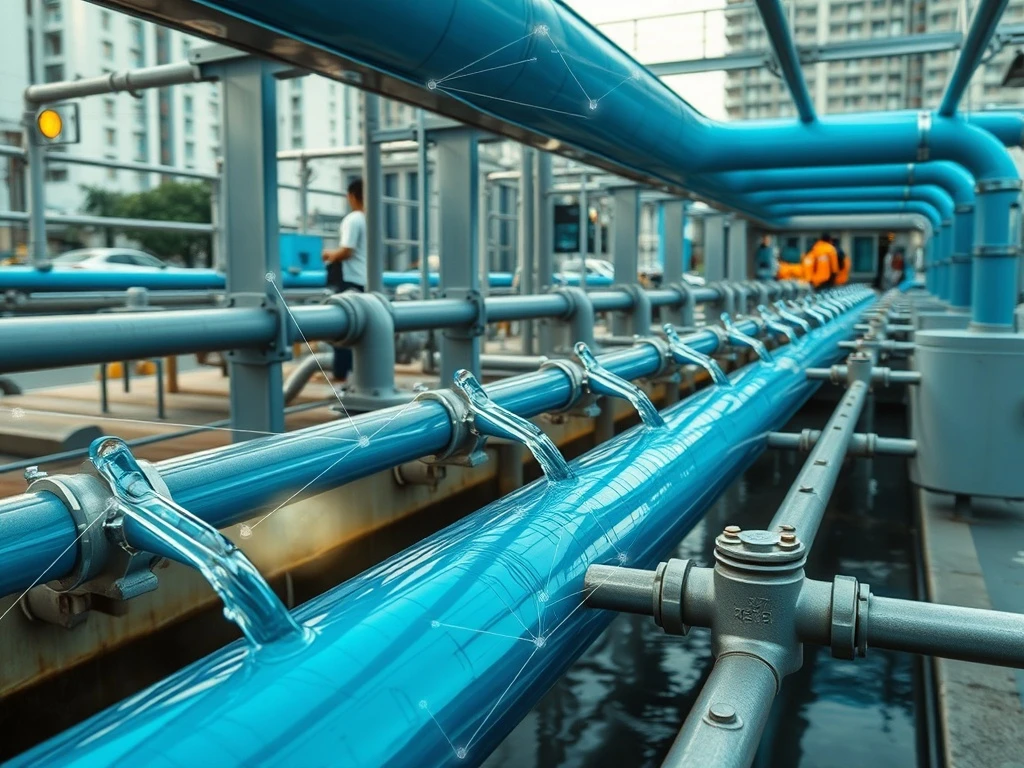
In a significant move blending finance, technology, and critical infrastructure, blockchain firm Global Settlement Network has unveiled a pioneering initiative to tokenize water treatment assets, targeting $200 million in value across Southeast Asia. Announced on Wednesday, the project begins with an initial pilot in Jakarta, Indonesia, aiming to demonstrate how blockchain-based tokenization can bridge the region’s vast water infrastructure financing gap. This development arrives as industry executives widely predict explosive growth for the tokenized real-world asset (RWA) market by 2026, particularly in emerging economies seeking innovative capital formation solutions.
Tokenized Water Projects Launch with Strategic Jakarta Pilot
Global Settlement Network’s strategy involves a phased, evidence-based rollout. The initial pilot will focus on eight government-contracted water treatment sites in Jakarta. Consequently, this first phase aims to raise up to $35 million. These funds are specifically allocated for facility upgrades and network expansion in the Indonesian capital. According to the firm’s statement, tokenizing these real-world assets involves creating digital tokens on a blockchain that represent ownership or investment rights in the physical infrastructure.
Also read: Bitcoin Mining Difficulty Plummets: Network Data Signals 14% Downward Adjustment
This process, known as real-world asset (RWA) tokenization, seeks to unlock several key benefits:
- Enhanced Investor Accessibility: By dividing large assets into digital tokens, the firm can attract a broader pool of smaller investors who were previously excluded from infrastructure financing.
- Improved Liquidity: Tokenized assets can potentially be traded on secondary markets, offering investors an exit strategy not typically available in traditional project finance.
- Transparent Settlement: The pilot will also test rupiah-stablecoin settlement rails in controlled corridors, potentially streamlining cross-border payments and reducing transaction friction.
Following the Jakarta proof-of-concept, the ambitious plan is to scale the model across Southeast Asia over the next 12 months, ultimately targeting $200 million in tokenized water assets. This expansion will likely involve working through diverse regulatory environments and adapting to different local infrastructure needs.
Also read: BlockDAG's Stunning 79,900% Surge Targets $1 as Litecoin and Dogecoin Struggle
The Critical Need for Water Infrastructure Financing
The drive for this innovative financing model stems from a stark reality. According to data cited by the involved firms, Southeast Asia faces a monumental water infrastructure financing gap. Specifically, the region requires over $4 trillion in long-term water investment by 2040 to meet growing demand and ensure sustainable access. Current spending levels are not on track to meet this target, creating a pressing need for alternative capital sources.
Mas Witjaksono, Chairman of the Indonesia-based Globalasia Infrastructure Fund, highlighted the strategic opportunity. He stated that the project offers significant growth potential because Indonesia, and the wider region, possess numerous major infrastructure developments and natural assets suitable for tokenization. This perspective underscores a broader trend where blockchain technology is being applied to solve tangible, large-scale economic challenges beyond speculative cryptocurrency trading.
Expert Predictions on the RWA Market Surge
The timing of this initiative aligns with bullish forecasts from the cryptocurrency sector. Many industry executives predict the tokenized RWA market will experience significant growth in 2026. They cite accelerating adoption in emerging economies, where traditional mechanisms for capital formation and attracting foreign investment often face hurdles. Currently, data from RWA.xyz estimates that over $21 billion in real-world assets is already on-chain, held by more than 629,528 individual holders. This existing base provides a foundation for the sector’s anticipated expansion.

This growth is not occurring in a vacuum. Southeast Asia has already established itself as a hotbed for cryptocurrency adoption and innovation. For instance, the Chainalysis Global Crypto Adoption Index, released in September, identified the APAC region—which includes Southeast Asia—as the fastest-growing region for on-chain crypto activity. The region saw a striking 69% year-over-year increase in value received. A subsequent Chainalysis report further noted Indonesia’s market dynamism, flagging it as the second-largest market for on-chain value in the 12 months leading to June 2025, with a 103% increase.
Handling Implementation and Future Scale
The successful implementation of tokenized water projects hinges on several critical factors. First, regulatory clarity and cooperation with government entities in Jakarta and other Southeast Asian nations will be paramount. The pilot’s involvement of government-contracted sites suggests a collaborative approach. Second, technological infrastructure, including secure blockchain networks and user-friendly digital wallets for investors, must be strong and accessible.
Furthermore, the project plans to test local currency stablecoin settlements. This step is vital for reducing foreign exchange volatility and integrating with local financial systems. The phased approach allows the consortium to validate the technology, economic model, and regulatory framework in a controlled environment before committing to a full regional rollout. If successful, this model could provide a blueprint for tokenizing other essential infrastructure assets, such as energy grids, transportation networks, and communication systems.
| Phase | Location Focus | Target Tokenized Value | Primary Objective |
|---|---|---|---|
| Pilot (Initial) | Jakarta, Indonesia | Up to $35 Million | Prove concept, upgrade 8 treatment sites |
| Expansion (Next 12 Months) | Southeast Asia Region | $200 Million | Scale model, address regional funding gap |
Conclusion
The launch of this $200 million initiative for tokenized water projects represents a concrete application of blockchain technology to address a fundamental human need. By starting with a targeted pilot in Jakarta, Global Settlement Network and its partners are taking a measured, evidence-based approach to modernizing infrastructure finance. The project’s potential success could catalyze further investment in Southeast Asia’s water systems while demonstrating the practical utility of real-world asset tokenization. As the RWA market prepares for predicted growth in 2026, this focus on essential, tangible assets like water treatment infrastructure provides a compelling narrative of technology serving clear societal and economic goals.
FAQs
Q1: What does “tokenizing” a water treatment plant mean?
Tokenization involves creating digital tokens on a blockchain that represent a financial interest in a physical asset. For a water plant, each token could represent a share of ownership, a debt obligation, or a right to future revenue, making investment in the infrastructure more accessible and liquid.
Q2: Why is Southeast Asia a focus for this kind of project?
Southeast Asia faces a massive, multi-trillion dollar shortfall in water infrastructure funding. Simultaneously, the region has high cryptocurrency adoption rates and populations comfortable with digital finance, creating a unique opportunity to pilot new funding models where traditional finance has fallen short.
Q3: How does tokenization help close the infrastructure funding gap?
It opens up investment to a global pool of digital asset investors, allows for fractional ownership of large projects, and can create secondary markets for these investments. This increases liquidity and can potentially lower the cost of capital for essential projects.
Q4: What are the main risks associated with tokenized real-world assets?
Key risks include regulatory uncertainty across different jurisdictions, the technological security of the blockchain platform, the legal enforceability of digital token ownership, and the underlying performance risk of the physical asset itself (e.g., the water plant).
Q5: What is a “rupiah-stablecoin settlement rail” mentioned in the pilot?
This refers to a digital payment system using a cryptocurrency (a stablecoin) whose value is pegged 1:1 to the Indonesian Rupiah. Testing this in “controlled corridors” means using it for specific, approved transactions within the pilot to see if it can make domestic and cross-border settlements faster and cheaper than traditional banking systems.

This article was produced with AI assistance and reviewed by our editorial team for accuracy and quality.