Uniswap ETF Filing: Bitwise’s Strategic Gambit Meets UNI’s Stubborn Price Reality
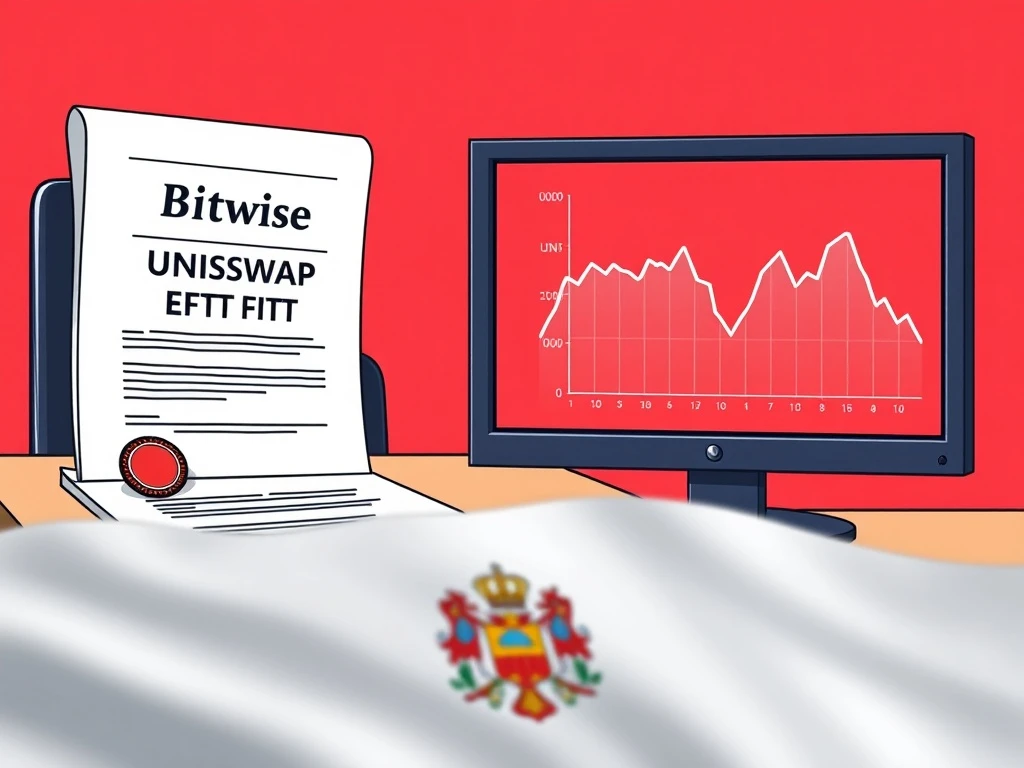
In a strategic move that captured the attention of the decentralized finance (DeFi) sector, asset manager Bitwise filed paperwork to establish a Bitwise Uniswap ETF Trust in Delaware on January 29, 2026. This preliminary step signals long-term institutional interest in providing traditional investors with regulated exposure to the world’s leading decentralized exchange protocol. However, a closer examination of the UNI token’s market performance reveals a starkly different narrative, one characterized by persistent weakness and a disconnect from positive fundamental developments. The filing represents a forward-looking bet on regulatory evolution rather than an imminent financial product launch.
Decoding the Bitwise Uniswap ETF Filing
Bitwise’s registration of a Delaware statutory trust is a common, yet significant, procedural first step in the complex journey toward a potential exchange-traded fund. Importantly, this action does not constitute a formal application with the U.S. Securities and Exchange Commission (SEC). Analysts widely interpret this move as a preparatory legal maneuver. It allows Bitwise to establish the necessary corporate structure in advance, positioning the firm to act swiftly should the regulatory environment for crypto-based ETFs, particularly those tied to DeFi protocols, become more favorable. The current SEC leadership and its stance on non-Bitcoin crypto assets remain a substantial hurdle. Consequently, there is no active review process or public timeline for a Uniswap ETF, framing Bitwise’s action as strategic positioning within a cautious, wait-and-see regulatory space.
Also read: American Bitcoin Holdings Surge to 7,000 BTC as Trump Family Doubles Down on Crypto Strategy
The Regulatory Hurdles for a DeFi ETF
The path to a spot Uniswap ETF is fraught with greater complexity than that of Bitcoin or even Ethereum ETFs. Regulators continue to grapple with fundamental questions regarding the classification and oversight of DeFi governance tokens like UNI. Key concerns include:
Token Classification: The SEC’s ongoing deliberation on whether UNI constitutes a security directly impacts the feasibility of an ETF.
Custody Solutions: Providing secure, compliant custody for a governance token, which is integral to a decentralized protocol’s operations, presents unique technical and regulatory challenges not faced with simple asset custody.
Market Surveillance: Ensuring the underlying UNI market is resistant to manipulation—a core requirement for ETF approval—is more complex in the globally fragmented and 24/7 DeFi trading environment. These factors collectively suggest that a Uniswap ETF, while a compelling concept, resides in a more distant regulatory future compared to its cryptocurrency predecessors.
Also read: Binance Oil and Gas Futures Launch with 100x Utilize: A High-Stakes Gamble for Traders
UNI’s Market Reaction: A Short-Lived Spark
The UNI token exhibited a immediate, positive price reaction to the Bitwise news, climbing approximately 3.83% to trade around $4.82 at the time of the announcement. This uptick, however, must be contextualized within broader and more concerning market trends. The rally was notably short-lived, failing to break a prevailing pattern of underperformance. Throughout January 2026, while Bitcoin and numerous alternative cryptocurrencies experienced significant rallies, UNI’s price action remained lethargic. This divergence highlights a growing market sentiment where investors are selectively allocating capital, often favoring perceived store-of-value assets or narratives with clearer short-term catalysts over certain DeFi governance tokens.
The mixed flows in the broader crypto ETF market further underscore this selective appetite. On the same day as UNI’s reaction:
Ethereum (ETH): Recorded substantial outflows of $63.53 million, indicating profit-taking or portfolio rebalancing.
Ripple (XRP) & Solana (SOL): Led inflows with $9.16 million and $1.87 million, respectively, showing targeted interest.
Chainlink (LINK): Saw minor inflows of $439,030.
This data paints a picture of a nuanced market where positive news for one asset does not translate into broad-based bullishness, and UNI’s gains appeared isolated.
The Persistent Weight on UNI’s Price Performance
Beyond the ETF news, UNI’s price has struggled to maintain momentum from its own ecosystem milestones, a point of concern for investors. Several major protocol developments failed to catalyze a sustained upward trend:
The UNIfication Proposal: A significant governance upgrade passed last month generated initial excitement, but its price impact faded quickly post-vote.
Token Burn Initiative: The permanent removal of 100 million UNI tokens from circulation, a typically bullish supply-side event, did not produce a lasting rally.
Fee Switch Activation & Frontend Fee Removal: Fundamental changes to the protocol’s revenue model and user experience also lacked a strong, sustained correlation with price appreciation. This repeated pattern suggests that the market is either discounting these improvements or is being overshadowed by macro factors and sector rotation. The token’s performance indicates a disconnect where strengthening fundamentals are not being reflected in investor valuation, potentially due to concerns over regulatory overhang, competitive pressures, or the utility value of the governance token itself.
Expert Analysis: Fundamentals vs. Market Sentiment
Market analysts point to a confluence of factors explaining this divergence. While Uniswap’s protocol dominance, governance activity, and technical upgrades are objectively strong, the market for governance tokens is maturing. Investors are increasingly discriminating, weighing factors like token utility, revenue distribution to holders, and regulatory risk. The SEC’s continued scrutiny of the crypto industry creates a headwind for all tokens with potential security characteristics. Furthermore, capital flows within the crypto sector have recently favored narratives like AI-integration and Bitcoin’s institutionalization, temporarily drawing attention and liquidity away from the DeFi sector. This creates a challenging environment for UNI, where positive news is absorbed quickly but fails to alter the longer-term price trend without a concomitant shift in broader market structure and sentiment.
Conclusion
The Bitwise Uniswap ETF filing is a noteworthy development that underscores the growing institutional interest in decentralised finance infrastructure. It represents a long-term strategic positioning for a future where regulatory clarity may permit such innovative products. However, the current reality for the UNI token is defined by a stubborn price trend that remains disconnected from both this strategic news and its own fundamental protocol progress. The market’s tepid response highlights the complex interplay between regulatory uncertainty, shifting sector narratives, and the evolving valuation models for DeFi assets. For now, the Uniswap ETF story is one of future potential, while the UNI price story remains firmly rooted in present-day market challenges and selective investor appetite.
FAQs
Q1: What does Bitwise’s Delaware filing for a Uniswap ETF actually mean?
It is a preliminary legal step to create a trust entity. This does not mean an ETF is launching soon. It prepares Bitwise to file a formal application with the SEC only if and when regulations become favorable.
Q2: Why didn’t UNI’s price surge more on the ETF news?
The filing is seen as a very early-stage procedural move, not a guarantee of a product. The market recognizes significant regulatory hurdles remain, and UNI has been underperforming the broader crypto market for weeks, indicating underlying selling pressure or disinterest.
Q3: What are the biggest challenges to getting a Uniswap ETF approved?
The SEC must first be comfortable that the UNI token is not a security. Regulators also need assurance of proper custody solutions and that the underlying UNI market is sufficiently sturdy and resistant to manipulation.
Q4: How did other crypto assets react to this news?
Reactions were mixed, showing selective capital flows. While UNI saw a brief uptick, Ethereum ETFs saw large outflows, and assets like XRP and SOL saw inflows, indicating the news did not drive a broad market trend.
Q5: Have other Uniswap improvements helped the UNI price?
Recently, major developments like the 100 million token burn, fee switch activation, and the UNIfication governance upgrade have failed to produce a sustained price rally, highlighting a disconnect between protocol progress and market valuation.

This article was produced with AI assistance and reviewed by our editorial team for accuracy and quality.