BitMart and HKUST Forge Transformative Partnership to Revolutionize Crypto Trading Research
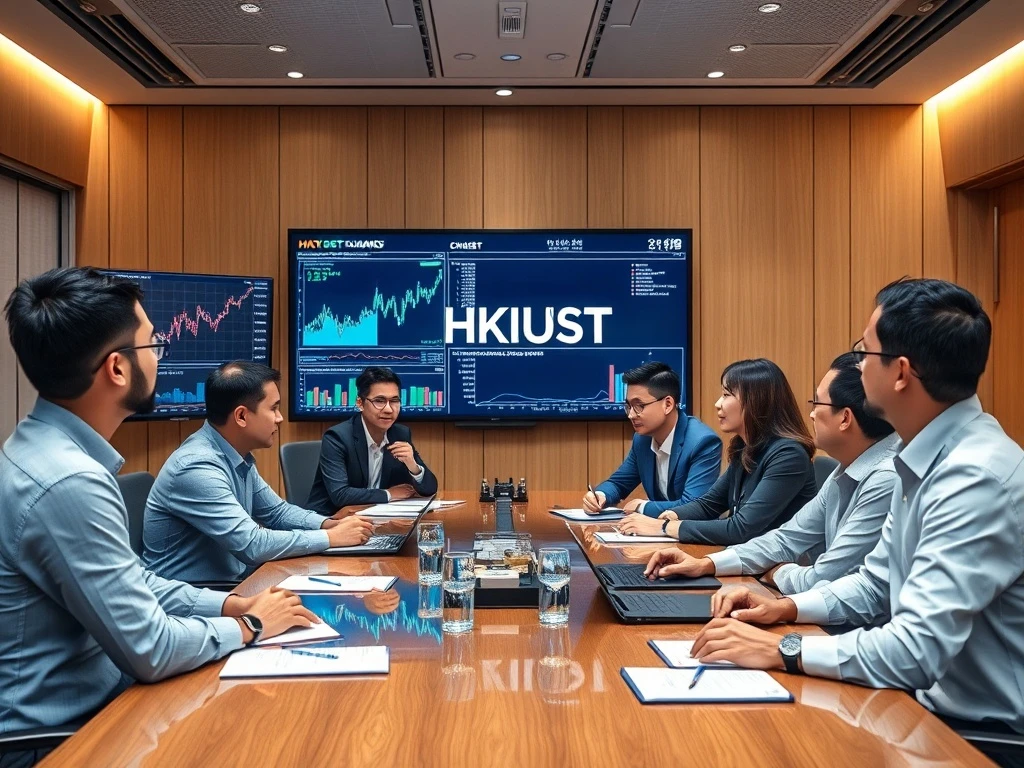
HONG KONG, March 2025 – In a groundbreaking move that bridges academic rigor with industry innovation, cryptocurrency exchange BitMart has announced a strategic partnership with the Hong Kong University of Science and Technology (HKUST) to modernize cryptocurrency trading research through the university’s prestigious MSc in Financial Mathematics program. This collaboration represents a significant step toward integrating traditional financial mathematics with emerging digital asset markets, potentially reshaping how future financial professionals approach cryptocurrency analysis and trading strategies.
BitMart and HKUST Partnership Details
The formal agreement establishes BitMart as the industry partner for HKUST’s MSc in Financial Mathematics Capstone project. Consequently, graduate students will gain direct access to real-world cryptocurrency market data and trading infrastructure. Furthermore, this partnership enables students to develop sophisticated mathematical models specifically for digital asset markets. The collaboration includes several key components that distinguish it from traditional academic-industry relationships.
First, BitMart will provide anonymized trading data spanning multiple market conditions. Second, HKUST faculty will supervise research projects applying advanced mathematical frameworks to cryptocurrency markets. Third, the program incorporates regular workshops featuring BitMart’s quantitative analysts and risk management specialists. Finally, successful projects may receive implementation consideration within BitMart’s trading systems, creating a direct pathway from academic research to practical application.
Context and Background of the Collaboration
This partnership emerges during a period of increasing institutional interest in cryptocurrency markets. According to recent financial industry reports, traditional financial institutions allocated approximately $15 billion to cryptocurrency research and development in 2024 alone. Meanwhile, academic programs worldwide have struggled to keep pace with the rapid evolution of digital asset markets. HKUST’s Financial Mathematics program, consistently ranked among Asia’s top quantitative finance programs, recognized this gap between academic curriculum and industry needs.
Dr. Michael Chen, Program Director of HKUST’s MSc in Financial Mathematics, explained the rationale behind the collaboration during a recent university announcement. “Traditional financial mathematics education has excelled in modeling conventional markets,” Chen stated. “However, cryptocurrency markets present unique challenges including 24/7 trading, different volatility patterns, and evolving regulatory frameworks. Our partnership with BitMart addresses these challenges directly by providing students with authentic data and industry mentorship.”
The Evolving Landscape of Cryptocurrency Education
Academic institutions globally have increasingly incorporated blockchain and cryptocurrency topics into their curricula over the past five years. A 2024 survey by the Global Cryptocurrency Education Initiative revealed that 68% of top-tier business schools now offer at least one cryptocurrency-related course. However, only 22% provide hands-on experience with real trading data and systems. The BitMart-HKUST partnership places both organizations at the forefront of this educational transformation.
The timing coincides with Hong Kong’s emergence as a regulated cryptocurrency hub in Asia. In 2023, Hong Kong implemented comprehensive cryptocurrency licensing frameworks that attracted numerous exchanges and blockchain companies. This regulatory clarity has encouraged traditional financial institutions and academic programs to engage more deeply with the cryptocurrency sector. The partnership leverages Hong Kong’s unique position as both a global financial center and a growing cryptocurrency innovation hub.
Impact on Financial Mathematics Education
The collaboration fundamentally enhances HKUST’s MSc in Financial Mathematics curriculum in several measurable ways. Students will now analyze real cryptocurrency market microstructure, develop algorithmic trading strategies for digital assets, and create risk management frameworks specifically designed for cryptocurrency portfolios. These practical skills complement the program’s existing strengths in stochastic calculus, numerical methods, and financial econometrics.
Professor Sarah Lim, who teaches Derivatives Pricing at HKUST, highlighted the educational benefits. “Cryptocurrency markets provide an excellent laboratory for testing financial mathematics concepts,” Lim noted. “Their continuous trading and global nature generate rich datasets for studying market efficiency, volatility modeling, and arbitrage opportunities. Through this partnership, our students can apply theoretical concepts to markets that behave differently from traditional equities or currencies.”
The table below illustrates how cryptocurrency markets differ from traditional financial markets, creating unique educational opportunities:
| Market Characteristic | Traditional Financial Markets | Cryptocurrency Markets |
|---|---|---|
| Trading Hours | Limited by exchange hours (typically 6.5-8 hours daily) | 24/7 continuous operation |
| Market Maturity | Established over decades with stable structures | Evolving rapidly with new participants and products |
| Regulatory Framework | Well-defined across jurisdictions | Varies significantly and continues to develop |
| Data Availability | Extensive historical data with standardized formats | Shorter history but more granular transaction-level data |
Industry Implications and Future Developments
Beyond educational benefits, this partnership signals broader industry trends. Cryptocurrency exchanges increasingly recognize the value of academic collaborations for several strategic reasons. First, such partnerships enhance credibility within traditional financial circles. Second, they provide access to cutting-edge research that can improve trading systems and risk management. Third, they help identify and recruit talented quantitative analysts familiar with both traditional finance and cryptocurrency markets.
BitMart’s Chief Technology Officer, David Wang, emphasized the mutual benefits during the partnership announcement. “The cryptocurrency industry needs more professionals who understand both advanced mathematics and market realities,” Wang stated. “By collaborating with HKUST, we contribute to developing this talent pool while gaining fresh perspectives on market analysis. Some of the most innovative trading strategies often emerge at the intersection of academic theory and practical application.”
The partnership follows similar initiatives by other cryptocurrency exchanges with academic institutions. For instance, Coinbase established research partnerships with Stanford University in 2022, while Binance collaborated with the University of Nicosia on blockchain education programs. However, the BitMart-HKUST collaboration represents one of the first focused specifically on financial mathematics rather than broader blockchain technology.
Research Focus Areas and Expected Outcomes
Initial research projects will concentrate on several priority areas identified by both BitMart and HKUST faculty. These include developing improved volatility models for major cryptocurrencies, creating market-making algorithms optimized for digital asset exchanges, and designing portfolio optimization frameworks that account for cryptocurrency-specific risks. Additionally, researchers will explore the application of machine learning techniques to cryptocurrency price prediction and anomaly detection.
The collaboration structure ensures practical relevance while maintaining academic rigor. Each Capstone project team includes at least one HKUST faculty advisor and one BitMart industry mentor. Teams must present interim findings to both academic and industry stakeholders throughout the research process. This dual feedback mechanism helps ensure that mathematical sophistication remains balanced with practical implementability.
Conclusion
The BitMart and HKUST partnership represents a significant advancement in cryptocurrency trading research and financial mathematics education. By combining HKUST’s academic excellence with BitMart’s industry expertise, this collaboration addresses the growing need for professionals who can navigate both traditional financial mathematics and emerging digital asset markets. Furthermore, the partnership exemplifies how academic institutions and cryptocurrency companies can collaborate productively within regulated frameworks. As cryptocurrency markets continue maturing and attracting institutional participation, such educational initiatives will likely become increasingly important for developing the next generation of financial professionals equipped to analyze and manage digital asset portfolios effectively.
FAQs
Q1: What specific benefits will HKUST students gain from this partnership?
HKUST students will access real cryptocurrency trading data, receive mentorship from BitMart professionals, and develop research projects with potential practical applications. This hands-on experience complements their theoretical financial mathematics education and enhances their employability in both traditional finance and cryptocurrency sectors.
Q2: How does this partnership differ from other university-cryptocurrency collaborations?
Unlike broader blockchain education initiatives, this partnership focuses specifically on financial mathematics and quantitative trading research. The collaboration integrates directly into HKUST’s existing MSc curriculum through the Capstone project, providing structured academic credit for industry-relevant research.
Q3: What research areas will the collaboration prioritize?
Initial research priorities include cryptocurrency volatility modeling, algorithmic trading strategies, market microstructure analysis, and portfolio optimization for digital assets. These areas address both academic interests in financial mathematics and industry needs for improved trading systems.
Q4: How will BitMart benefit from this academic partnership?
BitMart gains access to cutting-edge research, fresh perspectives on market analysis, and early identification of talented quantitative analysts. The collaboration also enhances BitMart’s credibility within traditional financial circles and supports Hong Kong’s development as a regulated cryptocurrency hub.
Q5: Does this partnership indicate growing institutional acceptance of cryptocurrencies?
Yes, the collaboration reflects increasing institutional engagement with cryptocurrency markets. Traditional academic institutions like HKUST are incorporating cryptocurrency topics into established programs, while regulated exchanges like BitMart are building bridges with traditional educational and financial institutions.