Bitcoin Support Levels Face Critical Test: $81K Holds Key to Avoiding $75K Plunge
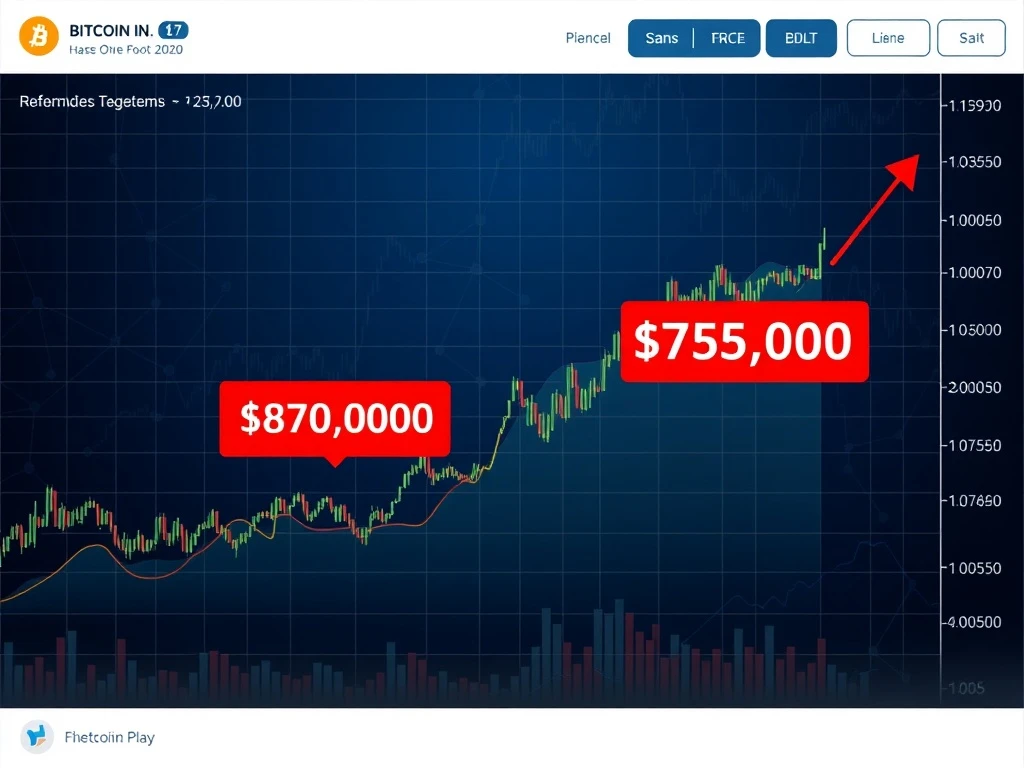
Bitcoin faces a significant technical test as the cryptocurrency trades below $82,000, with analysts identifying $81,000 as the next critical support level that could determine near-term market direction. According to recent analysis, a breach of this level might trigger a significant decline toward $75,000, marking a decisive moment for digital asset investors in July 2025.
Bitcoin Support Levels Under Microscope
Technical analysts currently focus on Bitcoin’s price action around the $81,000 threshold. This level represents November 2024’s low point, establishing it as a significant historical support zone. Market participants closely monitor this price area because previous support levels often transform into resistance during downtrends. Consequently, the $81,000 mark serves as a psychological barrier for traders and institutional investors alike.
Also read: Bitcoin Spot ETFs Shatter Positive Streak With $296 Million Outflow
Several factors contribute to the current market uncertainty. First, trading volume patterns show decreased activity near this support level. Second, derivative market data indicates changing open interest positions. Third, on-chain metrics reveal specific wallet movements around these price points. Market structure analysis suggests that a sustained break below $81,000 could accelerate selling pressure.
Technical Analysis Framework
Professional analysts employ multiple methodologies to assess Bitcoin’s price trajectory. The $75,000 support zone emerges from confluence across different analytical approaches. Fibonacci retracement levels from recent highs align with this area. Additionally, moving average convergence patterns suggest potential support clusters. Volume profile analysis identifies high-volume nodes near $75,000, indicating previous price acceptance.
Also read: Bitcoin Strategy Divide: GameStop's 4,710 BTC Hold Contrasts With Nation's Massive Sell-Off
Historical data reveals interesting patterns around similar support tests. During 2024’s market corrections, Bitcoin demonstrated resilience at key psychological levels. However, macroeconomic conditions differ significantly in 2025. The current analysis considers both technical factors and fundamental developments. Market sentiment indicators show cautious optimism despite potential downside risks.
Expert Technical Perspective
Seasoned analysts emphasize the importance of confirmation signals. A single daily close below $81,000 might not constitute a definitive break. Instead, they recommend monitoring weekly timeframes for clearer signals. Trading volume during potential breakdowns provides critical confirmation data. Furthermore, derivative market reactions offer additional validation points for any sustained move.
Historical precedent shows that Bitcoin often tests major support levels multiple times before decisive moves. The 2023-2024 cycle demonstrated this pattern clearly. Current market conditions suggest similar behavior might emerge. Analysts advise watching for decreasing volatility during consolidation periods. Such patterns often precede significant directional moves in either direction.
Macroeconomic Influences on Cryptocurrency
Beyond technical factors, fundamental developments significantly impact Bitcoin’s price action. The potential nomination of a new Federal Reserve Chair by President Donald Trump represents a major uncertainty. Monetary policy decisions directly influence risk asset valuations, including cryptocurrencies. Market participants particularly focus on interest rate trajectories and quantitative tightening policies.
Historical correlation patterns between Bitcoin and traditional markets have evolved. During 2024, cryptocurrency demonstrated increasing independence from equity markets. However, major monetary policy shifts typically affect all risk assets. The Federal Reserve’s balance sheet management remains particularly relevant. Additionally, dollar strength fluctuations continue influencing cryptocurrency valuations globally.
Volatility Expectations and Risk Management
Increased short-term volatility represents a consensus expectation among market observers. Several factors contribute to this outlook. First, regulatory developments continue evolving across major jurisdictions. Second, institutional adoption patterns show uneven progress. Third, technological advancements create both opportunities and uncertainties. Fourth, geopolitical developments increasingly influence digital asset markets.
Risk management strategies become key during volatile periods. Professional traders emphasize position sizing discipline. They also recommend diversified exposure across different timeframes. Furthermore, hedging strategies gain importance when support levels approach. Options market activity provides valuable signals about expected volatility ranges. These indicators help market participants deal with uncertain conditions.
Market Structure Evolution
The cryptocurrency market structure has matured significantly since 2024. Institutional participation continues growing steadily. Regulatory frameworks become clearer in major markets. Trading infrastructure improves across exchanges and platforms. These developments create a more sturdy market environment. However, they also introduce new complexities for price analysis.
Liquidity patterns show interesting changes during 2025. Depth of market measurements indicate improved conditions overall. Yet specific price levels sometimes experience temporary liquidity reductions. These patterns particularly affect support and resistance zones. Market makers adjust their strategies based on volatility expectations. Their activities significantly influence short-term price movements around key levels.
Comparative Analysis with Previous Cycles
Bitcoin’s current position invites comparison with historical patterns. The 2021-2022 cycle demonstrated similar support tests. However, fundamental differences exist in market maturity. Institutional involvement now exceeds previous cycles significantly. Regulatory clarity has improved in several jurisdictions. Technological infrastructure supports larger trading volumes efficiently.
| Time Period | Primary Support | Secondary Support | Breach Outcome |
|---|---|---|---|
| Q3 2023 | $25,000 | $20,000 | Held successfully |
| Q1 2024 | $38,000 | $32,000 | Temporary breach |
| Q3 2024 | $58,000 | $52,000 | Held successfully |
| Current (2025) | $81,000 | $75,000 | Under test |
This comparative analysis reveals evolving support level patterns. Each cycle demonstrates unique characteristics while maintaining certain consistent behaviors. The increasing absolute values reflect Bitcoin’s growing market capitalization. Percentage movements often show similar magnitudes across different cycles. These patterns help analysts develop probabilistic expectations for current market behavior.
On-Chain Metrics and Network Fundamentals
Beyond price analysis, fundamental network metrics provide essential context. Bitcoin’s hash rate continues achieving new records consistently. Network security strengthens with each difficulty adjustment. Active address metrics show healthy user adoption patterns. Furthermore, exchange balances indicate changing holder behavior trends.
Several key on-chain indicators merit particular attention:
- Realized Price Distribution: Shows where coins last moved
- MVRV Ratio: Indicates profit/loss conditions across holders
- Exchange Net Flow: Reveals accumulation/distribution patterns
- HODL Waves: Tracks coin aging and holder conviction
These metrics collectively paint a comprehensive picture of network health. They often provide early warning signals before price movements manifest. Current data suggests mixed signals across different indicators. Some metrics show strength while others indicate potential caution. This divergence creates interesting analytical challenges for market observers.
Institutional Perspective and Market Sentiment
Institutional investors approach current market conditions with measured perspectives. Their time horizons typically exceed retail traders significantly. Allocation strategies focus on portfolio construction principles. Risk-adjusted return calculations incorporate different probability scenarios. Furthermore, regulatory compliance requirements influence their decision-making processes.
Market sentiment indicators show interesting patterns during July 2025. Fear and greed measurements fluctuate within moderate ranges. Social media sentiment analysis reveals cautious optimism overall. Traditional media coverage maintains balanced reporting tones. These indicators suggest neither extreme bullishness nor bearishness dominates current sentiment.
Conclusion
Bitcoin faces a critical technical juncture as it approaches the $81,000 support level. Analysis suggests this price zone represents a significant test for market structure. A successful defense could establish a foundation for future advances. Conversely, a breach might trigger movement toward the $75,000 support area. Macroeconomic developments, particularly regarding Federal Reserve leadership, add complexity to the analysis. Market participants should monitor both technical and fundamental factors during this period. Bitcoin support levels remain critical indicators for understanding broader cryptocurrency market direction. The coming weeks will likely provide clearer signals about near-term price trajectories.
FAQs
Q1: What makes the $81,000 level particularly significant for Bitcoin?
The $81,000 level represents November 2024’s low point, establishing it as a major historical support zone where significant buying interest previously emerged.
Q2: How do analysts determine secondary support levels like $75,000?
Analysts use confluence across multiple methodologies including Fibonacci retracement levels, moving average clusters, and volume profile analysis to identify secondary support zones.
Q3: Why might Federal Reserve developments impact Bitcoin prices?
Monetary policy decisions influence risk asset valuations globally, affecting liquidity conditions, investor risk appetite, and dollar strength—all factors that correlate with cryptocurrency markets.
Q4: What confirmation signals do traders watch for support breaks?
Traders typically require sustained breaks below support on higher timeframes (daily/weekly), accompanied by increased volume and derivative market reactions for confirmation.
Q5: How have Bitcoin support levels evolved since 2023?
Support levels have increased significantly in absolute terms reflecting Bitcoin’s growing market capitalization, while percentage movements often show similar magnitudes across cycles.

This article was produced with AI assistance and reviewed by our editorial team for accuracy and quality.