Bitcoin Soars: BTC Shatters $96,000 Barrier in Stunning Market Rally
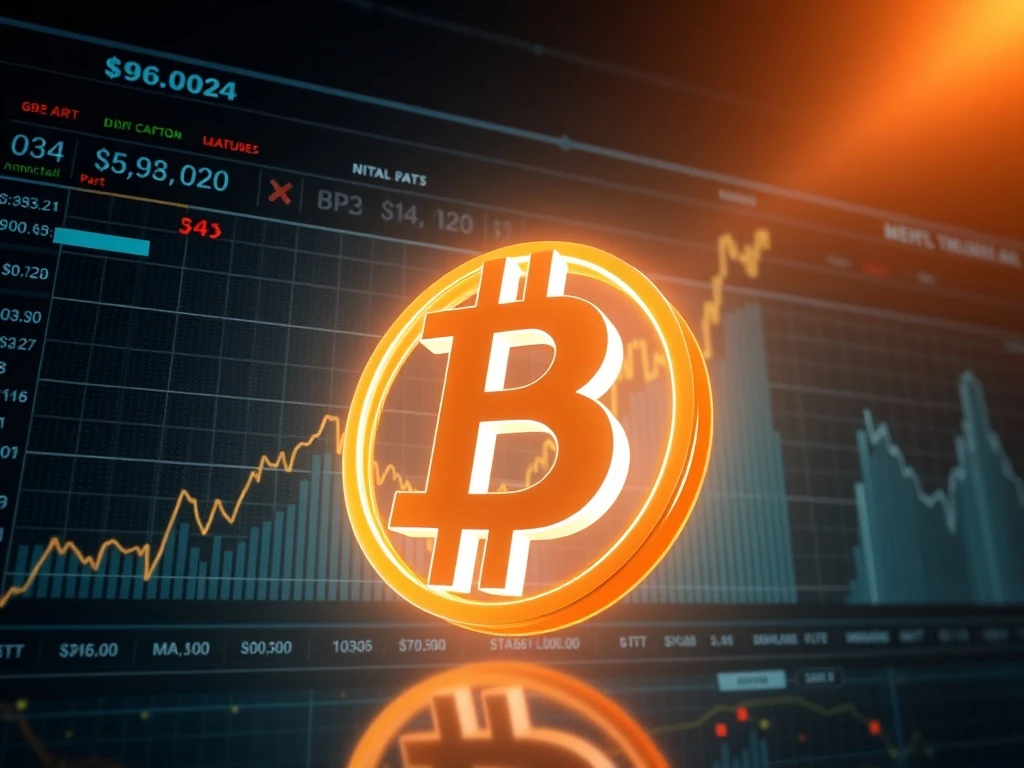
In a landmark moment for digital assets, Bitcoin (BTC) has decisively broken through the $96,000 threshold, trading at $96,020.22 on the Binance USDT market according to Crypto News Insights. This surge represents a significant psychological and technical milestone for the world’s premier cryptocurrency, capturing global investor attention and signaling potent market momentum as we advance through 2025.
Bitcoin Price Achieves a Historic $96,000 Valuation
The cryptocurrency market witnessed a powerful rally today. Consequently, Bitcoin’s price action dominated financial headlines. Market data confirms the asset traded firmly above $96,000. This price point marks a new cycle high, building on gains established over the preceding weeks. Furthermore, trading volume spiked significantly across major exchanges. Analysts immediately began scrutinizing the order books for sustainability clues. The move appears broad-based, not isolated to a single trading pair or platform.
Several key factors contributed to this upward trajectory. Firstly, institutional adoption continues at a measured pace. Major asset managers have integrated Bitcoin into diversified portfolios. Secondly, macroeconomic conditions remain favorable for non-correlated assets. Persistent inflation concerns in traditional markets often drive capital toward hard-capped digital stores of value. Finally, network fundamentals like hash rate and active addresses show robust health. These on-chain metrics provide a foundation for price appreciation.
Contextualizing the Current Bitcoin Rally
To understand this price level, historical context is essential. Bitcoin’s journey to $96,000 follows a predictable yet volatile market cycle. After the 2022 downturn, accumulation phases in 2023 and 2024 set the stage. The current rally mirrors aspects of previous bull markets, particularly the 2017 and 2021 cycles. However, the market structure is now profoundly different. Regulatory frameworks in major economies like the EU and the UK provide clearer guidelines. Meanwhile, the investor base has matured, incorporating more long-term holders.
Also read: Bitcoin Treasury Companies Face New Pressure as US-Iran Tensions Shift
The table below compares key metrics from previous cycle peaks to the current environment:
| Metric | 2017 Peak (~$20k) | 2021 Peak (~$69k) | Current (~$96k) |
|---|---|---|---|
| Market Cap Dominance | >65% | ~40% | ~52% |
| Institutional Holdings | Minimal | Growing | Substantial |
| Global Regulatory Clarity | Low | Emerging | Moderate-High |
| Primary Driver | Retail FOMO | Institutional & Corporate Adoption | Macro Hedge & Network Maturation |
Analyzing the Drivers Behind the Cryptocurrency Surge
Multiple converging forces propelled Bitcoin past this key level. Macroeconomic uncertainty remains a primary catalyst. Central banks globally grapple with balancing growth and inflation. Consequently, investors seek assets with predictable monetary policy. Bitcoin’s fixed supply of 21 million coins offers a stark contrast to fiat currencies. This feature becomes increasingly attractive during periods of fiscal expansion.
Technological and ecosystem developments also provide support. The Lightning Network facilitates faster, cheaper transactions. This improvement enhances Bitcoin’s utility as a medium of exchange. Additionally, layer-2 solutions and sidechains are expanding functionality. These innovations address historical criticisms about scalability. They enable new use cases without compromising the security of the base layer.
- Institutional Inflows: Spot Bitcoin ETFs and fund products report consistent weekly inflows.
- Network Security: The hash rate sits at an all-time high, making the network more secure than ever.
- Supply Dynamics: Over 70% of the total supply hasn’t moved in over a year, indicating strong holder conviction.
- Global Adoption: Several nations continue to explore Bitcoin as a reserve asset or legal tender.
Expert Perspectives on Market Sustainability
Market analysts offer measured perspectives on the rally’s longevity. Many cite the reduced leverage in the current system compared to 2021. Derivatives markets show less excessive bullish positioning. This scenario suggests a healthier, more organic price discovery process. Furthermore, the volatility around the $96,000 level has been relatively contained. This stability often indicates conviction among buyers rather than speculative frenzy.
Seasoned traders also point to technical analysis. The breakthrough followed a consolidation period below the previous all-time high. This pattern typically signifies accumulation before a continuation move. Key moving averages, like the 50-week and 200-day, now act as strong support levels below the current price. The overall chart structure, therefore, appears technically sound. However, experts universally caution that corrections are a normal part of any bull market. They advise investors to maintain a long-term perspective and sound risk management.
The Ripple Effect Across the Broader Crypto Market
Bitcoin’s performance invariably influences the entire digital asset ecosystem. As the benchmark cryptocurrency, its price action sets the tone. Altcoins often experience amplified volatility in the wake of major BTC moves. Today, major large-cap altcoins like Ethereum (ETH) and Solana (SOL) posted significant gains. However, their performance relative to Bitcoin, known as ‘altcoin season,’ remains a topic of debate. Market dominance metrics show capital rotation is occurring, but Bitcoin continues to lead.
The surge also impacts related financial sectors. Publicly traded companies holding Bitcoin on their balance sheets see share price increases. Mining companies benefit from higher revenue potential per hash. Meanwhile, financial service providers offering crypto products report heightened user engagement. This interconnectedness demonstrates Bitcoin’s growing integration into the global financial fabric. The asset is no longer a niche curiosity but a systemically relevant financial instrument.
Conclusion
Bitcoin’s ascent above $96,000 marks a pivotal chapter in its evolution from digital experiment to mature financial asset. This price achievement reflects a complex interplay of macroeconomic forces, technological progress, and deepening institutional adoption. While short-term volatility is ever-present, the underlying trends supporting Bitcoin’s value proposition appear robust. The market now watches to see if this level consolidates as a new support zone, paving the way for the next phase of the cycle. As always, informed participation, grounded in an understanding of both the opportunities and risks, remains paramount for anyone engaging with the dynamic cryptocurrency market.
FAQs
Q1: What does Bitcoin trading above $96,000 mean for the average investor?
It signifies strong market confidence and maturation, but investors should always conduct personal research, understand volatility, and never invest more than they can afford to lose. Diversification remains a core principle.
Q2: How does the current rally compare to Bitcoin’s previous all-time high in 2021?
The current environment features greater institutional participation, improved regulatory clarity, and stronger network fundamentals. However, the core driver of scarcity (the 21 million coin cap) remains unchanged.
Q3: What are the main risks associated with Bitcoin at this price level?
Primary risks include heightened volatility, potential regulatory shifts in key markets, technological vulnerabilities (though rare), macroeconomic changes that affect risk appetite, and the inherent novelty of the asset class.
Q4: Can Bitcoin’s price go higher from here?
While past performance doesn’t guarantee future results, many analysts base long-term forecasts on adoption curves and stock-to-flow models. However, price predictions are highly speculative and the market is unpredictable.
Q5: How does Bitcoin’s performance affect other cryptocurrencies?
Bitcoin often sets the overall market sentiment. A strong BTC typically creates a ‘rising tide’ effect, boosting capital inflow into the crypto sector. However, individual altcoin projects rise and fall based on their own utility and development progress.

This article was produced with AI assistance and reviewed by our editorial team for accuracy and quality.