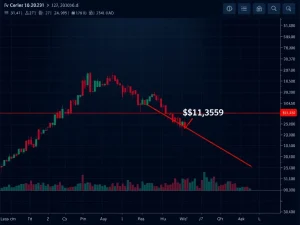
Bitcoin Captures Global Attention as Search Volume Soars During Historic Bear Market

Global interest in Bitcoin has surged dramatically in recent weeks, according to search trend data from multiple analytics platforms. This renewed attention coincides with a prolonged and severe downturn in the cryptocurrency’s market value. A recent analysis from blockchain analytics firm CryptoQuant posits that the current Bitcoin bear market ranks among the most challenging in the asset’s history. The juxtaposition of heightened public curiosity with deep market pessimism presents a complex narrative for the world’s premier digital currency as of March 2025.
Bitcoin Search Trends Defy Market Sentiment
Data from Google Trends and other social listening tools reveals a significant uptick in queries related to “Bitcoin” and associated terms. This surge occurs despite the cryptocurrency trading well below its all-time high. Typically, search volume for speculative assets correlates strongly with price action. However, the current divergence suggests a more nuanced public engagement. Several factors may drive this curiosity:
- Macroeconomic Uncertainty: Investors are searching for alternative stores of value amid global inflation concerns.
- Regulatory Developments: New legislation in major economies prompts searches for implications.
- Institutional Activity: News of corporate or sovereign investment moves sparks public interest.
- Technological Milestones: Events like the Bitcoin halving create sustained educational searches.
This search behavior indicates that Bitcoin retains a powerful position in the public consciousness. Its narrative extends beyond mere price speculation to encompass broader financial and technological themes.
Analyzing the Severity of the Current Bitcoin Bear Market
In a detailed report, a CryptoQuant researcher provided a data-intensive examination of the ongoing market phase. The analysis compares key on-chain and market metrics against previous cycles. The researcher’s conclusion that this period is “among the worst ever” stems from several converging factors. These factors create a uniquely challenging environment for Bitcoin holders and the broader crypto ecosystem.
Firstly, the peak-to-trough drawdown in price has been both deep and prolonged. Secondly, on-chain data reveals specific patterns of investor behavior. For instance, the percentage of Bitcoin supply held at a loss reached historically significant levels. Furthermore, network activity metrics, while resilient, have shown stress. The table below contrasts key metrics from previous major bear markets with current data (illustrative values):
| Bear Market Period | Max Drawdown | Duration (Days) | Supply in Profit (%) Low |
|---|---|---|---|
| 2014-2015 | ~86% | ~410 | ~40% |
| 2018-2019 | ~84% | ~364 | ~41% |
| 2022-2023 | ~77% | ~376 | ~45% |
| Current Cycle | ~78%+ | Ongoing | ~42% |
Consequently, the combination of these metrics supports the researcher’s stark assessment. The market has tested the resolve of long-term holders extensively.
The Role of On-Chain Analytics in Market Assessment
CryptoQuant’s research methodology relies heavily on on-chain analytics. This approach examines the foundational data of the Bitcoin blockchain. It tracks the movement of coins between wallets, exchange inflows and outflows, and holder composition. This data provides a transparent, albeit complex, view of investor sentiment and potential future selling pressure. For example, a high volume of coins moving to exchanges often precedes selling. Conversely, accumulation in cold storage suggests long-term confidence. The current cycle has featured elevated exchange inflows during capitulation events, a hallmark of severe bear markets.
Contextualizing the Cycle Within Bitcoin’s History
Bitcoin has experienced multiple boom-and-bust cycles since its inception. Each bear market has had unique catalysts but shared common psychological phases. The 2011 crash followed early hype and the Mt. Gox exchange’s first major security breach. The 2014-2015 downturn was driven by the collapse of the same Mt. Gox exchange. The 2018 bear market arrived after the initial coin offering (ICO) bubble burst. The 2022 decline correlated strongly with macroeconomic tightening and the failure of several centralized crypto entities.
The present cycle inherits complexities from its predecessors while introducing new challenges. Global regulatory frameworks are simultaneously crystallizing and fragmenting. The traditional financial system’s integration with crypto, through ETFs and banking services, creates new channels for contagion. Therefore, analyzing this bear market requires a multi-dimensional lens that considers past patterns and novel systemic interactions.
Potential Implications of Rising Searches Amid a Downturn
The surge in online searches for Bitcoin during a harsh bear market carries several potential implications. Historically, periods of low price but high fundamental development and interest have laid the groundwork for subsequent bull markets. This phenomenon is sometimes called “building in a bear market.” Developers often focus on core protocol improvements when speculative frenzy subsides. Additionally, sustained search interest indicates that the asset class is not fading into obscurity. It remains a topic of research, debate, and potential investment for a global audience.
For regulators and policymakers, this sustained interest underscores the persistent demand for clear digital asset guidelines. For investors, it highlights the importance of separating short-term price action from long-term technological and adoption trends. The data suggests the market is in a phase of consolidation and education, rather than abandonment.
Conclusion
The current moment for Bitcoin presents a striking dichotomy. On one hand, quantitative analysis from firms like CryptoQuant describes a historically severe Bitcoin bear market characterized by deep losses and investor stress. On the other hand, qualitative data from search engines reveals undiminished, and even growing, global public interest. This contrast defines the complex maturation of the cryptocurrency market. It moves from a phase dominated purely by speculation to one where foundational understanding and strategic positioning during downturns gain importance. The path forward will likely be shaped by both the harsh realities of on-chain metrics and the persistent curiosity reflected in millions of online searches.
FAQs
Q1: What does a “bear market” mean for Bitcoin?
A bear market refers to a prolonged period of declining prices, typically a drop of 20% or more from recent highs, accompanied by widespread pessimism. For Bitcoin, this often involves significant drawdowns from its cycle peak, lasting several months to over a year.
Q2: Why are Bitcoin searches increasing if the price is down?
Search interest can be driven by factors beyond immediate buying pressure. These include educational curiosity during low prices, news about regulation or institutional adoption, macroeconomic hedging discussions, and monitoring of technological developments like upgrades or halvings.
Q3: What is on-chain data, and why is it important?
On-chain data refers to the transparent, public information recorded on a blockchain. It includes transaction volumes, wallet activity, exchange flows, and holding patterns. Analysts use this data to gauge network health, investor sentiment, and potential market movements, providing a foundational view beyond just price charts.
Q4: How does the current Bitcoin bear market compare to 2018?
While both were severe, the current cycle involves a more integrated traditional finance sector (via ETFs), a more complex global regulatory landscape, and recovery from major centralized entity failures in 2022. The drawdowns are comparable, but the market structure and external pressures have evolved.
Q5: Can high search volume predict a market recovery?
Not directly. While sustained or rising interest is a necessary condition for broader adoption and can indicate accumulating long-term belief, it is not a reliable short-term timing indicator. Market recoveries depend on a confluence of factors including macroeconomic conditions, liquidity, regulatory clarity, and shifts in on-chain holder behavior.