Bitcoin Rebound Sparks Concern as Analysts Reveal Alarming Demand Weakness and Downside Risks
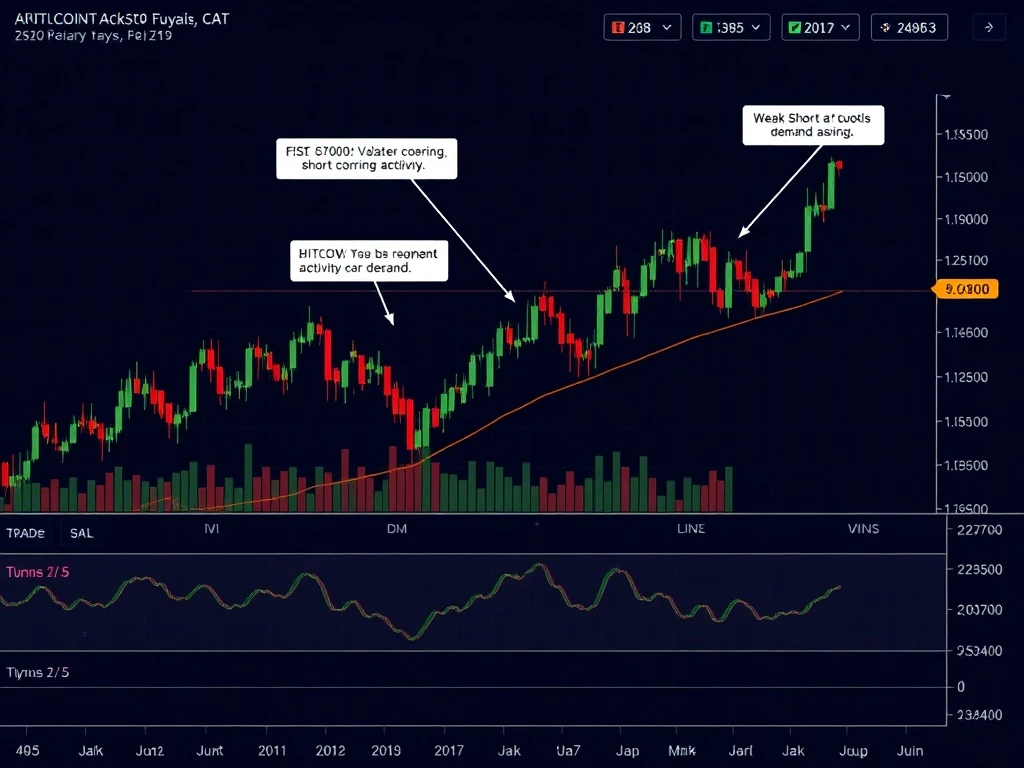
Global cryptocurrency markets witnessed a cautious Bitcoin recovery this week, but analysts immediately flagged concerning signals about weak underlying demand and significant downside risks. The digital asset’s recent price movement, while appearing positive on surface charts, reveals troubling patterns that experienced traders recognize as potential warning signs for future volatility.
Bitcoin Price Analysis Reveals Short-Covering Dynamics
Market data from major exchanges shows Bitcoin’s recent bounce primarily resulted from short covering rather than organic buying pressure. When traders who bet against Bitcoin’s price close their positions, they must purchase Bitcoin to cover their shorts. This activity creates artificial upward momentum that often lacks sustainability. Consequently, market analysts remain skeptical about the longevity of this recovery phase.
Technical indicators across multiple timeframes confirm the short-covering narrative. The funding rates on perpetual swap markets turned positive only briefly during the rebound. Additionally, open interest patterns demonstrate that traders quickly reduced their bearish positions rather than establishing new bullish ones. These patterns suggest professional traders view the rebound as a temporary relief rally within a broader corrective phase.
Cryptocurrency Market Trends Show Demand Deficiency
Multiple data points reveal concerning demand weakness across Bitcoin markets. Exchange inflows and outflows, monitored through blockchain analytics, show institutional accumulation remains subdued. Meanwhile, retail interest metrics, including search volume and social media engagement, continue trending below recent peaks. This demand deficiency creates vulnerability for Bitcoin’s price structure.
The following table illustrates key demand indicators from the past week:
| Indicator | Current Status | Trend Direction | Market Implication |
|---|---|---|---|
| Exchange Net Flow | Negative (-2,400 BTC) | Improving | Reduced selling pressure |
| Active Addresses | 850,000 daily | Declining | Reduced network activity |
| Futures Volume | $28 billion daily | Flat | Neutral sentiment |
| Options Put/Call Ratio | 0.68 | Increasing | Growing hedging activity |
Market commentators note several concerning developments. First, Bitcoin’s dominance ratio continues fluctuating within a narrow range. Second, altcoins generally underperform during Bitcoin’s recovery phases. Third, trading volumes remain below average across major exchanges. These factors collectively suggest the broader cryptocurrency market lacks conviction about sustained upward movement.
Expert Analysis of Market Structure Vulnerabilities
Seasoned analysts identify specific vulnerabilities in Bitcoin’s current market structure. The concentration of Bitcoin holdings among large addresses, often called whales, creates potential liquidity issues. When these entities decide to sell, their transactions can significantly impact market prices due to limited buy-side depth. Recent on-chain data shows whale accumulation has slowed considerably during this recovery period.
Furthermore, macroeconomic factors continue influencing cryptocurrency markets. Central bank policies, inflation expectations, and traditional market correlations all affect Bitcoin’s price action. Currently, traditional financial markets exhibit their own volatility, which frequently spills over into digital asset markets. This interconnectedness means Bitcoin cannot decouple from broader financial conditions despite its proponents’ arguments.
Crypto Market Volatility Patterns and Historical Context
Bitcoin’s current volatility patterns resemble previous market cycles where weak rebounds preceded further declines. Historical data from 2018 and 2022 shows similar characteristics when bear market rallies lacked fundamental support. During those periods, price recoveries driven primarily by short covering typically retraced their gains within weeks as underlying weakness reasserted itself.
Several technical levels warrant close monitoring:
- Immediate resistance at the 50-day moving average
- Key support around the recent swing low
- Volume profile showing low activity at current levels
- Momentum indicators displaying divergence from price action
Market participants should note that volatility typically expands after periods of compression. The current low-volatility environment, measured by the Bitcoin volatility index, suggests significant price movement may develop soon. Direction remains uncertain, but the balance of evidence currently favors downside resolution given the demand weakness analysts emphasize.
Institutional Perspective on Bitcoin’s Technical Setup
Institutional analysts highlight concerning technical developments. The weekly chart shows Bitcoin struggling to maintain above crucial moving averages. Meanwhile, the monthly chart reveals weakening momentum as measured by traditional technical indicators. These patterns suggest the current recovery lacks the characteristics of sustainable bullish reversals observed in previous cycles.
Options market data provides additional insights. The skew in options pricing shows greater demand for downside protection than upside exposure. This hedging activity indicates sophisticated market participants remain cautious despite the recent price rebound. The term structure of volatility further confirms this defensive positioning across different expiration dates.
Bitcoin Technical Analysis and Forward Projections
Technical analysts employ multiple methodologies to assess Bitcoin’s forward path. Fibonacci retracement levels from recent swings identify potential support and resistance zones. Elliott Wave practitioners debate whether the current pattern represents a corrective wave within a larger downtrend. Meanwhile, market profile analysis reveals poor structure development during the recent rebound.
The most concerning technical aspect involves volume confirmation. Sustainable advances typically occur on increasing volume, but Bitcoin’s recent recovery developed on below-average trading activity. This volume-price divergence often precedes trend reversals. Additionally, multiple timeframes show weakening momentum as measured by the Relative Strength Index and MACD indicators.
Seasoned chart analysts identify several critical levels:
- Breakdown confirmation below recent lows
- Recovery validation above the 200-day moving average
- Volume expansion needed for trend continuation
- Time-based analysis of correction duration
Market structure analysis reveals additional concerns. The distribution of Bitcoin across different wallet sizes shows concentration among larger holders. This concentration creates potential selling pressure if these entities decide to reduce exposure. Meanwhile, the velocity of Bitcoin transactions remains below historical averages, suggesting reduced economic activity on the network.
Conclusion
Bitcoin’s recent price rebound raises legitimate concerns among market analysts who identify weak demand and significant downside risks. The recovery appears driven primarily by short covering rather than organic buying interest, creating vulnerability for future price declines. Multiple data points, including exchange flows, network activity, and derivatives positioning, suggest cautious market sentiment despite the upward price movement. Investors should monitor key technical levels and demand indicators closely as Bitcoin navigates this uncertain phase. The cryptocurrency’s ability to attract sustained buying interest will ultimately determine whether the current rebound represents a genuine trend reversal or merely a temporary relief rally within a broader corrective phase.
FAQs
Q1: What is short covering and how does it affect Bitcoin’s price?
Short covering occurs when traders who previously sold Bitcoin (expecting price declines) buy back their positions. This buying activity creates upward price pressure but doesn’t necessarily indicate genuine demand or bullish sentiment.
Q2: How can investors identify weak demand in cryptocurrency markets?
Investors monitor several indicators including exchange net flows, active addresses, trading volumes, and derivatives data. Consistently low readings across these metrics suggest weak underlying demand despite price movements.
Q3: What technical levels are analysts watching for Bitcoin?
Key levels include the 50-day and 200-day moving averages, recent swing highs and lows, and volume profile points of control. Breaks above or below these levels provide important information about market direction.
Q4: How does Bitcoin’s current situation compare to previous market cycles?
Current patterns resemble previous bear market rallies where short-covering rebounds lacked fundamental support. Historical analogs suggest such recoveries often retrace their gains when underlying weakness reasserts itself.
Q5: What should cryptocurrency investors monitor in coming weeks?
Investors should watch for increasing trading volumes, improving network metrics, changing derivatives positioning, and Bitcoin’s ability to hold above key support levels during market stress.