Bitcoin’s Critical Standstill: Glassnode Reveals Prolonged Sideways Movement Trapping BTC in $81K-$98K Range
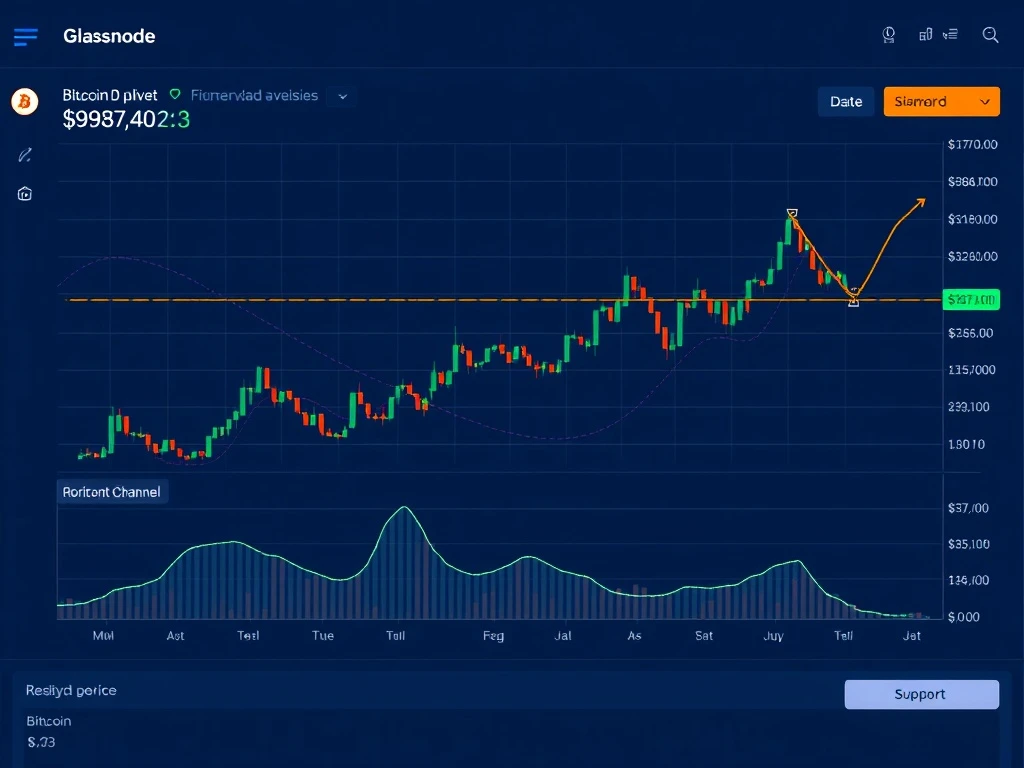
Bitcoin faces a critical market phase as leading on-chain analytics firm Glassnode reveals the cryptocurrency may experience prolonged sideways movement, trapped between $81,100 and $98,400 resistance levels that could define market dynamics through 2025. This analysis comes amid evolving regulatory landscapes and institutional adoption patterns that continue to shape cryptocurrency valuation frameworks globally. Market participants now scrutinize whether Bitcoin can maintain its store-of-value narrative while navigating these technical constraints.
Bitcoin’s Technical Range Analysis and Market Implications
Glassnode’s comprehensive report identifies specific price boundaries that currently contain Bitcoin’s movement. The firm’s analysts utilize sophisticated on-chain metrics to determine that $98,400 represents a critical resistance level corresponding to the short-term holder cost basis. Meanwhile, $81,100 establishes the lower boundary of this trading range. This technical configuration suggests market equilibrium between buyers and sellers, creating conditions for extended consolidation.
Historical data reveals similar consolidation periods typically precede significant market movements. For instance, Bitcoin experienced comparable sideways action between November 2020 and January 2021 before its subsequent rally to all-time highs. The current range-bound behavior reflects balanced market forces rather than directional uncertainty. Glassnode’s analysis incorporates multiple data points including exchange flows, holder distribution patterns, and realized price metrics to validate these technical observations.
Resistance Dynamics and Supply Zone Analysis
The $100,000 psychological barrier represents more than just a round number resistance. Glassnode identifies this level as a significant supply zone where previous investors may consider taking profits. This concentration of potential selling pressure creates a formidable barrier for upward price movement. Even if Bitcoin manages to breach the $98,400 short-term holder cost basis, the $100,000 region presents additional challenges that could limit immediate upside potential.
Expert Perspective on Market Structure
Market analysts emphasize that resistance levels function as collective psychological barriers where market participants make coordinated decisions. The $100,000 threshold represents both a technical and psychological milestone that may trigger profit-taking behavior among various investor cohorts. Glassnode’s research methodology examines wallet age distributions, transaction volume patterns, and accumulation trends to validate these resistance dynamics with empirical data rather than speculation.
Comparative analysis with previous market cycles reveals important patterns. During the 2017 bull market, Bitcoin faced similar consolidation around the $10,000 level before its eventual breakthrough. The current market structure shows parallels in terms of investor behavior and technical configuration. Glassnode’s data indicates that long-term holders continue to maintain positions while short-term traders exhibit more responsive behavior to price fluctuations near resistance levels.
Demand Momentum Requirements for Breakout
Glassnode’s conclusion emphasizes that meaningful price appreciation requires distinct recovery in demand momentum. The firm measures demand through multiple indicators including new address creation, transaction volume growth, and institutional inflow patterns. Current metrics suggest insufficient demand acceleration to support sustained breakout movement. This analysis aligns with broader market observations regarding capital rotation and investor allocation decisions across cryptocurrency assets.
The demand assessment incorporates both retail and institutional participation metrics. Retail interest, measured through exchange sign-ups and small transaction volumes, shows moderate but inconsistent growth. Institutional participation, tracked through regulated product flows and corporate treasury allocations, demonstrates steady but gradual expansion. Neither cohort currently exhibits the explosive growth patterns historically associated with major Bitcoin price breakthroughs.
| Metric | Current Status | Breakout Requirement |
|---|---|---|
| Daily Transaction Volume | $25-30 Billion | $45+ Billion |
| New Address Creation | 350,000 Daily | 500,000+ Daily |
| Exchange Net Flow | Neutral to Negative | Sustained Negative |
| Institutional Inflows | Moderate | Accelerating |
Market Context and Historical Precedents
Sideways consolidation periods represent normal market behavior within Bitcoin’s historical price action. The cryptocurrency has experienced similar range-bound periods during previous market cycles, typically lasting between 60 and 150 days before resolving directionally. The current consolidation occurs within a broader context of macroeconomic uncertainty, evolving regulatory frameworks, and technological developments within the blockchain ecosystem.
Several factors contribute to the current market dynamics:
- Macroeconomic conditions including interest rate policies and inflation concerns
- Regulatory developments across major jurisdictions affecting institutional participation
- Technological advancements in layer-2 solutions and blockchain scalability
- Market structure evolution with increasing derivative product sophistication
- Adoption metrics showing gradual but inconsistent growth patterns
Historical analysis reveals that prolonged consolidation often precedes significant directional moves. The duration and volatility characteristics of these consolidation phases provide valuable information about potential breakout magnitude and timing. Glassnode’s research incorporates these historical patterns while adjusting for current market structure differences including increased institutional participation and regulatory oversight.
Investor Behavior and On-Chain Indicators
Glassnode’s analysis extends beyond price action to examine underlying investor behavior through on-chain metrics. The firm tracks several key indicators that provide insight into market sentiment and positioning. Short-term holder behavior near resistance levels demonstrates profit-taking tendencies, while long-term holders maintain accumulation patterns during consolidation phases. These behavioral patterns create the supply and demand dynamics that establish resistance and support levels.
Critical on-chain metrics currently monitored include:
- Realized Price Distribution showing concentration of investor cost bases
- Exchange Net Position Change indicating accumulation or distribution trends
- Entity-Adjusted Dormancy Flow measuring older coins moving versus newer coins
- Spent Output Profit Ratio (SOPR) tracking realized profits across transactions
- Network Value to Transactions (NVT) ratio assessing network utilization versus valuation
These metrics collectively paint a comprehensive picture of market structure and investor psychology. The current data suggests balanced conditions without extreme fear or greed dominating market decisions. This equilibrium contributes to the range-bound price action identified in Glassnode’s analysis while providing clues about potential catalysts that could disrupt the current balance.
Conclusion
Bitcoin’s current market phase represents a critical juncture where technical factors and fundamental developments converge. Glassnode’s analysis of prolonged sideways movement between $81,100 and $98,400 provides valuable insight into market structure and potential future trajectories. The $100,000 resistance level remains a significant psychological and technical barrier requiring substantial demand momentum for sustainable突破. Market participants should monitor on-chain metrics and demand indicators for signals of changing dynamics that could结束 the current consolidation phase. As always, cryptocurrency markets remain subject to rapid changes based on technological developments, regulatory announcements, and macroeconomic shifts that could alter the current technical configuration.
FAQs
Q1: What does “prolonged sideways movement” mean for Bitcoin investors?
Prolonged sideways movement indicates price consolidation within a defined range, suggesting balanced market forces between buyers and sellers. For investors, this typically means reduced volatility and potentially extended holding periods before significant directional price movement occurs.
Q2: How does Glassnode determine resistance and support levels?
Glassnode utilizes on-chain analytics including cost basis distributions, exchange flow data, and transaction volume patterns to identify price levels where significant buying or selling pressure historically emerges. These levels represent psychological and technical barriers validated by actual market behavior.
Q3: What factors could break Bitcoin out of its current range?
Potential catalysts include significant institutional adoption announcements, regulatory clarity in major markets, macroeconomic policy shifts affecting risk assets, technological breakthroughs in blockchain scalability, or unexpected global events altering safe-haven asset demand.
Q4: How long might Bitcoin remain in sideways consolidation?
Historical patterns suggest consolidation phases can last from several weeks to multiple months. Previous Bitcoin cycles show range-bound periods typically resolving within 60-150 days, though current market structure differences may alter this timeframe.
Q5: What should traders monitor during sideways markets?
Traders should focus on volume patterns at range boundaries, on-chain metrics indicating accumulation or distribution, derivative market positioning, and broader macroeconomic developments. Breakouts from consolidation ranges often require confirmation through multiple timeframes and metrics.
This article was produced with AI assistance and reviewed by our editorial team for accuracy and quality.