Bitcoin Soars: BTC Price Surges Above $91,000 Milestone in Major Market Rally
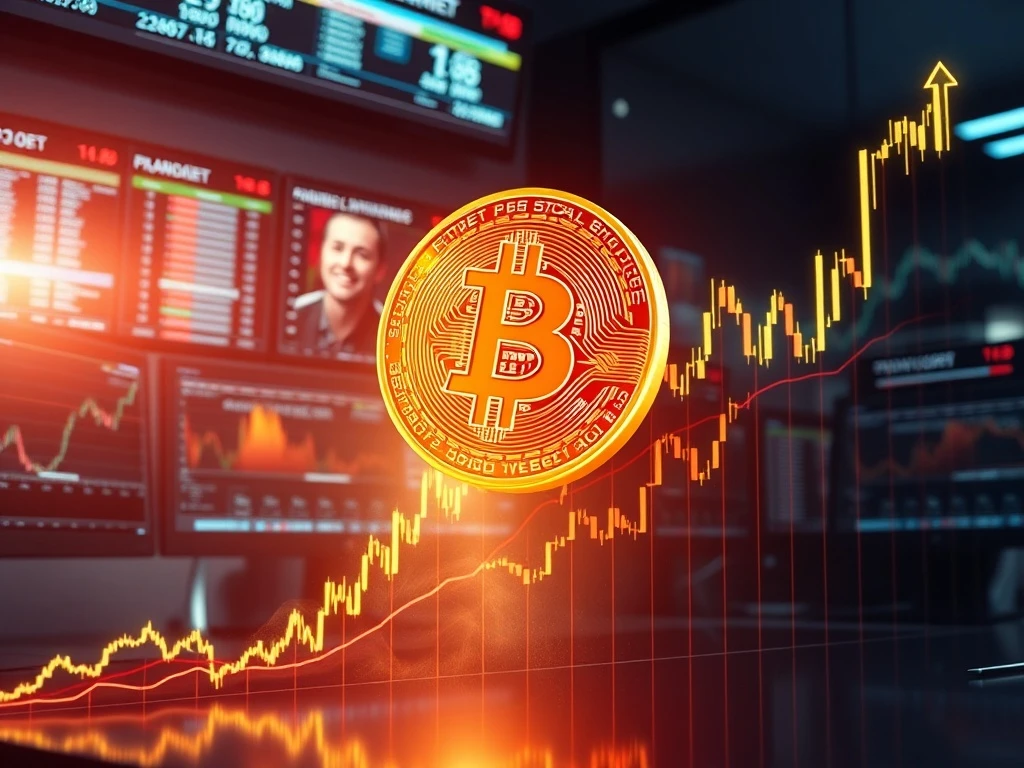
Global cryptocurrency markets witnessed a pivotal moment today as Bitcoin, the world’s leading digital asset, decisively broke through the $91,000 price barrier. According to real-time data from Crypto News Insights market monitoring, BTC is now trading at $91,000 on the prominent Binance USDT perpetual futures market. This surge represents not just a numerical milestone but a powerful signal of renewed institutional and retail confidence in the flagship cryptocurrency’s long-term value proposition. Consequently, analysts are scrutinizing the confluence of macroeconomic factors and blockchain-specific developments driving this ascent.
Bitcoin Price Analysis: Breaking Down the $91,000 Rally
The move past $91,000 marks Bitcoin’s highest trading level in the current market cycle, effectively erasing previous resistance zones. Market depth data indicates substantial buy-side liquidity absorbed selling pressure efficiently. Furthermore, the rally appears broad-based, with significant volume supporting the price increase across major global exchanges. On-chain analytics firms report a notable decrease in Bitcoin held on exchanges, suggesting a trend toward accumulation and long-term holding, often called ‘hodling.’ This supply-side dynamic historically creates upward price pressure as available liquid supply diminishes.
Simultaneously, derivatives markets show a measured response. While funding rates for perpetual swaps have turned positive, they remain within a neutral range, indicating leveraged speculation is not yet overheated. Open interest has climbed in tandem with the price, reflecting fresh capital entering the market. Importantly, the spot market is leading the charge, a healthier sign than a futures-led pump. This price action follows a prolonged consolidation period between $82,000 and $89,000, where the asset built a strong technical base.
Catalysts and Market Context for the Cryptocurrency Surge
Several fundamental and macroeconomic catalysts underpin Bitcoin’s impressive climb. Primarily, shifting expectations around global monetary policy have played a critical role. Recent signals from major central banks about a potential pivot toward rate cuts have weakened the US Dollar Index (DXY), traditionally creating a favorable environment for hard assets like Bitcoin. Additionally, the sustained inflow into US-listed spot Bitcoin Exchange-Traded Funds (ETFs) has provided a consistent, institutional-grade bid for the asset. These ETFs have now seen net positive inflows for multiple consecutive weeks, demonstrating durable demand.
Concurrently, developments within the blockchain ecosystem itself contribute to positive sentiment. The successful implementation of recent network upgrades has enhanced scalability and transaction efficiency. Moreover, regulatory clarity in key jurisdictions, though incremental, has reduced systemic uncertainty for large investors. The following table summarizes key weekly inflows into major spot Bitcoin ETFs prior to this price breakout:
| ETF Provider | Approx. Net Inflow (Prior Week) | Effect on Market Sentiment |
|---|---|---|
| BlackRock (IBIT) | +$420 million | Strongly Positive |
| Fidelity (FBTC) | +$298 million | Positive |
| Ark Invest/21Shares (ARKB) | +$87 million | Moderately Positive |
Beyond traditional finance, geopolitical tensions and concerns about currency debasement in several economies continue to drive retail adoption. Bitcoin’s fixed supply cap of 21 million coins stands in stark contrast to expansive fiat monetary policies, reinforcing its narrative as ‘digital gold.’
Expert Insights and Historical Precedent
Seasoned market analysts emphasize the importance of viewing this move within a broader historical context. “Breaking key psychological levels like $90,000 often acts as a magnet for price discovery,” notes a veteran crypto strategist from a leading fund. “The critical factor now is whether Bitcoin can establish $89,000 to $91,000 as a new support zone. The market structure, with reduced exchange reserves and steady ETF buys, supports a bullish thesis for continued upward momentum, though volatility remains a constant companion.”
Historical data reveals that similar breakout patterns in past cycles, following extended accumulation phases, have led to significant further appreciation. However, experts unanimously caution that past performance never guarantees future results. Risk management, including position sizing and an understanding of Bitcoin’s inherent volatility, is paramount for all market participants. The current rally also differs from previous ones due to the mature presence of regulated financial products, which may dampen extreme downside volatility while providing more stable upward pressure.
Broader Impact on the Digital Asset Ecosystem
Bitcoin’s role as the market leader means its price action has a profound ripple effect across the entire digital asset space. Typically, a sustained BTC rally improves sentiment for the broader altcoin market, though often with a lag. Major cryptocurrencies like Ethereum (ETH), Solana (SOL), and others have already shown positive correlation in early trading following Bitcoin’s breakout. This phenomenon, known as the ‘altcoin season,’ could gain momentum if Bitcoin’s price stabilizes at these higher levels, allowing capital to rotate into projects with higher beta.
- Market Capitalization: The total crypto market cap has increased significantly, restoring trillions in value.
- Miner Revenue: Bitcoin miners experience higher USD-denominated rewards, improving network security.
- Institutional Interest: Corporate treasury allocations and institutional research into Bitcoin intensify.
- Retail Engagement: On-ramp platforms report increased user sign-ups and trading activity.
Furthermore, the public and regulatory perception of cryptocurrency evolves with each new price high. It draws more mainstream media attention and can accelerate discussions about comprehensive regulatory frameworks. For blockchain developers and entrepreneurs, a thriving primary asset price environment can lead to increased funding and user adoption for decentralized applications and Layer-2 scaling solutions built atop these networks.
Conclusion
Bitcoin’s surge above $91,000 represents a major technical and psychological achievement for the digital asset class. Driven by a mix of institutional ETF inflows, favorable macro conditions, and robust on-chain fundamentals, this rally underscores Bitcoin’s growing integration into the global financial landscape. While the path forward will undoubtedly include volatility, the breakthrough of this key level marks a new chapter in the asset’s price discovery. Market participants will now watch closely to see if this level holds as support, potentially paving the way for the next phase of the Bitcoin price cycle. The coming weeks will be crucial for determining the sustainability of this move and its implications for the entire cryptocurrency ecosystem.
FAQs
Q1: What does Bitcoin trading at $91,000 on Binance USDT mean?
It means that on the Binance exchange, one Bitcoin can be bought or sold for 91,000 Tether (USDT) tokens, a stablecoin pegged to the US dollar. This is a key perpetual futures market price reference used by traders globally.
Q2: What are the main reasons Bitcoin price is rising?
Primary drivers include sustained inflows into spot Bitcoin ETFs, a macroeconomic backdrop of potential interest rate cuts, decreasing Bitcoin supply on exchanges (increased hodling), and positive developments in regulatory clarity and network technology.
Q3: How does Bitcoin’s price affect other cryptocurrencies?
Bitcoin is the market leader. A strong, sustained rally in BTC typically boosts overall market sentiment and capital inflow, which often, after a period, benefits major alternative cryptocurrencies (altcoins) as investors seek higher returns.
Q4: Is it too late to buy Bitcoin after it hits $91,000?
Financial advisors state that cryptocurrency is a highly volatile asset class. Investment decisions should be based on personal financial goals, risk tolerance, and thorough research, not on fear of missing out (FOMO). Dollar-cost averaging is a common strategy to mitigate timing risk.
Q5: What is the significance of the $91,000 price level?
It is a major round-number psychological resistance level. Breaking and holding above it can trigger algorithmic buying, attract media attention, and encourage sidelined investors to enter the market, potentially acting as a springboard for further price discovery.
This article was produced with AI assistance and reviewed by our editorial team for accuracy and quality.