Bitcoin Price Prediction: Alarming Analysis Suggests Potential Drop to $56K as Market Catalysts Vanish
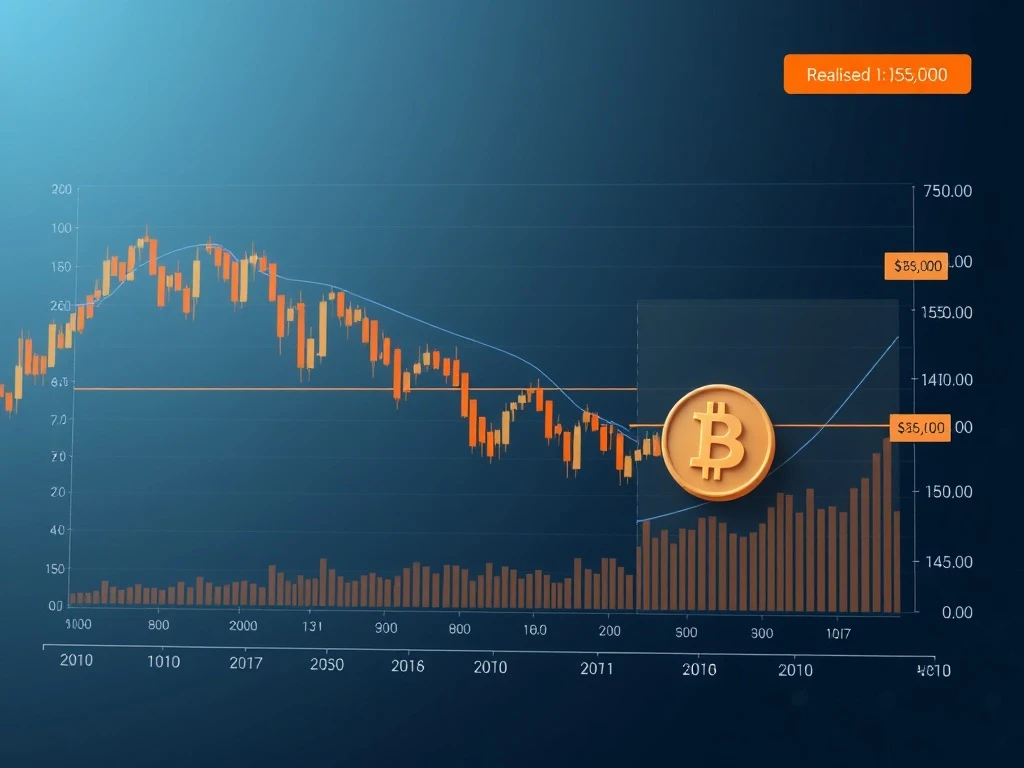
Bitcoin faces mounting pressure as leading analysts identify a concerning lack of catalysts that could drive the cryptocurrency toward critical support levels, potentially testing the $56,000 threshold that represents the average acquisition cost across the entire network. According to Galaxy Digital’s research team, the digital asset’s current market structure presents significant challenges for immediate recovery, with technical indicators suggesting further downside potential before establishing a sustainable bottom.
Bitcoin Technical Analysis Reveals Critical Support Levels
Galaxy Digital’s Head of Research, Alex Thorn, published a comprehensive market analysis on Monday highlighting Bitcoin’s precarious position. The cryptocurrency currently trades approximately 39% below its October 2024 all-time high of $126,000, having recently recovered from a nine-month low to approximately $78,500. Thorn’s research identifies two key technical levels that historically marked cycle bottoms: the realized price at $56,000 and the 200-week moving average at $58,000. These metrics provide objective frameworks for understanding Bitcoin’s potential price floor based on network-wide cost basis and long-term trend analysis.
Historically, Bitcoin has found substantial support around its realized price during previous bear market cycles. This metric calculates the average price at which all circulating Bitcoin was last moved on-chain, essentially representing the network’s aggregate cost basis. When prices approach this level, long-term holders become increasingly reluctant to sell at a loss, creating natural buying pressure. Additionally, the 200-week moving average has served as reliable support during previous market cycles, with Bitcoin bouncing from this level multiple times throughout its history.
Market Structure and Narrative Challenges
Beyond technical indicators, Thorn identifies fundamental challenges facing Bitcoin’s price recovery. The cryptocurrency has failed to correlate with traditional inflation hedges like gold and silver during recent market turbulence, undermining the “debasement hedge” narrative that previously supported its valuation. Furthermore, the absence of clear catalysts for upward momentum creates a vacuum where negative sentiment can dominate price action. This combination of technical vulnerability and narrative weakness presents a complex challenge for Bitcoin bulls seeking to reverse the current downtrend.
Also read: SUI Price Tests Critical $1.05 Level as Pepeto's Stunning 300x Surge Captures Market Attention
Long-Term Holder Behavior Signals Approaching Bottom
Analysis of on-chain data reveals nuanced behavior among Bitcoin’s most committed investors. While large-scale accumulation from institutional buyers remains limited, suggesting potential waiting for lower entry points, long-term holder profit-taking has notably decreased. This reduction in selling pressure from experienced investors typically precedes market bottoms, as those most likely to sell during declines have already exited positions. However, Thorn cautions that remaining long-term holders might create resistance at higher price levels if they choose to realize profits during any recovery.
The relationship between long-term holder behavior and price action follows consistent historical patterns. During accumulation phases, these investors typically purchase during price weakness, providing underlying support. Conversely, during distribution phases, their selling can cap upside momentum. The current reduction in profit-taking suggests the distribution phase may be concluding, potentially setting the stage for renewed accumulation if prices reach attractive levels.
Regulatory Developments and Market Impact
The cryptocurrency industry continues monitoring legislative developments in Washington, particularly the proposed market structure bill currently stalled in the Senate Banking Committee. While regulatory clarity could theoretically serve as a positive catalyst, Thorn notes that bipartisan support has diminished in recent weeks, reducing the likelihood of near-term passage. Even if legislation advances, the research suggests altcoins might benefit more substantially than Bitcoin from regulatory clarity, as established protocols face fewer existential questions than emerging projects regarding compliance frameworks.
Historical Context and Cycle Analysis
Bitcoin’s market cycles demonstrate remarkable consistency in their relationship to key technical indicators. During the 2018-2019 bear market, Bitcoin tested its realized price multiple times before establishing a durable bottom. Similarly, the 2022 downturn saw the cryptocurrency briefly dip below this level before commencing its next bull run. These historical precedents provide context for understanding potential price trajectories, though each cycle features unique characteristics influenced by macroeconomic conditions, adoption metrics, and regulatory environments.
The current cycle differs from previous ones in several important aspects. Institutional participation through spot Bitcoin ETFs has created new dynamics in price discovery, while global monetary policy remains in a transitional phase between quantitative tightening and potential easing. Additionally, Bitcoin’s maturation as an asset class has altered its correlation patterns with traditional markets, creating both challenges and opportunities for portfolio managers incorporating digital assets into diversified strategies.
Supply Gap Analysis and Price Targets
Thorn’s research identifies a supply gap between $70,000 and current price levels, suggesting Bitcoin might first test this intermediate support before potentially declining toward the realized price. This gap represents a price range with historically lower trading volume, potentially creating weaker support during downward movements. The analysis suggests a sequential testing of support levels rather than an immediate decline to $56,000, providing multiple potential inflection points where market sentiment could shift.
Comparative Asset Performance and Macro Conditions
Bitcoin’s recent performance divergence from traditional inflation hedges warrants examination within broader macroeconomic contexts. While gold and silver have benefited from geopolitical uncertainty and currency debasement concerns, Bitcoin has faced unique headwinds including regulatory scrutiny, environmental criticism, and technological growing pains. This decoupling challenges previous assumptions about Bitcoin’s role in portfolio construction, potentially requiring revised frameworks for assessing its risk-return profile relative to alternative assets.
Global financial conditions continue evolving in response to inflationary pressures and central bank policies. The Federal Reserve’s balance sheet normalization, European Central Bank’s monetary stance, and emerging market currency dynamics all influence capital flows across asset classes. Bitcoin’s sensitivity to liquidity conditions remains pronounced, with expansionary monetary policies historically correlating with stronger performance and tightening cycles presenting challenges for risk assets broadly.
Conclusion
Bitcoin faces significant technical and fundamental challenges according to Galaxy Digital’s comprehensive analysis, with potential support levels emerging around $56,000 based on realized price metrics and historical patterns. The absence of clear catalysts for upward momentum, combined with narrative weaknesses and regulatory uncertainty, creates a complex environment for price discovery. However, diminishing selling pressure from long-term holders and historically reliable support levels suggest the current downturn may be approaching its later stages, potentially creating opportunities for patient investors with appropriate risk tolerance. Market participants should monitor both technical indicators and fundamental developments as Bitcoin navigates this critical phase in its market cycle.
FAQs
Q1: What is Bitcoin’s realized price and why does it matter?
The realized price represents the average cost basis of all Bitcoin in circulation, calculated using on-chain data of when each coin last moved. This metric matters because it historically indicates strong support levels where long-term holders become reluctant to sell at a loss.
Q2: How reliable is the 200-week moving average as a support indicator?
Bitcoin has bounced from its 200-week moving average during multiple previous market cycles, making it one of the most reliable long-term support indicators. However, past performance doesn’t guarantee future results, especially in evolving market conditions.
Q3: What catalysts could reverse Bitcoin’s current downtrend?
Potential catalysts include favorable regulatory developments, institutional adoption acceleration, macroeconomic policy shifts toward monetary easing, or technological breakthroughs enhancing Bitcoin’s utility and adoption.
Q4: How does long-term holder behavior influence Bitcoin’s price?
Long-term holders (entities holding Bitcoin for over 155 days) typically provide market stability during downturns by refusing to sell at a loss. Their reduced selling pressure often signals approaching market bottoms, while their potential profit-taking can create resistance during recoveries.
Q5: How does the current market cycle compare to previous Bitcoin bear markets?
The current cycle features greater institutional participation, more developed derivatives markets, and different macroeconomic conditions than previous cycles. While technical patterns show similarities, these structural differences create unique dynamics that require careful analysis beyond historical comparisons alone.

This article was produced with AI assistance and reviewed by our editorial team for accuracy and quality.