Bitcoin Price Shows Defiant Strength as DOJ Probes Fed Chair: Can BTC Sustain Its Rally?
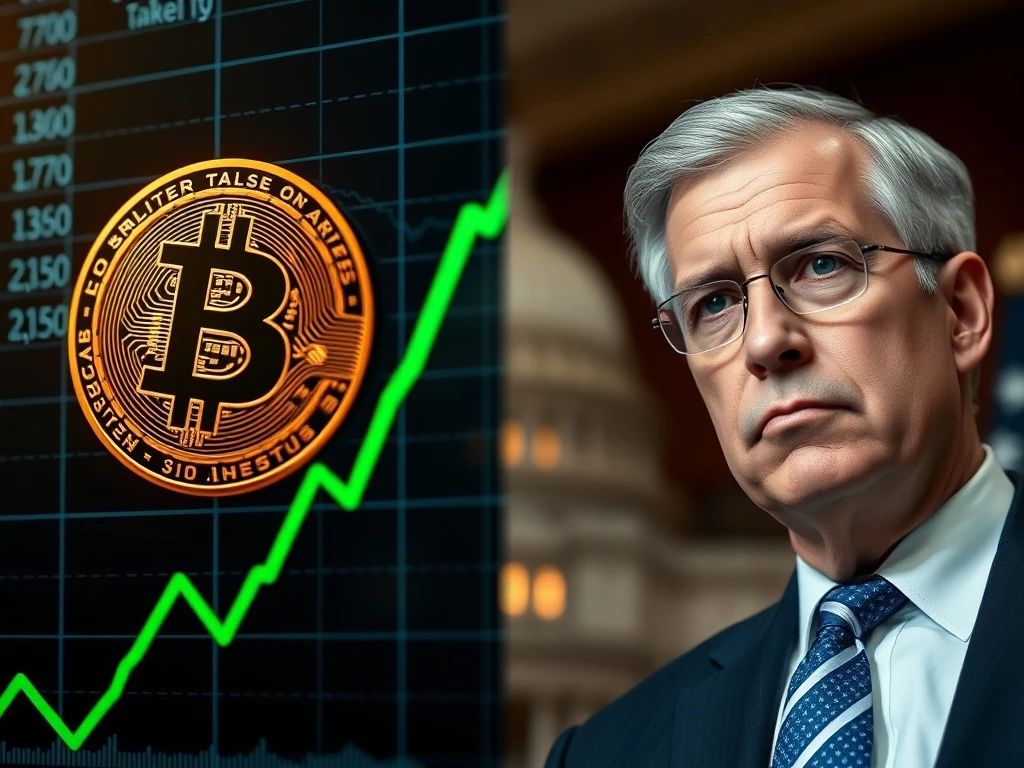
NEW YORK, March 2026 – The Bitcoin price demonstrated notable resilience this week, briefly surging past the $92,000 threshold. This movement coincided with breaking news that US federal prosecutors have initiated a criminal investigation into Federal Reserve Chair Jerome Powell. The unexpected correlation between a potential central bank scandal and cryptocurrency market strength presents a complex puzzle for traders and analysts. This article examines the multifaceted drivers behind Bitcoin’s recent performance, scrutinizing derivative market signals, institutional capital flows, and the broader macroeconomic sector to assess the sustainability of the current price action.
Bitcoin Price Reaction to Political and Monetary Uncertainty
On Monday, the Bitcoin price experienced a sharp, albeit brief, ascent above $92,000. Market data directly links this volatility to headlines concerning the Department of Justice’s probe into Chair Powell. The investigation reportedly focuses on the Federal Reserve’s building renovation project. Consequently, analysts immediately questioned whether this action signals a threat to the cherished independence of the US central bank. Historically, perceptions of institutional instability or political overreach have driven capital toward alternative, non-sovereign assets. Bitcoin, with its fixed supply and decentralized nature, often attracts attention during such periods. However, the rally proved transient. The digital asset struggled to maintain momentum above $94,000, a key resistance level it has failed to breach consistently over the past month. This price behavior suggests that while the news provided a short-term catalyst, deeper, more structural market factors are currently in control.
Also read: Bitcoin ETP Flows Surge: Fidelity's Macro Chief Spots Critical Capital Rotation from Gold
Institutional Sentiment Revealed Through ETF Flows and Futures Data
A closer examination of institutional activity reveals a cautious, if not bearish, undertone. Data from US spot Bitcoin exchange-traded funds (ETFs) shows a concerning trend of capital withdrawal. Over four consecutive trading sessions, these funds recorded net outflows totaling $1.38 billion. This persistent exit of institutional capital indicates a lack of conviction among major investors, despite the headline-grabbing price spike. Simultaneously, the derivatives market tells a similar story. The annualized premium for Bitcoin two-month futures, known as the basis rate, currently hovers around a neutral 5%. For context, periods of strong bullish sentiment are typically characterized by a basis rate exceeding 10%. The current 5% level sits firmly in a neutral-to-bearish range, signaling that professional traders are not aggressively betting on a sustained upward breakout. This data collectively paints a picture of skepticism, where institutional players are using price strength as an opportunity to reduce exposure rather than double down on bullish positions.
Macroeconomic Divergence: Bitcoin Lags Behind Precious Metals
The current macroeconomic environment adds another layer of complexity to Bitcoin’s narrative. While Bitcoin has declined approximately 23% since its October 2025 peak, traditional safe-haven assets like gold and silver have achieved new all-time highs in 2026. This stark divergence forces a reevaluation of Bitcoin’s role as a digital store of value. Several interrelated factors contribute to this phenomenon. First, expectations for near-term economic stimulus in the United States have diminished. Major financial institutions, including Goldman Sachs, have revised their forecasts, no longer anticipating an interest rate cut in March. They cite persistently sticky inflation and a resilient labor market as primary reasons. Second, the US dollar has shown unexpected strength. The US Dollar Index (DXY) rebounded to 99 from a late-November 2025 low of 96.7. A strong dollar typically creates headwinds for dollar-denominated assets like Bitcoin. Furthermore, yields on the 5-year US Treasury have remained stable below 3.8%, indicating bond market participants are not pricing in an imminent crisis of confidence in US debt. The absence of a clear “debasement trade”—where investors flee fiat currency due to fiscal concerns—partially explains why capital has flowed into precious metals but not yet meaningfully into cryptocurrencies.
Also read: BlockDAG's Defiant $0.000022 Presale Emerges as TRUMP Slumps and TAO Soars
The Political Backdrop: Fed Leadership in the Crosshairs
The investigation into Chair Powell unfolds against a tense political backdrop. Powell’s term concludes in April, opening the door for a potential successor. President Donald Trump has publicly criticized the Fed for maintaining elevated interest rates while inflation persisted above the 2% target throughout late 2025. Powell has framed the DOJ’s action within the broader context of the administration’s previous threats toward the central bank. This power struggle introduces significant uncertainty into future US monetary policy. A shift toward a more politically compliant Fed chair could alter the trajectory of interest rates and quantitative tightening policies. For Bitcoin advocates, a scenario of looser future monetary policy or compromised central bank independence could be fundamentally bullish. However, current market metrics suggest traders are not yet positioning for this outcome, preferring to wait for more concrete developments.
Corporate Buying Fails to Offset Broader Market Apathy
Interestingly, significant corporate accumulation has not been enough to catalyze a sustained Bitcoin price rally. MicroStrategy (MSTR), led by executive chairman Michael Saylor, announced its largest Bitcoin purchase since July 2025 on Monday, adding approximately $1.25 billion worth of BTC to its treasury. This aggressive buying from a known industry bellwether would typically provide strong psychological support for the market. Yet, the price failed to hold above $94,000. This disconnect highlights a critical market dynamic: while corporate buying provides a solid, long-term foundational demand, it cannot single-handedly counteract broad-based selling pressure from ETFs and a lack of leveraged speculative interest. The market is currently dominated by larger, more influential flows that are leaning negative.
Key Data Points at a Glance:
- Bitcoin Price High: Briefly exceeded $92,000 on Monday.
- Spot ETF Net Outflows (4 days): $1.38 billion.
- BTC Futures Basis Rate: ~5% (neutral-to-bearish).
- MicroStrategy Purchase: $1.25 billion in BTC.
- US Dollar Index (DXY): Rebounded to 99.
- Bitcoin Drawdown from Oct 2025 High: Approximately 23%.
Conclusion
The Bitcoin price finds itself at a crossroads, caught between a provocative geopolitical catalyst and sobering on-chain and institutional data. The DOJ investigation into Fed Chair Powell provided a temporary boost, reinforcing Bitcoin’s perceived role as a hedge against traditional financial system instability. However, the subsequent price rejection and clear signals from ETF outflows and futures markets indicate that sustained bullish momentum is lacking. For the Bitcoin price to embark on a credible rally toward higher targets like $105,000, the market likely requires a shift in the macroeconomic picture—such as a weakening dollar or clearer signs of monetary debasement—or a significant resurgence in institutional and leveraged buyer demand. Until then, the dominant narrative remains one of cautious consolidation, where short-term spikes are met with selling pressure, underscoring the complex and maturing nature of the cryptocurrency market.
FAQs
Q1: Why did the Bitcoin price jump when the DOJ announced an investigation into the Fed Chair?
The price jump was likely a knee-jerk reaction to news that could imply political pressure on the Federal Reserve. Some traders view Bitcoin as a hedge against central bank instability or potential currency debasement, leading to short-term buying.
Q2: What are Bitcoin ETF outflows, and why are they important?
Bitcoin ETF outflows occur when investors redeem more shares than they create, meaning net capital is leaving the fund. Large, sustained outflows, like the recent $1.38 billion, signal that institutional investors are reducing their exposure to Bitcoin, which can create significant selling pressure.
Q3: What does the “basis rate” in Bitcoin futures indicate?
The basis rate is the annualized percentage difference between futures and spot prices. A rate around 5% is considered neutral. A rate above 10% often signals strong bullish employ and buying demand, which is currently absent from the market.
Q4: If gold is hitting all-time highs, why isn’t Bitcoin?
While both are considered alternative assets, they have different investor bases and drivers. Gold’s rally is being fueled by central bank buying, geopolitical tension, and its established safe-haven status. Bitcoin’s market is currently more influenced by specific institutional flows and a lack of leveraged speculation, causing a divergence in performance.
Q5: Can corporate buying from companies like MicroStrategy drive the Bitcoin price long-term?
Corporate buying provides a strong, long-term foundational demand and reduces the available supply. However, in the short to medium term, price is driven by the balance of all buy and sell orders. Large-scale selling from ETFs or derivatives markets can easily outweigh the impact of a single corporate buyer’s purchases.

This article was produced with AI assistance and reviewed by our editorial team for accuracy and quality.