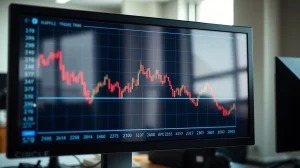
Bitcoin Price Crash: Andrew Tate’s $90K Loss on $2M Gamble as BTC Plunges to $63K

Global cryptocurrency markets witnessed significant turbulence this week, culminating in a sharp Bitcoin price crash that erased billions in market value and spotlighted high-profile investor losses. Notably, influencer Andrew Tate faced a substantial $90,000 loss on a recent $2 million Bitcoin purchase as the leading digital asset plunged toward the $63,000 support level. This dramatic market movement, occurring on Tuesday, has reignited debates about cryptocurrency volatility and long-term viability, with prominent critic Peter Schiff declaring the downturn a potential endpoint for the current market cycle.
Analyzing the Bitcoin Price Crash and Market Context
The recent Bitcoin price crash did not occur in isolation. Market analysts point to a confluence of factors driving the sell-off. Firstly, macroeconomic pressures, including shifting interest rate expectations and geopolitical tensions, have increased risk aversion across all asset classes. Consequently, speculative assets like cryptocurrencies often experience amplified outflows during such periods. Secondly, on-chain data revealed substantial movement from long-term holder wallets to exchanges, a classic precursor to increased selling pressure. This technical indicator frequently signals a shift in market sentiment from accumulation to distribution.
Also read: Operation Atlantic: Global Law Enforcement Shatters $45M Crypto Fraud Ring
Furthermore, the derivatives market played a vital role. A cascade of liquidations in leveraged long positions exacerbated the downward move. As the price broke below key technical support levels, automated sell orders triggered, creating a feedback loop of declining prices. This event underscores the inherent volatility and complex mechanics of the digital asset ecosystem, where traditional and crypto-native factors intertwine to drive price action.
Andrew Tate’s Cryptocurrency Investment Strategy and Outcome
Andrew Tate, a controversial online personality known for his commentary on wealth and business, publicly engaged with Bitcoin as part of his investment portfolio. According to reports from BSCNews on X, Tate executed a purchase of approximately $2 million worth of Bitcoin when the price hovered near $67,000. This substantial entry point highlights a strategy of conviction buying, potentially anticipating a continuation of the bullish trend that had characterized the market for preceding months.
Also read: Spartans.com Shatters Norms with $7 Million Leaderboard Launch, Rewriting Online Gambling Rules
However, the market moved decisively against this position within a remarkably short timeframe. Merely three hours after his reported purchase, the Bitcoin price had dropped to approximately $64,000, representing an immediate paper loss. The decline continued over the following day, with BTC testing the $63,000 level. This rapid depreciation resulted in an unrealized loss of roughly $90,000 on Tate’s position, demonstrating the swift and unforgiving nature of crypto market corrections. While not catastrophic relative to his principal, the loss serves as a public case study in the risks of timing volatile markets.
Expert Perspectives and Market Commentary
The volatility immediately drew commentary from financial experts and crypto critics alike. Peter Schiff, a longtime gold advocate and cryptocurrency skeptic, seized on the downturn. He characterized the plunge as a sign that the “crypto mania” might be reaching its conclusion, reiterating his long-standing warnings about the asset class’s lack of intrinsic value and susceptibility to speculative bubbles. His comments, disseminated to his substantial following, often influence retail sentiment and contribute to the broader narrative surrounding digital assets.
Conversely, many blockchain analysts offered a more measured interpretation. They noted that corrections of 10-20% are historically common within Bitcoin bull markets and do not necessarily invalidate the longer-term trajectory. These analysts pointed to strong fundamentals, including continued institutional adoption through spot Bitcoin ETFs and the upcoming Bitcoin halving event, as reasons for maintained cautious optimism. This divergence of opinion between traditional finance critics and crypto-native analysts is a persistent feature of the market arena.
The Ripple Effects of High-Profile Crypto Losses
Incidents like Andrew Tate’s reported loss have effects that extend beyond a single portfolio. Firstly, they capture mainstream media attention, framing cryptocurrency investment as a high-stakes gamble for the public. This perception can deter more conservative, long-term capital from entering the space. Secondly, they provide educational moments about risk management, including the importance of position sizing, dollar-cost averaging, and having a clear exit strategy before entering a trade.
Moreover, the event highlights the psychological aspect of investing. The fear of missing out (FOMO) can drive investors to enter at market peaks, while the fear, uncertainty, and doubt (FUD) generated by sharp declines can trigger panic selling. Working through these emotions is a critical skill for any market participant. For the broader ecosystem, sustained volatility may accelerate calls for more reliable regulatory frameworks designed to protect investors while still building innovation.
Historical Volatility and Bitcoin’s Market Cycles
To understand the current situation, context is vital. Bitcoin’s history is a range of dramatic surges and precipitous declines. The following table outlines major drawdowns from all-time highs, providing perspective on the scale of past corrections:
| Year | Peak Price | Trough Price | Drawdown | Recovery Time |
|---|---|---|---|---|
| 2013 | ~$1,150 | ~$180 | ~84% | ~3 years |
| 2017-18 | ~$19,800 | ~$3,200 | ~84% | ~2.5 years |
| 2021 | ~$69,000 | ~$15,500 | ~77% | ~1.5 years |
This historical data reveals a pattern of deep bear markets followed by eventual new all-time highs. The current pullback, while sharp, remains within the range of historical volatility for the asset. Analysts monitor several key metrics to gauge market health, including:
- MVRV Ratio: Measures whether the asset is over or undervalued relative to its realized capitalization.
- Exchange Net Flow: Tracks whether coins are moving to exchanges (for selling) or to private wallets (for holding).
- Funding Rates: Indicates sentiment in the perpetual swaps market; extreme positivity can signal a local top.
Conclusion
The recent Bitcoin price crash and the associated loss for investor Andrew Tate provide a stark reminder of the digital asset market’s inherent volatility. While short-term fluctuations can be severe, often triggered by macroeconomic factors and leveraged trading, they occur within well-established historical cycles of boom and bust. The divergent reactions from figures like Peter Schiff and blockchain analysts underscore the ongoing debate about cryptocurrency’s ultimate role in the global financial system. For investors, the event reinforces fundamental principles: conduct thorough research, understand risk tolerance, avoid investing more than one can afford to lose, and consider time horizons that can weather inevitable market storms. The long-term narrative for Bitcoin and digital assets will continue to evolve, shaped by technological adoption, regulatory developments, and their proven resilience through past cycles.
FAQs
Q1: How much did Andrew Tate lose on his Bitcoin investment?
Based on reports, Andrew Tate purchased approximately $2 million worth of Bitcoin near $67,000. As the price fell to around $63,000, his position showed an unrealized loss of roughly $90,000.
Q2: What did Peter Schiff say about the Bitcoin price crash?
Peter Schiff, a well-known cryptocurrency critic, stated that the sharp decline signaled a potential end to the current “crypto mania,” reiterating his skeptical stance on the asset class’s long-term value.
Q3: Is a 10-15% drop normal for Bitcoin?
Yes, historically, Bitcoin has experienced frequent corrections of 10% or more even during bull markets. Its high volatility is a well-documented characteristic.
Q4: What typically causes a sharp Bitcoin price crash?
Sharp crashes can be caused by several factors, including macroeconomic news (like interest rate changes), large-scale liquidations of leveraged positions, regulatory announcements, or shifts in market sentiment leading to coordinated selling.
Q5: Did Andrew Tate sell his Bitcoin at a loss?
The reports indicate an unrealized (paper) loss. There is no public confirmation that he sold the position, so the loss may not be locked in unless he chose to exit the trade.

This article was produced with AI assistance and reviewed by our editorial team for accuracy and quality.