Bitcoin Price Consolidates After Critical 20% Bounce as Liquidity Levels Dictate Market Fate
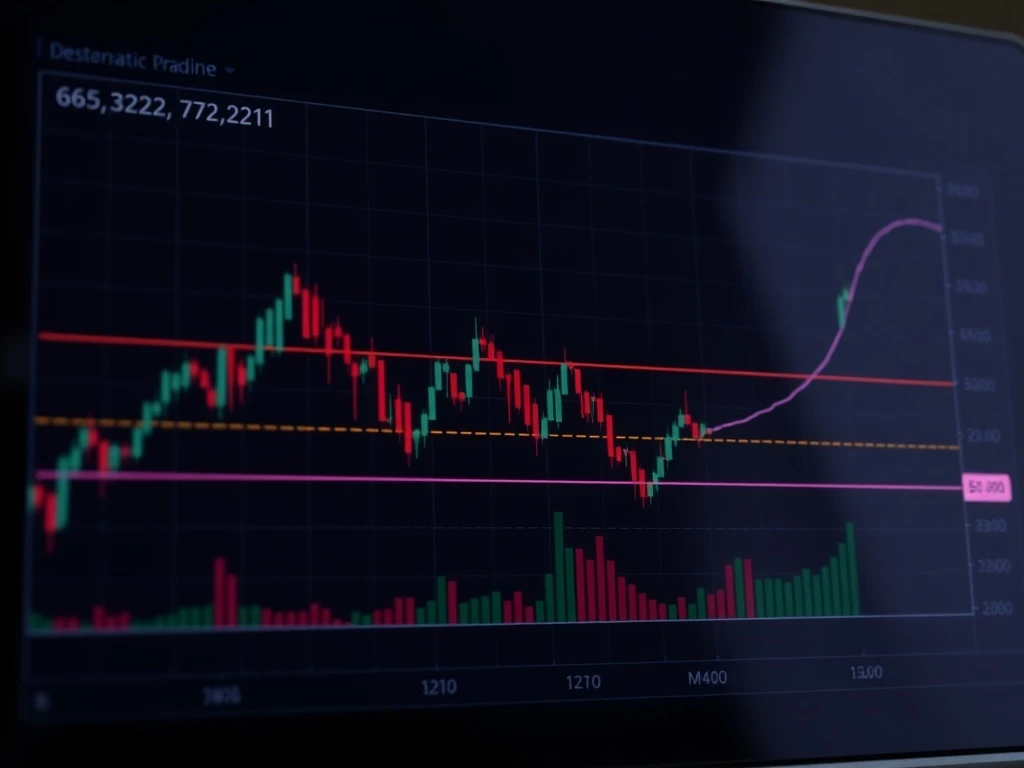
Global cryptocurrency markets witnessed significant volatility this week as Bitcoin, the leading digital asset, entered a critical consolidation phase following a dramatic 20% recovery bounce. Market analysts and institutional traders are now closely monitoring three specific liquidity zones—$65,322, $72,271, and $79,360—that will likely determine the next major directional move for the world’s most valuable cryptocurrency. This price action follows last week’s sharp correction that tested investor sentiment and triggered substantial liquidations across derivative markets.
Bitcoin Price Enters Critical Consolidation Phase
Following its impressive recovery, Bitcoin has established a well-defined trading range that reflects balanced market participation. The current consolidation represents a natural market pause as participants assess fundamental developments and technical signals. According to historical data from CoinMetrics, similar consolidation patterns after significant bounces have typically preceded substantial directional moves within 7-14 trading sessions. Market depth analysis reveals concentrated liquidity at the $65,322 level, which now serves as immediate support, while the $72,271 zone represents the current equilibrium point where buying and selling pressure appears balanced.
Also read: Litecoin Price Tests Critical Support: Will the $43 Floor Hold for a 2026 Breakout?
Technical analysts emphasize the importance of this consolidation phase for establishing a sustainable foundation for future price movements. The 20% bounce itself represents one of the most significant weekly recoveries in 2025, suggesting underlying strength despite recent volatility. Furthermore, on-chain data indicates that long-term holders have largely maintained their positions throughout this period, demonstrating continued conviction in Bitcoin’s fundamental value proposition.
Liquidity Levels Shape Market Direction and Trader Sentiment
The three identified liquidity levels—$65,322, $72,271, and $79,360—function as critical psychological and technical thresholds that guide institutional and retail trading strategies. These levels correspond with:
Also read: Dogecoin RSI Hits Historic Bottom Zone: Can the Meme Coin Recover?
- Historical Support and Resistance: Previous price action has established these zones as significant turning points
- Options Expiry Concentrations: Substantial open interest in Bitcoin options contracts clusters around these prices
- Institutional Order Flow: Major trading desks have reported concentrated buy and sell orders at these levels
- Technical Confluences: Multiple Fibonacci retracement levels and moving averages converge near these prices
Market microstructure analysis reveals that the $65,322 level represents what traders call “high-density support,” where a significant volume of limit buy orders accumulates. Conversely, the $79,360 zone presents a substantial resistance barrier where previous selling pressure has emerged. The intermediate $72,271 level serves as a pivot point that could determine whether Bitcoin tests higher resistance or revisits lower support levels.
Expert Analysis of Market Structure and Liquidity Dynamics
Seasoned market analysts emphasize that liquidity distribution provides key insights into potential price trajectories. According to data from CryptoQuant and Glassnode, exchange liquidity has become increasingly concentrated at these key levels throughout 2025, reflecting evolving market maturity and institutional participation patterns. This concentration creates what traders describe as “liquidity magnets”—price zones that tend to attract trading activity and often trigger significant market movements when breached.
The current market structure suggests that Bitcoin’s price action will likely remain range-bound until one of these liquidity levels experiences a decisive break. Historical precedent indicates that such breaks typically occur alongside fundamental catalysts, including regulatory developments, macroeconomic data releases, or significant institutional adoption news. Market participants should monitor trading volume patterns at these levels, as increasing volume often precedes directional moves.
Comparative Analysis of Recent Bitcoin Consolidation Patterns
To provide context for the current market phase, analysts have examined similar consolidation periods from Bitcoin’s price history. The table below compares key characteristics of recent consolidation patterns:
| Period | Duration | Price Range | Outcome | Volume Profile |
|---|---|---|---|---|
| Q4 2024 | 18 days | 12.5% | Breakout upward | Increasing |
| Q1 2025 | 14 days | 8.7% | Breakdown lower | Decreasing |
| Current Phase | Ongoing | Est. 10-15% | To be determined | Balanced |
This comparative analysis reveals that the current consolidation exhibits characteristics of both previous patterns, making the eventual direction particularly uncertain. However, the 20% preceding bounce suggests stronger underlying momentum than either previous instance, potentially favoring an eventual upward resolution. Market participants should note that consolidation duration often correlates with subsequent move magnitude, with longer consolidations typically preceding more significant directional movements.
Macroeconomic Context and Institutional Influence
Beyond technical factors, Bitcoin’s current price action unfolds against a complex macroeconomic backdrop. Federal Reserve policy decisions, inflation data, and traditional market correlations continue to influence cryptocurrency valuations. Institutional participation has reached unusual levels in 2025, with daily Bitcoin ETF flows regularly exceeding $500 million and creating substantial market impact. These institutional flows often cluster around technical levels, amplifying their significance as support and resistance zones.
Furthermore, regulatory developments across major jurisdictions have created both headwinds and tailwinds for cryptocurrency markets. The evolving regulatory sector affects market structure, liquidity provision, and institutional participation patterns. Analysts note that regulatory clarity in key markets typically correlates with increased liquidity concentration at specific price levels as market makers adjust their strategies to accommodate new compliance requirements and risk parameters.
Conclusion
Bitcoin’s current consolidation phase following its substantial 20% recovery bounce represents a critical juncture for cryptocurrency markets. The three identified liquidity levels—$65,322, $72,271, and $79,360—will likely determine the next significant directional move as traders and institutions position around these key thresholds. Market participants should monitor volume patterns, institutional flow data, and macroeconomic developments that could trigger decisive breaks from the current range. This period of consolidation provides essential market structure information that will shape trading strategies and risk management approaches throughout the remainder of 2025.
FAQs
Q1: What caused Bitcoin’s 20% bounce before the current consolidation?
The bounce resulted from multiple factors including oversold technical conditions, institutional buying at key support levels, positive regulatory developments in several jurisdictions, and favorable macroeconomic data that reduced immediate interest rate hike expectations.
Q2: How do liquidity levels actually influence Bitcoin’s price direction?
Liquidity levels concentrate trading activity because market participants place significant orders at these prices. When price approaches these zones, the concentration of buy or sell orders can either halt price movement or trigger accelerated moves as orders execute, creating self-reinforcing price action.
Q3: What timeframe typically defines a consolidation phase in cryptocurrency markets?
Consolidation phases in Bitcoin markets typically last between 7 and 21 trading days, though extended consolidations can occur during periods of particular uncertainty. The current phase’s duration will provide clues about the potential magnitude of the subsequent directional move.
Q4: How does institutional participation affect these liquidity levels?
Institutional trading desks often place large orders at specific technical levels, increasing liquidity concentration. Their algorithmic trading strategies also respond to these levels, creating amplified effects when prices approach these zones compared to purely retail-driven markets.
Q5: What indicators should traders watch during this consolidation period?
Traders should monitor trading volume patterns (particularly at the key levels), funding rates in perpetual swap markets, options open interest concentrations, on-chain movement of older coins, and institutional flow data from ETF products to gauge potential breakout direction.

This article was produced with AI assistance and reviewed by our editorial team for accuracy and quality.