Bitcoin Price Faces Critical $85K Test as New Whales Trigger Market Distribution
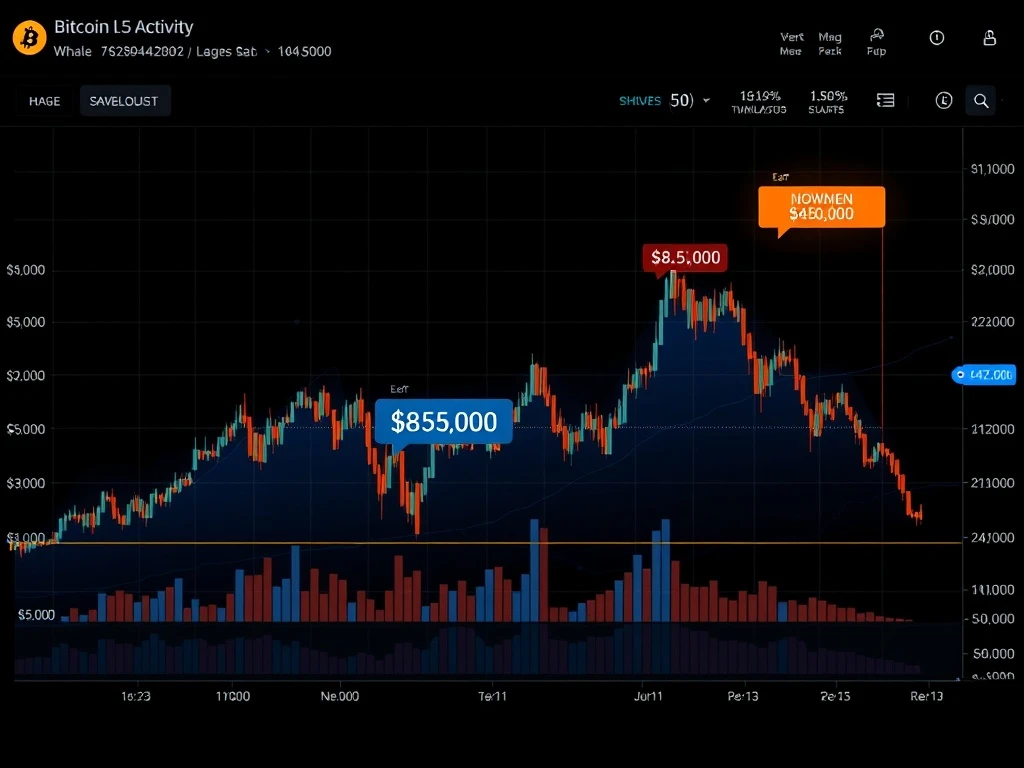
Bitcoin’s recent price volatility reflects a significant shift in market dynamics as new large holders now control more capital than long-term investors, potentially driving BTC toward the $85,000 support level according to multiple blockchain analytics firms. This development, observed in global cryptocurrency markets during early 2025, signals changing investor behavior that could determine Bitcoin’s near-term trajectory.
New Bitcoin Whales Dominate Market Dynamics
Recent blockchain data reveals a fundamental change in Bitcoin ownership patterns. CryptoQuant analyst Moreno DV identified that new whales—entities holding over 1,000 BTC with unspent transaction outputs younger than 155 days—now control a larger share of Bitcoin’s realized capitalization than traditional long-term holders. This metric measures the aggregate cost basis of coins based on their last on-chain movement, providing essential insight into investor psychology and potential price pressure points.
Also read: Litecoin Price Tests Critical Support: Will the $43 Floor Hold for a 2026 Breakout?
The realized price for this new whale cohort sits near $98,000, creating immediate pressure as Bitcoin trades below this level. Consequently, these large holders currently face approximately $6 billion in unrealized losses, creating potential selling pressure that could accelerate downward momentum. Meanwhile, long-term holders with a realized price near $40,000 remain largely inactive, meaning near-term price action depends primarily on capital under pressure rather than conviction-based holding.
Understanding Realized Capital Shifts
Realized capitalization represents a sophisticated metric that values each Bitcoin at its last transaction price rather than current market value. This approach provides clearer insight into actual investor cost bases and potential pain points. The shift toward new whale dominance indicates substantial coin redistribution occurred during Bitcoin’s recent price appreciation, potentially creating weaker hands at elevated price levels.
Also read: Dogecoin RSI Hits Historic Bottom Zone: Can the Meme Coin Recover?
Exchange Data Signals Increased Distribution Pressure
Cryptocurrency exchange metrics reinforce the bearish short-term outlook. The Exchange Whale Ratio, which measures the proportion of large transactions in total exchange inflows, has surged to the 0.52–0.55 range. Historically, elevated ratios in this range typically precede distribution phases as large holders move coins to exchanges, often for selling or portfolio reallocation purposes.
Market analysts monitor this indicator closely because sustained elevation combined with failure to reclaim the $95,000 to $98,000 resistance zone could extend the current pullback toward $85,000 to $80,000 support levels. The correlation between whale-dominated inflows and subsequent price declines has established itself as a reliable pattern throughout Bitcoin’s market history, particularly during distribution phases following significant rallies.
Technical Analysis Confirms Bearish Structure
Multiple technical indicators align with the on-chain narrative. Trader XO noted that Bitcoin currently trades below both the 21-period daily and 12-period weekly exponential moving averages while breaking multiple prior higher lows—a classic sign of weakening momentum. This technical deterioration suggests Bitcoin could “gravitate” toward the mid-$80,000s unless a sharp relief rally occurs to reclaim key moving averages and previous support-turned-resistance levels.
Order flow analysis from market observer ‘exitpumpBTC’ reveals substantial negative delta clusters below $91,000, with more than $300 million in total selling pressure already realized. This data signals aggressive short positioning that currently reinforces downside momentum, though it could potentially create a short squeeze scenario if Bitcoin manages to reclaim the $91,000 level decisively.
Market Structure Analysis Points Toward $85,000
Futures analyst Dom described the current setup as a “failed auction” based on Market Profile theory. Bitcoin briefly broke above the Value Area High (VAH)—the upper boundary where most trading occurred since November 2024—only to re-enter the value area. Such price action typically carries high probability of rotation toward the Value Area Low (VAL), which currently resides near $86,000 according to Dom’s analysis.
This technical framework suggests natural market mechanics may pull Bitcoin toward the $85,000–$86,000 region as the market seeks equilibrium following the failed breakout attempt. The Market Profile approach analyzes trading activity distribution across price levels, identifying areas where the market established value and potential attraction points for future price movement.
Historical Context for Current Movements
The current distribution phase follows Bitcoin’s impressive rally throughout 2024, which saw the cryptocurrency appreciate approximately 150% from January lows. Such substantial gains naturally create profit-taking opportunities, particularly for newer entrants who acquired positions during the advance. Historical patterns show that distribution phases typically last several weeks to months as the market digests gains and establishes new support levels.
Comparatively, Bitcoin experienced similar whale-driven distribution in early 2021 following its climb above $60,000, resulting in a multi-month consolidation before resuming its upward trajectory. While each market cycle exhibits unique characteristics, the fundamental dynamics of large holder behavior during distribution phases show remarkable consistency across Bitcoin’s history.
Broader Market Implications and Considerations
The shift toward new whale dominance carries implications beyond immediate price action. Firstly, it suggests institutional and large-scale adoption continues progressing as new entities accumulate substantial Bitcoin positions. However, the relatively short holding period indicates these may represent more tactical rather than strategic allocations, potentially increasing near-term volatility.
Secondly, the concentration of unrealized losses among new whales creates potential for cascading selling if Bitcoin fails to reclaim their cost basis near $98,000. This psychological level represents a critical threshold where underwater positions might convert to realized losses, particularly if broader market sentiment deteriorates or macroeconomic conditions worsen.
Thirdly, the inactivity of long-term holders suggests conviction remains strong among Bitcoin’s most dedicated investors. Their reluctance to distribute at current levels provides underlying support for the cryptocurrency’s long-term thesis, even as short-term turbulence persists. This divergence between short-term and long-term holder behavior represents a defining characteristic of mature cryptocurrency markets.
Monitoring Key Levels and Indicators
Traders and analysts should monitor several critical levels and metrics in coming weeks:
- $91,000 resistance: Reclaiming this level could trigger short covering and relieve immediate downward pressure
- Exchange Whale Ratio: Sustained elevation above 0.50 suggests continued distribution pressure
- Realized price convergence: Watch for new whale realized price adjustments indicating distribution or accumulation
- Long-term holder activity: Increased movement from this cohort would signal more fundamental sentiment shifts
- $85,000–$86,000 support: This represents the primary technical and psychological support zone based on current analyses
Conclusion
Bitcoin faces a critical test near the $85,000 level as new whale dominance creates distribution pressure that could extend the current pullback. The convergence of on-chain metrics, exchange data, and technical analysis suggests the cryptocurrency may need to establish support in this region before resuming its longer-term upward trajectory. While short-term volatility persists, the underlying adoption narrative remains intact as both new and existing investors continue participating in Bitcoin’s evolving market structure. Market participants should monitor whale behavior indicators closely alongside traditional technical levels for signals regarding Bitcoin’s next directional move.
FAQs
Q1: What defines a “new Bitcoin whale” in current market analysis?
Analysts define new Bitcoin whales as entities holding over 1,000 BTC with unspent transaction outputs younger than 155 days. This distinguishes them from long-term holders who have maintained positions through multiple market cycles.
Q2: Why does the Exchange Whale Ratio matter for Bitcoin’s price?
The Exchange Whale Ratio measures the proportion of large transactions in total exchange inflows. Elevated ratios typically indicate whale distribution activity, often preceding price declines as large holders move coins to exchanges for selling purposes.
Q3: How does realized capitalization differ from market capitalization?
Realized capitalization values each Bitcoin at its last transaction price rather than current market value, providing insight into investor cost bases. Market capitalization simply multiplies current price by total supply, offering less nuanced information about holder psychology.
Q4: What technical factors support the $85,000 price target?
Multiple factors support this level including the Value Area Low from Market Profile analysis, previous consolidation zones, Fibonacci retracement levels from recent advances, and the psychological significance of round-number support.
Q5: How long might distribution pressure affect Bitcoin markets?
Historical distribution phases typically last several weeks to months as the market digests gains. The duration depends on broader market conditions, macroeconomic factors, and whether Bitcoin establishes convincing support at key technical levels.

This article was produced with AI assistance and reviewed by our editorial team for accuracy and quality.