Bitcoin Options Surpass Futures in Historic Shift as Investors Embrace Structured Risk
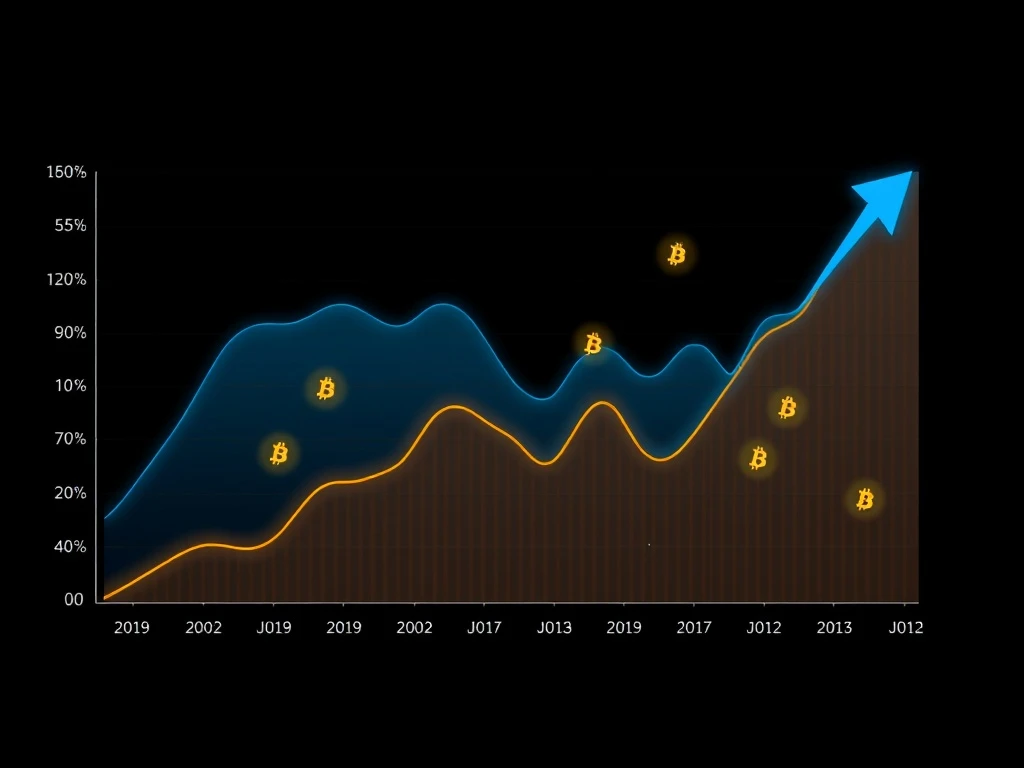
In a landmark development for cryptocurrency markets, Bitcoin options open interest has decisively overtaken futures for the first time in history, signaling a fundamental transformation in how institutional and sophisticated traders manage digital asset exposure. According to data from mid-January 2026, options open interest climbed to approximately $74.1 billion, edging above the roughly $65.22 billion in futures contracts. This major shift away from short-term directional tap into toward structured, expiry-based positions represents the maturation of Bitcoin as an institutional asset class and fundamentally alters market dynamics.
Bitcoin Options Overtake Futures in Open Interest
The surpassing of futures by options in open interest marks a critical inflection point for cryptocurrency derivatives markets. Open interest, which tracks outstanding contracts that remain open rather than daily trading volume, provides important insight into market positioning and sentiment. Consequently, when options inventory rises above futures, positioning tends to favor defined payoff structures such as hedges and yield programs instead of pure directional price bets. This structural change significantly affects how Bitcoin price reacts around monthly expiries, major strike prices, and periods of traditionally thin liquidity.
Also read: AI Trading Agents: The Revolutionary Path to Mastering Your Crypto Portfolio in 2025
Futures contracts have historically served as the most direct instrument for taking a view on Bitcoin price direction. Traders post margin and manage funding costs that shift with market conditions. These positions can be adjusted quickly, but they also respond sharply to changes in funding rates or basis returns. In contrast, calls and puts allow market participants to cap downside, define upside, or position around volatility expectations rather than price alone. More complex structures, including spreads and collars, often remain on balance sheets longer because they align with specific hedging mandates or scheduled yield generation programs.
The Mechanics of a Maturing Derivatives Space
Options positions frequently remain open through their stated expiry date, which makes their open interest more stable by design. Futures positions, by comparison, tend to fluctuate more dramatically as traders respond to funding pressure or reduce exposure during risk-off periods. Data analytics from platforms like Checkonchain reveals a clear pattern around the recent turn of the year. Options open interest dropped sharply in late December following a major quarterly expiry, then rebuilt robustly through early January as new contracts replaced expired ones. Futures open interest followed a steadier, less cyclical path, reflecting ongoing adjustments rather than forced, scheduled clearing.
Also read: RunBot AI Trading Bot: Revolutionizing Automated Cryptocurrency Strategies with Machine Learning
Expert Analysis on the Shift
Market analysts interpret this data as evidence of growing sophistication. “The dominance of options open interest indicates that Bitcoin is being integrated into traditional portfolio management frameworks,” explains a derivatives strategist from a major trading firm. “We are seeing less speculative, employ-driven trading and more strategic, risk-defined positioning. This is a hallmark of an asset class moving from the fringe to the mainstream.” This transition is further supported by the parallel growth of U.S.-listed ETF options, which provide a familiar, regulated venue for institutional players previously unable or unwilling to access crypto-native platforms.
How Options Open Interest Signals Hedging Flows
Options are inherently tied to longer-term strategies that roll forward on a calendar schedule. This characteristic makes the inventory more persistent, even when near-term price action appears mixed or choppy. While futures positions face ongoing carrying costs through variable funding rates or basis shifts, options positions lock in a specific cost and payoff profile until expiry. Many options trades sit inside formal hedging or yield enhancement programs where positions roll on fixed schedules rather than reacting impulsively to market headlines.
- Expiry Mechanics: Clear risk in scheduled batches instead of continuously.
- Strike Concentration: Large positions at specific prices can guide short-term support or resistance.
- Dealer Hedging: Market makers who sell options must hedge, creating flows that can dampen or extend price moves.
- Inventory Rebuilds: Major expiries are routinely followed by the establishment of new positions for the next cycle.
Because of these structural traits, open interest in options can remain elevated even as futures traders rapidly reduce directional exposure. This persistence actively shapes realized volatility around monthly and quarterly expiry dates, especially when large positions cluster at specific strike prices. As options inventory grows, market makers and dealers play an increasingly influential role in shaping short-term price moves through their dynamic hedging activities.
The Division of Bitcoin Volatility Across Trading Hours
The Bitcoin options market no longer operates within a single, unified ecosystem. Alongside established crypto-native venues like Deribit, listed ETF options have become a substantial and growing segment. Checkonchain’s market breakdown shows significantly increasing activity tied to spot Bitcoin ETF products such as iShares Bitcoin Trust (IBIT). This creates a notable divide in trading rhythms and participant profiles.
Crypto-native platforms operate 24/7, utilize digital asset collateral, and cater to proprietary trading firms, crypto funds, and advanced retail traders. Conversely, listed ETF options trade strictly during U.S. equity market hours and clear through traditional systems familiar to institutional options desks. Consequently, a larger share of Bitcoin’s volatility risk now resides inside regulated, onshore markets that close overnight and on weekends. Offshore venues continue to drive primary price discovery outside U.S. hours, particularly during impactful global macro events.
ETF Options Drive Portfolio-Style Risk Management
Clearing rules and margin standards fundamentally affect market participation. Listed ETF options fit seamlessly within the operational systems most large institutions already use, thereby opening access for pension funds, registered investment advisors, and mutual funds that face regulatory or operational barriers to trading on offshore exchanges. These traditional finance firms bring established, repeatable strategies into Bitcoin markets.
Strategies like covered call writing, protective collar overlays, and systematic volatility targeting programs now appear regularly through ETF options and repeat on set schedules. This institutional repetition can maintain high options open interest even during periods when purely speculative demand wanes. While crypto-native venues continue to dominate continuous trading and more specialized volatility strategies, the underlying motive behind options positions is changing. More inventory is now tied to strategic portfolio overlays and liability-driven investing than to short-term directional speculation.
The Practical Impact on Market Stress Events
When options exceed futures in open interest, market stress often manifests differently. Acute funding rate spikes and cascading futures liquidations may become less dominant drivers of volatility. Instead, expiry cycle mechanics and strike price concentration take on greater importance for predicting price paths. Dealers’ gamma hedging flows around large option positions can provide temporary support or resistance, effectively smoothing or exacerbating moves depending on market structure. Monitoring options open interest by venue—separating offshore volatility trades from onshore ETF-linked programs—becomes a important analytical task.
Conclusion
The milestone where Bitcoin options open interest surpasses futures marks a definitive step in the evolution of cryptocurrency markets. It signals a maturation from a venue dominated by leveraged directional bets to one increasingly characterized by structured risk management, volatility targeting, and strategic portfolio integration. Futures will remain the essential tool for expressing pure price direction and for hedging the complex exposures created by large options books. However, the $74.1 billion in options open interest versus $65.22 billion in futures sends a clear message: sophisticated market participants are now managing Bitcoin risk with more precision, foresight, and alignment to traditional financial methodologies. This structural shift promises to alter the fundamental behavior of Bitcoin markets for years to come.
FAQs
Q1: What does it mean that Bitcoin options open interest has overtaken futures?
It signifies a major shift in market structure. More capital is now deployed in options, which are used for hedging and defined-risk strategies, than in futures, which are typically used for directional, leveraged bets. This indicates growing market sophistication and institutional participation.
Q2: How does high options open interest affect Bitcoin’s price volatility?
High options open interest, especially when concentrated at specific strike prices, can influence short-term volatility. Market makers hedging their options exposure create buying or selling pressure in the spot market, which can dampen or amplify price moves as expiration approaches.
Q3: What is the difference between crypto-native options and ETF options?
Crypto-native options (e.g., on Deribit) trade 24/7, use crypto as collateral, and are popular with crypto-native firms. ETF options (e.g., on IBIT) trade during U.S. market hours, use traditional clearinghouses, and are accessible to regulated institutions like pension and mutual funds.
Q4: Why is this shift toward options considered a sign of market maturation?
Options are complex instruments primarily used for risk management, not speculation. Their growing dominance suggests participants are more focused on managing volatility and protecting portfolios than on making leveraged directional bets, which is typical of established asset classes like equities and commodities.
Q5: Do futures still matter now that options open interest is higher?
Absolutely. Futures remain vital for establishing direct price exposure, for hedging options portfolios, and for providing liquidity. They are still the primary gauge for measuring the market’s outright directional bias and appetite for employ.

This article was produced with AI assistance and reviewed by our editorial team for accuracy and quality.