Bitcoin Mining Difficulty Drops: Critical 2026 Adjustment Brings Temporary Relief to Struggling Miners
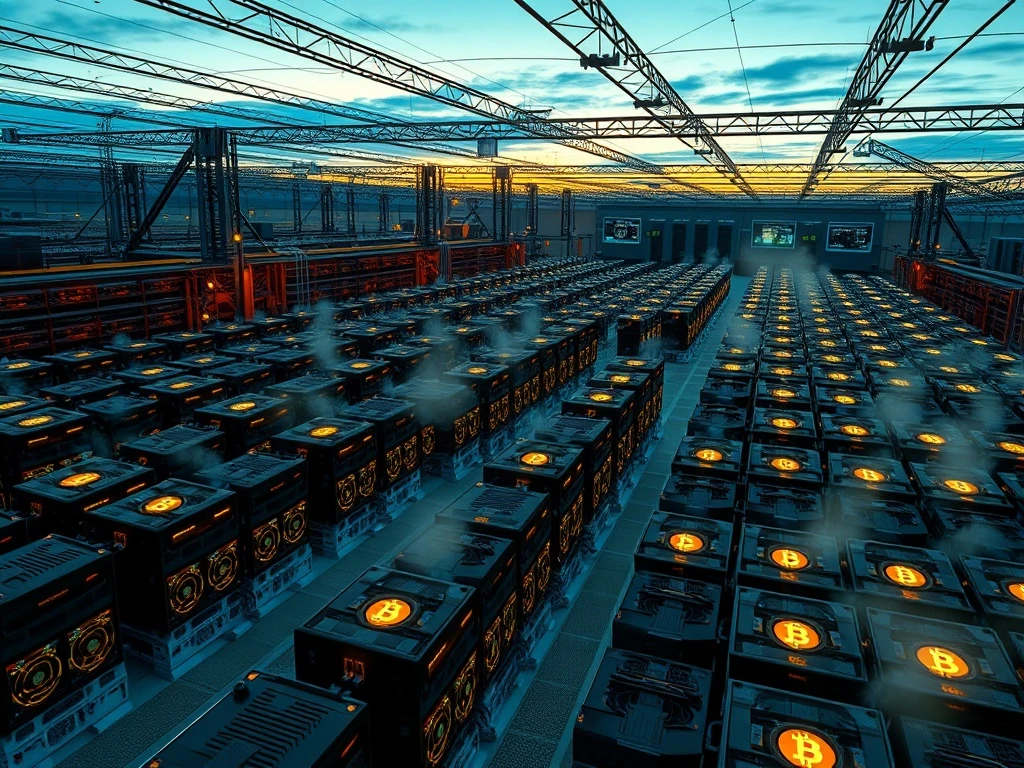
January 2026 marks a major moment for the Bitcoin network as mining difficulty experiences its first downward adjustment of the year, falling to 146.4 trillion. This development follows an exceptionally challenging 2025 where miners faced rare profitability pressures amid record-high difficulty levels and market volatility. The adjustment represents a critical recalibration of the network’s fundamental security mechanism, potentially offering temporary respite to an industry addressing complex macroeconomic and regulatory landscapes.
Bitcoin Mining Difficulty Adjustment Mechanism Explained
The Bitcoin network automatically adjusts mining difficulty approximately every two weeks to maintain a consistent 10-minute block time target. This self-regulating system ensures network security remains stable regardless of fluctuating computational power. Consequently, the January 2026 adjustment to 146.4 trillion directly responds to changing network conditions observed during the previous adjustment period.
Also read: Tokenization: The IMF's Ambitious 2026 Blueprint for Reshaping Global Finance
Network data reveals average block times currently sit at 9.88 minutes, slightly below the target. This discrepancy triggered the recent difficulty decrease. However, projections from monitoring platforms like CoinWarz indicate the next adjustment on January 22, 2026, will likely increase difficulty to approximately 148.20 trillion. This forecasted rise aims to realign block production with the protocol’s designed parameters.
2025: A Record-Breaking Yet Turbulent Year for Mining
Bitcoin mining difficulty consistently reached new all-time highs throughout 2025, creating what industry analysts describe as the “harshest margin environment” on record. The final 2025 adjustment pushed difficulty slightly higher, though it remained below November’s peak of 155.9 trillion. This sustained elevation fundamentally increased competition for block rewards across the decentralized network.
Also read: Drift Protocol Exploit Sparks Crisis Across 20 Solana Projects
Several interconnected factors created this perfect storm for miners. First, the April 2024 halving event permanently reduced block subsidies by 50%, immediately compressing revenue streams. Second, macroeconomic developments including interest rate policies and inflation concerns affected capital markets. Third, regulatory uncertainty introduced additional operational risks. Finally, a sharp cryptocurrency market downturn beginning in November 2025 applied further pressure.
The Profitability Squeeze: Hash Price Plummets Below Breakeven
Miner hash price, a important profitability metric measuring expected revenue per unit of computational power, provides the clearest picture of industry stress. This metric fell below $35 per petahash-second per day in November 2025, representing a multi-year low. Importantly, $40 per PH/s/day typically serves as the critical threshold where miners must decide whether operating remains economically viable.
When hash price drops below this level, miners with higher operational costs face difficult choices. They can either continue mining at a loss hoping for future price appreciation, temporarily shut down equipment, or exit the industry entirely. This dynamic creates natural pressure on network hash rate, which subsequently influences difficulty adjustments.
External Pressures: Market Volatility and Policy Impacts
Bitcoin’s price trajectory significantly exacerbated mining challenges. After reaching an all-time high exceeding $125,000 in October 2025, BTC experienced a flash crash followed by a sustained downturn. Prices dropped over 30% in November, briefly trading just above $80,000. Although some recovery occurred afterward, values remained substantially below previous peaks during the difficulty adjustment period.
Furthermore, policy changes introduced additional complications. Tariffs enacted during the Trump administration raised concerns about supply chain constraints for mining hardware. Potential equipment shortages or increased costs could limit miners’ ability to upgrade to more efficient machines, affecting their competitive positioning within the network.
The 2026 Outlook: Adaptation and Industry Evolution
The mining industry enters 2026 at a critical juncture. While the recent difficulty decrease offers momentary relief, the projected increase suggests continued competitive pressure. Miners must adapt through several strategic avenues. Many operations are exploring energy diversification, seeking cheaper and more sustainable power sources to improve margins. Others are investigating hybrid models that allocate computational resources between cryptocurrency mining and artificial intelligence workloads.
Technological innovation remains paramount. The ongoing development of more efficient ASIC miners directly impacts operational economics. Additionally, geographic diversification helps mitigate regulatory risks. Companies are increasingly evaluating jurisdictions with favorable policies and reliable energy infrastructure to ensure long-term viability.
Conclusion
The first Bitcoin mining difficulty adjustment of 2026 to 146.4 trillion represents a meaningful network response to the extreme conditions of 2025. While offering temporary relief, the underlying challenges of compressed profitability, market volatility, and regulatory uncertainty persist. The mining industry’s ability to innovate and adapt will determine its trajectory through 2026 and beyond. Network security remains resilient through these adjustments, demonstrating Bitcoin’s resilient design even during periods of significant industry transition.
FAQs
Q1: What is Bitcoin mining difficulty?
Bitcoin mining difficulty measures how hard it is to find a new block compared to the easiest possible scenario. The network adjusts this value approximately every two weeks to maintain a consistent 10-minute block time, ensuring security and stability regardless of changes in total computational power.
Q2: Why did mining difficulty decrease in January 2026?
Difficulty decreased because average block times fell slightly below the 10-minute target during the previous adjustment period. This indicates that blocks were being found too quickly, prompting the network to reduce difficulty to restore equilibrium.
Q3: What is hash price and why is it important for miners?
Hash price represents the expected revenue a miner earns per unit of computational power (typically per petahash-second per day). It’s a critical profitability metric that helps miners determine whether their operations remain economically viable at current Bitcoin prices and difficulty levels.
Q4: How does the 2024 halving affect 2026 mining economics?
The April 2024 halving permanently reduced block rewards from 6.25 to 3.125 BTC. This 50% reduction in subsidy income fundamentally changed mining economics, making efficiency and operational costs more vital than ever for profitability.
Q5: What happens when mining difficulty reaches all-time highs?
Record-high difficulty means increased competition among miners, requiring more computational power to earn the same rewards. This typically squeezes profit margins, especially for operations with higher electricity costs or less efficient equipment, potentially forcing some miners to shut down temporarily or permanently.

This article was produced with AI assistance and reviewed by our editorial team for accuracy and quality.