Exclusive: Bitcoin Miners Accelerate BTC Sales in Critical Pivot to AI Data Centers
NEW YORK, March 15, 2026 – The Bitcoin mining industry is undergoing a fundamental transformation. Major mining corporations are now accelerating sales of their Bitcoin (BTC) reserves at an unprecedented rate. This strategic shift directly funds a rapid pivot toward building artificial intelligence data centers and high-performance computing (HPC) projects. Consequently, the steep decline in Bitcoin’s price since October has compressed mining profitability. It forces publicly traded miners to seek alternative revenue streams. Industry analysts confirm this trend represents the most significant capital reallocation in the sector’s history.
Bitcoin Miners Accelerate BTC Sales as Margins Collapse
Public blockchain data and corporate filings reveal a marked increase in BTC selling pressure from major miners. For instance, Marathon Digital Holdings sold approximately 1,200 BTC in February alone. Similarly, Riot Platforms and Core Scientific have reported increased treasury liquidations. The primary catalyst is the Bitcoin network’s rising hash rate coupled with stagnant coin prices. This combination severely squeezes profit margins. Jaran Mellerud, founder of crypto-mining consultancy Hashlab, provided specific context. “The average cost to mine one Bitcoin now exceeds $45,000 for many public miners,” Mellerud stated. “With BTC trading below $60,000, the margin compression is unsustainable for operations reliant solely on block rewards.”
This financial pressure follows the Bitcoin halving event of April 2024, which cut block rewards in half. Miners have since operated on thinner revenues while facing soaring global energy costs. The timeline is critical. The accelerated selling began in earnest during Q4 2025. It coincided with a 40% quarterly drop in Bitcoin’s price. Therefore, companies are not merely selling newly minted coins. They are actively drawing down strategic reserves accumulated during the 2021-2023 bull market.
The AI Data Center Gold Rush Attracts Mining Capital
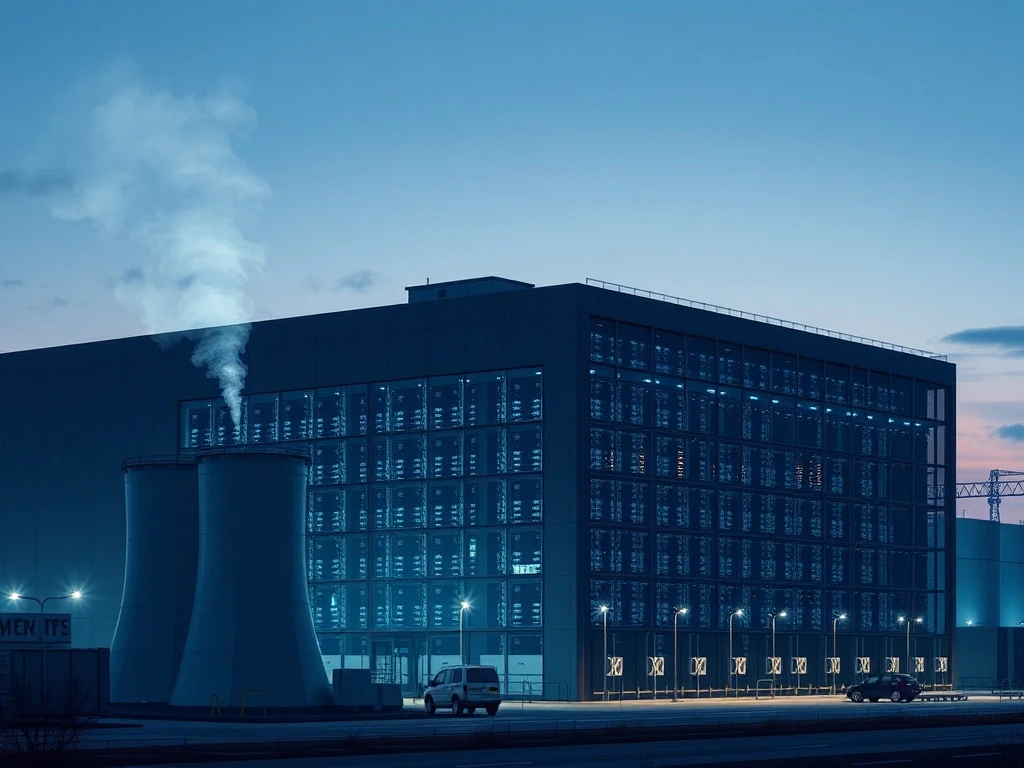
The proceeds from these BTC sales are flowing directly into the construction and acquisition of AI data center infrastructure. This pivot leverages the miners’ core competencies: securing cheap power and managing large-scale, compute-intensive operations. The potential revenue from hosting AI workloads dwarfs current Bitcoin mining returns. According to a December 2025 report by investment bank TD Cowen, a 100-megawatt data center dedicated to AI inference can generate up to ten times the annual revenue of a same-sized Bitcoin mining facility.
- Infrastructure Repurposing: Companies like Hut 8 and Bit Digital are retrofitting existing mining sites. They are replacing ASIC miners with NVIDIA H100 and Blackwell architecture GPU racks.
- Power Purchase Agreement (PPA) Advantage: Miners hold long-term, fixed-rate electricity contracts. These contracts provide a massive cost advantage for energy-intensive AI compute.
- Geographic Footprint: Mining operations in Texas, Canada, and Scandinavia possess the necessary grid connections and cooling capacity. These sites are ideal for rapid conversion.
Expert Analysis on the Strategic Shift
Industry leaders frame this not as an abandonment of Bitcoin, but as a necessary diversification. “We are evolving from a single-asset business model to a diversified high-performance compute platform,” said Fred Thiel, CEO of Marathon Digital, in a recent earnings call. The company announced a $500 million joint venture focused on AI infrastructure. Furthermore, a research note from financial services firm BTIG highlighted the risk mitigation. “This pivot reduces correlation to crypto market volatility,” wrote analyst Gregory Lewis. “It transforms these firms into infrastructure plays on the AI boom, which the public markets are valuing at higher multiples.”
Comparative Analysis: Mining Revenue vs. AI Hosting Potential
The economic driver for this pivot becomes clear when comparing revenue models. The table below outlines estimated annual revenue per 100MW of capacity, based on analyst projections from Wells Fargo and company guidance.
| Business Model | Est. Annual Revenue (100MW) | Gross Margin Range | Primary Risk |
|---|---|---|---|
| Bitcoin Mining (Post-2024 Halving) | $25M – $40M | 15% – 30% | BTC Price Volatility, Hash Rate Increase |
| AI GPU Cloud Hosting | $200M – $350M | 40% – 60% | GPU Procurement, Client Concentration |
| Mixed Use (50/50) | $112M – $195M | 30% – 45% | Operational Complexity |
This data underscores the powerful financial incentive. The transition, however, is capital-intensive. A single NVIDIA H100 server cluster can cost over $3 million. Consequently, the accelerated BTC sales provide the essential liquidity to fund these purchases without excessive debt.
Market Impact and the Road Ahead for 2026
The immediate market impact is twofold. First, the increased selling from once-long-term holders adds persistent downward pressure on Bitcoin’s price. Second, it signals a maturation of the mining industry. Companies are prioritizing sustainable cash flows over pure crypto speculation. Looking forward, analysts expect more merger and acquisition activity. Traditional data center operators may acquire mining firms for their power assets. Conversely, miners with strong balance sheets may acquire smaller AI startups.
Investor and Community Reaction
The reaction from different stakeholder groups is mixed. Institutional investors have largely applauded the move. They view it as a prudent de-risking strategy. However, some segments of the Bitcoin community express concern. They worry about the centralization of mining power if only the largest, best-capitalized firms survive the transition. Additionally, environmental groups are monitoring the situation. They note that while AI compute is energy-intensive, the shift could accelerate adoption of stranded renewable energy sources, similar to Bitcoin mining’s earlier role.
Conclusion
The headline trend is definitive. Bitcoin miners are accelerating BTC sales to finance a historic pivot. This strategic shift moves capital from cryptocurrency mining into AI data centers and high-performance computing. The primary drivers are collapsing mining margins and the superior financial metrics of AI infrastructure. Key players like Marathon and Riot are leading the charge. They are repurposing their power and real estate assets. The long-term effect will be a more diversified and financially resilient industry. However, it may also alter the fundamental dynamics of Bitcoin’s security and decentralization. Observers should watch corporate earnings calls throughout 2026. They will reveal the speed and scale of this capital reallocation. The great Bitcoin mining migration has begun.
Frequently Asked Questions
Q1: Why are Bitcoin miners selling their BTC now?
Miners are selling BTC reserves primarily due to compressed profit margins. The Bitcoin halving cut block rewards, while energy costs rose and the BTC price declined. Selling treasury coins provides immediate capital to fund more profitable ventures like AI data centers.
Q2: How does building an AI data center compare to Bitcoin mining?
AI data center hosting can generate significantly higher and more stable revenue per unit of energy consumed. Analyst estimates suggest a 100MW AI facility can earn 5-10 times the annual revenue of a same-sized Bitcoin mining farm, with better gross margins.
Q3: What is the timeline for this industry shift?
The accelerated selling and pivot began in Q4 2025 and is expected to accelerate through 2026. Several major miners have already announced concrete partnerships and capital expenditure plans for AI infrastructure build-outs this year.
Q4: Does this mean Bitcoin mining is no longer profitable?
Bitcoin mining remains profitable for the most efficient operators with the lowest energy costs. However, the profit margin has decreased substantially, making it less attractive compared to other uses for the same infrastructure and capital.
Q5: Will this mass exodus from mining hurt the Bitcoin network?
In the short term, if many miners shut down, the network hash rate could drop, temporarily affecting security. However, Bitcoin’s difficulty adjustment algorithm will lower the mining difficulty, allowing remaining miners to become profitable again, ensuring network stability.
Q6: How does this affect everyday cryptocurrency investors?
The increased selling from miners adds a source of consistent sell-side pressure on Bitcoin’s price. For investors, it underscores the importance of understanding the changing fundamentals of the mining sector, which can influence market cycles and coin supply dynamics.
This article was produced with AI assistance and reviewed by our editorial team for accuracy and quality.