Bitcoin Miner CleanSpark’s Strategic Pivot: Bold Texas Acquisition Expands AI and HPC Footprint
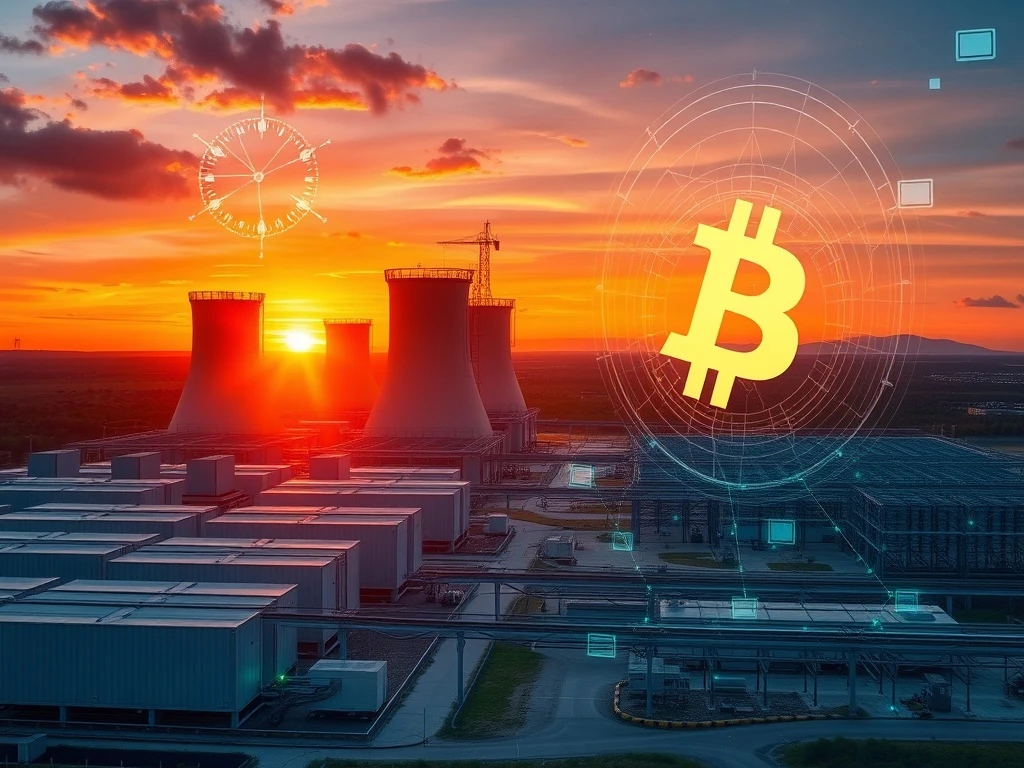
In a strategic move reflecting broader industry trends, Bitcoin mining company CleanSpark announced a definitive agreement to acquire 447 acres of land in Brazoria County, Texas, on Wednesday, December 10, 2025, marking a significant expansion into artificial intelligence and high-performance computing infrastructure. This acquisition represents a calculated pivot as the cryptocurrency mining sector faces remarkable operational challenges and seeks sustainable revenue diversification.
CleanSpark’s Texas Expansion: A Calculated AI and HPC Strategy
CleanSpark’s Texas land purchase specifically targets the development of a 300-megawatt data center facility with potential expansion to 600 MW. The company explicitly designed these centers for artificial intelligence and high-performance computing workloads. Consequently, this move positions CleanSpark within a rapidly growing market segment. The demand for scaled, AI-native compute continues to accelerate dramatically. Moreover, access to transmission-level power in strategically advantageous regions has become increasingly constrained, according to CleanSpark chairman and CEO Matt Schultz. The company expects the Texas deal to close in the first quarter of 2026, following standard regulatory and due diligence processes.
Also read: AAVE Exchange Balances Surge to 2.23M, Signaling Intensifying Sell Pressure
The Rising Tide of Mining Difficulty and Industry Diversification
CleanSpark’s strategic shift occurs against a backdrop of soaring Bitcoin mining difficulty throughout 2025. According to data from CoinWarz, BTC mining difficulty peaked at approximately 156 trillion in November 2025, maintaining historically high levels around 146 trillion at year’s end. This escalating difficulty directly increases computational costs and energy consumption for mining operations. Therefore, numerous Bitcoin mining companies have initiated diversification strategies. For instance, industry players including MARA Holdings, Core Scientific, Hut 8, Riot Platforms, and TeraWulf have already repurposed infrastructure or announced concrete plans to deepen their involvement in AI and HPC sectors. These companies recognize the structural similarities between cryptocurrency mining data centers and those required for intensive AI model training and inference.
Comparative Analysis of Major Miner Diversification Strategies
The following table illustrates how leading Bitcoin mining companies are approaching infrastructure diversification as of late 2025:
Also read: BYDFi Simplifies Crypto: How the Exchange Is Opening Trading to Everyone in 2026
| Company | Diversification Strategy | Primary Focus | Announcement Timeline |
|---|---|---|---|
| CleanSpark | Land acquisition for new AI/HPC data centers | Greenfield development in Texas | Q4 2025 |
| Core Scientific | Partnerships with AI cloud providers | Retrofitting existing facilities | Q2 2025 |
| Riot Platforms | Dual-purpose infrastructure design | Modular switching between mining and HPC | Q3 2025 |
| TeraWulf | Nuclear-powered data center expansion | Sustainable computing for AI workloads | Q1 2025 |
Infrastructure Synergies Between Crypto Mining and AI Computing
The transition from Bitcoin mining to AI and high-performance computing leverages significant infrastructure synergies. Both applications require:
- Massive computational power provided by specialized processing units
- Extensive cooling systems to manage substantial heat generation
- Reliable, high-capacity power infrastructure with stable electrical supply
- Solid network connectivity for data transfer and operations management
- Geographic advantages including favorable energy markets and regulatory environments
Texas offers particular advantages for these operations, including competitive energy markets, business-friendly regulations, and growing technology sector partnerships. Furthermore, the state’s independent electrical grid provides certain operational flexibilities. CleanSpark’s selected location in Brazoria County specifically offers access to transmission-level power, which has become a scarce resource for large-scale computing operations nationwide.
Economic Drivers Behind the Strategic Pivot
Multiple economic factors drive Bitcoin miners toward AI and HPC diversification. First, Bitcoin’s block reward halving events periodically reduce mining revenue. Second, increasing global mining competition continually pushes difficulty higher. Third, energy price volatility creates operational uncertainty. Fourth, AI computing services command premium pricing with growing enterprise demand. According to industry analysts, AI cloud services can generate significantly higher revenue per watt compared to cryptocurrency mining during certain market conditions. However, this transition requires substantial capital investment and technical expertise. CleanSpark’s move suggests confidence in both the long-term AI market and their operational capabilities beyond cryptocurrency validation.
Alternative Diversification Approaches Within the Mining Sector
While CleanSpark and others pursue AI and HPC expansion, some mining companies explore different diversification pathways. For example, Canadian Bitcoin miner Canaan recently announced participation in a proof-of-concept program to utilize compute heat for local greenhouse operations. This approach addresses both energy efficiency concerns and community relations. Other companies investigate demand response programs, where they temporarily reduce power consumption during grid stress events. These varied strategies demonstrate the industry’s adaptive response to evolving market conditions and sustainability expectations.
Regulatory and Market Implications of Infrastructure Repurposing
The large-scale repurposing of cryptocurrency mining infrastructure carries broader implications. From a regulatory perspective, data centers serving AI workloads may face different compliance requirements than cryptocurrency mining operations. Additionally, local communities may respond differently to AI data centers versus cryptocurrency mining facilities, potentially affecting permitting processes. Market dynamics also shift as substantial computing capacity transitions between sectors. This movement could influence availability and pricing for both Bitcoin mining and AI computational resources throughout 2026 and beyond. Industry observers closely monitor whether these transitions represent temporary adaptations or permanent strategic realignments.
Conclusion
CleanSpark’s Texas land acquisition for AI and high-performance computing development represents a significant milestone in the ongoing evolution of cryptocurrency mining infrastructure. This Bitcoin miner’s strategic pivot reflects broader industry adaptation to rising operational costs and seeking sustainable growth avenues. As Bitcoin mining difficulty reaches unusual levels, infrastructure diversification toward AI and HPC applications offers potential revenue stability and technological relevance. The coming years will determine whether these moves establish a durable industry template or represent transitional responses to specific market conditions. Nevertheless, CleanSpark’s expansion clearly demonstrates the dynamic intersection of cryptocurrency, artificial intelligence, and large-scale computing infrastructure in the modern technological arena.
FAQs
Q1: Why is CleanSpark moving into AI and high-performance computing?
CleanSpark is diversifying its operations due to increasing Bitcoin mining difficulty and associated rising costs. The company recognizes infrastructure synergies between cryptocurrency mining and AI computing, along with growing market demand for AI services that may offer more stable revenue streams.
Q2: Where exactly is CleanSpark building its new data center?
CleanSpark acquired 447 acres of land in Brazoria County, Texas, for development of a data center complex. The location provides access to transmission-level power, which has become increasingly constrained in strategic regions for large-scale computing operations.
Q3: How does Bitcoin mining difficulty affect mining companies’ business decisions?
Higher mining difficulty requires more computational power and energy to mine the same amount of Bitcoin, increasing operational costs. This economic pressure encourages miners to seek alternative uses for their infrastructure that might offer better returns on investment.
Q4: Are other Bitcoin mining companies making similar moves?
Yes, several major mining companies including Core Scientific, Hut 8, Riot Platforms, and TeraWulf have announced plans to repurpose infrastructure or expand into AI and HPC services. This represents a broader industry trend toward diversification beyond cryptocurrency mining.
Q5: What happens to Bitcoin mining operations when companies pivot to AI?
Companies typically maintain some Bitcoin mining capacity while allocating portions of their infrastructure to AI workloads. Some design flexible systems that can switch between applications based on market conditions, while others develop entirely separate facilities for different computing purposes.

This article was produced with AI assistance and reviewed by our editorial team for accuracy and quality.