Bitcoin’s Liquidity Warning: Why the Heatmap Signals a Critical Juncture
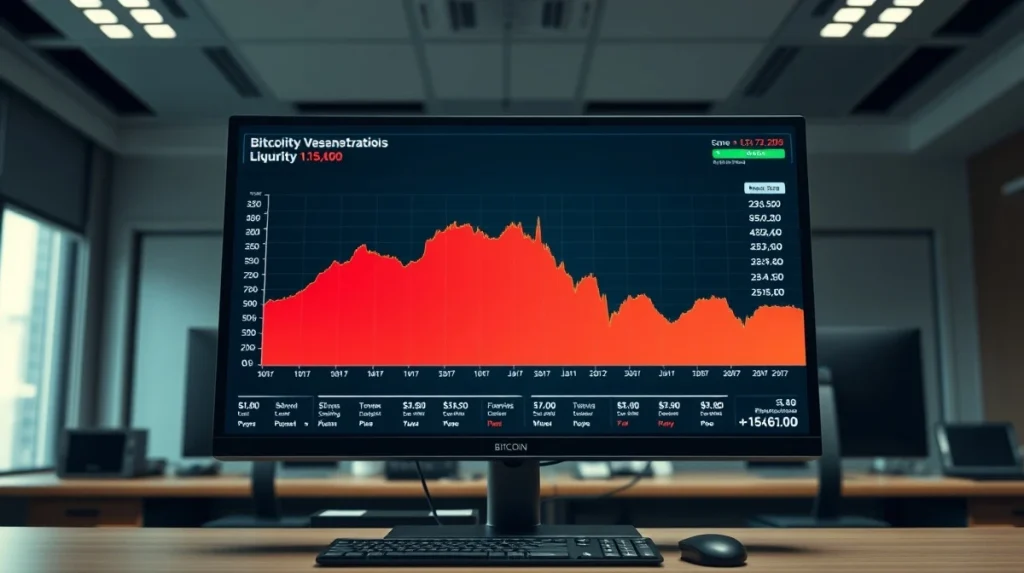
Bitcoin’s price action has stalled. After bouncing from a low near $65,500 in early April 2026, the cryptocurrency has struggled to break meaningfully above $67,000. This consolidation hides a more telling story found in market microstructure data. A specific analytical tool, the Market Maker’s Toolkit (MMT) heatmap popularized by analyst Columbus0x, reveals where trading interest truly lies. The data shows a clear imbalance: more buy and sell orders—what traders call liquidity—are stacked below Bitcoin’s current price than above it. This structural setup often precedes significant price moves.
Decoding the Bitcoin Heatmap’s Message
Columbus0x’s MMT heatmap is not a crystal ball. It is a visualization of order book depth across major cryptocurrency exchanges. The tool aggregates limit orders—the resting bids and asks that form the market’s foundation. According to data from April 3-4, 2026, the chart displays a dense cluster of buy orders in the mid-to-low $60,000 range. This zone, particularly between $60,500 and $62,000, acts as a powerful magnet. Conversely, sell-side liquidity above $68,000 appears comparatively thin. This creates a lopsided market. The implication is straightforward. A drop toward $60,000 would encounter substantial buying interest, potentially creating a strong support floor. A rally, however, might face less immediate resistance, but also less fuel from eager buyers waiting at higher levels.
Also read: Leap Wallet Shutdown: Urgent Steps Cosmos Users Must Take Now
The Mechanics of Market Liquidity
Liquidity is the lifeblood of any financial market. In simple terms, it refers to the ease of buying or selling an asset without causing a drastic price change. A deep order book with many orders at various prices indicates high liquidity. A thin order book suggests the opposite. The current Bitcoin heatmap suggests a market in a state of indecision, but with a clear gravitational pull to the downside. Industry watchers note that when significant liquidity pools form below the spot price, they often get ‘filled’ as the price dips to trigger those waiting buy orders. This process can stabilize a decline. But it also means the path of least resistance, for now, points lower toward that liquidity pool.
Historical Context and Trader Psychology
This pattern is not new. Similar liquidity setups have preceded major moves in Bitcoin’s past. For instance, in late 2023, a buildup of liquidity around $40,000 eventually drew the price down before it launched a sustained rally. The psychology at work is key. Large traders and institutions often place limit orders at round numbers or previous areas of consolidation, anticipating others will do the same. This creates self-fulfilling zones of interest. The current concentration in the $60,000s aligns with a major support area from Q1 2026. What this means for investors is heightened awareness of these levels. A clean hold of support near $60,000 could be seen as a bullish consolidation. A breakdown, however, could trigger a sharper sell-off as stop-loss orders are hit.
Also read: Crypto Inflows Stumble: JPMorgan Reveals Sharp Slowdown in Early 2026 Capital
Current Price Action and Macro Pressures
As of April 4, 2026, Bitcoin trades in a tight band between $66,000 and $67,000. This follows a volatile week influenced by macroeconomic data from the United States. The price bounce from the $65,500 low lacked strong follow-through. Trading volume has declined during this consolidation, a typical sign of waning momentum. Analysts point to external factors adding pressure. Expectations around central bank interest rate policies and strength in traditional equity markets have diverted some capital away from crypto assets. This suggests the liquidity picture on the heatmap is forming within a cautious macro environment. The market is waiting for a catalyst.
What Traders Are Watching Next
The heatmap provides a snapshot, not a forecast. Its utility lies in framing probabilities. Key levels to monitor include:
- Immediate Support: The recent low near $65,500.
- Primary Liquidity Zone: The $60,000 to $62,000 range highlighted by the heatmap.
- Resistance: The $68,000 to $70,000 area where sell orders begin to increase.
A break above $68,000 with conviction could invalidate the bearish liquidity structure and target thinner resistance higher. Conversely, a sustained move below $65,500 would likely accelerate a test of the main liquidity pool below. Market sentiment, as measured by tools like the Crypto Fear & Greed Index, has cooled from extreme greed levels seen in March, providing more room for a sentiment-driven bounce if positive news emerges.
Conclusion
Bitcoin’s price heatmap offers a clear, data-driven warning. The heavier concentration of liquidity below current prices than above them indicates where professional trading interest currently resides. The mid-$60,000 range remains the dominant price magnet. While this setup suggests a higher probability of a test lower, it also identifies a potential area of strong buying should that test occur. Market participants should view this not as a prediction of doom, but as a map of the battlefield. The coming days will reveal whether Bitcoin can build liquidity at higher levels to support a new advance, or if it must revisit the dense pool of orders waiting below.
FAQs
Q1: What is a liquidity heatmap in cryptocurrency trading?
A liquidity heatmap is a data visualization tool that aggregates and displays the density of buy and sell limit orders across different price levels on exchanges. It shows where significant trading interest is clustered.
Q2: Who is Columbus0x and what is the MMT heatmap?
Columbus0x is a pseudonymous crypto market analyst known for technical and on-chain analysis. The MMT (Market Maker’s Toolkit) heatmap is a specific charting tool they utilize to visualize order book liquidity, drawing data from multiple trading venues.
Q3: Does more liquidity below price mean Bitcoin will definitely drop?
Not definitely. While it indicates a higher probability of a move down to ‘fill’ those buy orders, it also identifies a strong potential support zone. Price can always move up if new buying pressure emerges or if the liquidity profile changes.
Q4: How reliable are these heatmaps for making trading decisions?
They are one piece of analysis among many. Heatmaps show the current resting order book state, which can change rapidly. They should be used in conjunction with price action, volume analysis, and broader market fundamentals.
Q5: What other tools do analysts use alongside liquidity heatmaps?
Common complementary tools include on-chain data (exchange flows, wallet activity), futures market metrics (funding rates, open interest), traditional technical analysis (support/resistance, moving averages), and macroeconomic indicators.

This article was produced with AI assistance and reviewed by our editorial team for accuracy and quality.