Bitcoin’s Stunning Stability: Now Less Volatile Than Tesla and Nvidia, Schwab Data Shows
New data from financial services giant Charles Schwab reveals a significant market shift: Bitcoin, the pioneering cryptocurrency, now exhibits lower price volatility than the stocks of major technology companies Tesla and Nvidia. This analysis, reported on March 27, 2026, marks a potential inflection point in the digital asset’s journey toward mainstream financial acceptance. The finding challenges long-held perceptions of cryptocurrency as an inherently unstable asset class. Concurrently, analysts at Bernstein have published research suggesting the Bitcoin price has found a bottom, providing a dual narrative of stabilization and potential forward momentum for the world’s largest digital currency.
Bitcoin Volatility Dips Below Tech Giants
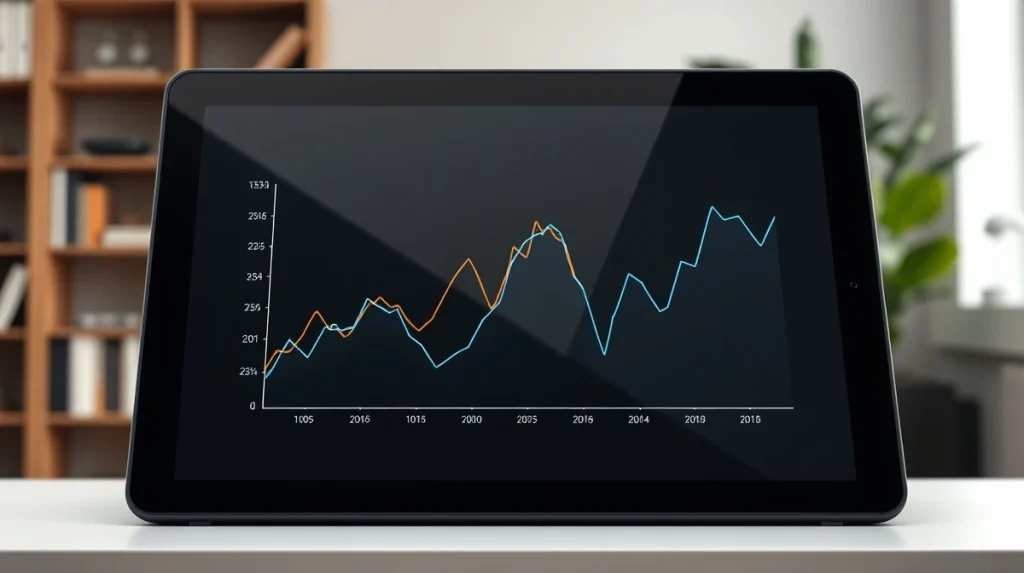
Charles Schwab’s market analysis team compared the 30-day realized volatility of Bitcoin against the same metric for Tesla Inc. (TSLA) and Nvidia Corporation (NVDA) stocks. Realized volatility measures the standard deviation of an asset’s returns over a specific period, providing a concrete gauge of price swings. Historically, Bitcoin’s volatility has dwarfed that of even the most dynamic equities. However, recent data indicates this relationship has inverted. For the period leading into late March 2026, Bitcoin’s volatility reading settled below that of both Tesla and Nvidia. This development suggests a notable calming in the cryptocurrency’s price movements relative to two of the stock market’s most prominent and sometimes turbulent names.
Several factors contribute to this newfound stability. Firstly, increased institutional adoption has brought more long-term, buy-and-hold capital into the Bitcoin ecosystem. Secondly, the maturation of regulated financial products, like U.S. spot Bitcoin Exchange-Traded Funds (ETFs) approved in early 2024, has provided a structured avenue for investment. Finally, broader macroeconomic integration means Bitcoin’s price action is increasingly influenced by traditional financial indicators, such as interest rate expectations and inflation data, rather than purely speculative crypto-market sentiment.
Bernstein’s Analysis on the Bitcoin Price Floor
In a related development, research from the brokerage and investment firm Bernstein posits that Bitcoin has established a definitive price bottom. Analysts Gautam Chhugani and Mahika Sapra outlined their reasoning in a note to clients. They point to robust on-chain metrics, including strong accumulation by long-term holders and reduced selling pressure from miners following the April 2024 halving event. The analysts also highlight the substantial and consistent net inflows into U.S. spot Bitcoin ETFs since their launch as a critical demand-side support pillar. “The structural demand from ETFs is creating a baseline absorption of supply,” the analysts noted, contextualizing the price stabilization.
The Convergence of Data Points
The Schwab volatility data and the Bernstein bottom-call, while distinct analyses, paint a cohesive picture of a maturing market. Lower volatility reduces risk metrics for institutional portfolios, potentially inviting further capital allocation. The perception of a established price floor can bolster investor confidence, reducing panic selling during downturns. Together, these analyses indicate Bitcoin may be transitioning from a speculative technological bet into an asset with more recognizable financial characteristics. This transition does not eliminate risk, but it potentially redefines its profile within a diversified portfolio.
For comparison, consider the following simplified volatility scores (hypothetical index for illustration):
- Bitcoin (BTC): 45
- Tesla (TSLA): 58
- Nvidia (NVDA): 52
A lower score indicates lower recent volatility. This illustrative ranking underscores the core finding from the Schwab dataset.
Contextualizing the Shift in Broader Markets
The relative stabilization of Bitcoin occurs against a specific backdrop in equity markets. Both Tesla and Nvidia have experienced significant volatility drivers in early 2026. Tesla’s stock remains highly sensitive to electric vehicle delivery numbers, competitive pressures, and CEO Elon Musk’s public commentary. Nvidia, while a dominant force in artificial intelligence hardware, has seen its stock price react sharply to quarterly earnings reports and shifts in semiconductor demand forecasts. Their inherent volatility as growth stocks in dynamic sectors provides a new benchmark against which to measure digital assets. Bitcoin’s decoupling from extreme volatility is therefore a two-sided story: calming crypto markets and persistently dynamic tech equities.
Market historians may draw parallels to other asset classes that matured over decades. For instance, the technology sector of the NASDAQ in the late 1990s exhibited extreme volatility before settling into a more predictable, though still dynamic, pattern as it became a core part of the global economy. While the timeline is compressed, Bitcoin appears to be on a similar path of integration and normalization.
Implications for Investors and the Market
This volatility shift carries practical implications. Financial advisors using modern portfolio theory may begin to reassess Bitcoin’s role and risk contribution. Risk-averse institutions that previously cited volatility as a primary barrier to entry may revisit their policies. Furthermore, the derivatives market for Bitcoin, including options and futures, may see changing patterns in pricing as implied volatility adjusts to new realized volatility norms. However, experts caution that past performance is not indicative of future results. Cryptocurrency markets remain susceptible to regulatory announcements, technological developments, and macroeconomic shocks that could reintroduce periods of high volatility.
Conclusion
The convergence of data from Charles Schwab and analysis from Bernstein presents a compelling narrative for Bitcoin in early 2026. The cryptocurrency’s demonstrated volatility now sits below that of flagship technology stocks Tesla and Nvidia, signaling a profound maturation. Coupled with analyst consensus around a established price floor, the market environment for Bitcoin appears to be shifting from one defined by wild speculation to one increasingly influenced by institutional flows and macroeconomic fundamentals. This evolution of Bitcoin volatility represents a critical milestone, potentially broadening its appeal to a more extensive segment of the global investment community and solidifying its position within the contemporary financial landscape.
FAQs
Q1: What does it mean that Bitcoin is less volatile than Tesla and Nvidia?
It means that, according to the specific volatility metric used by Schwab (likely 30-day realized volatility), the price of Bitcoin was experiencing smaller percentage swings up and down than the share prices of Tesla and Nvidia over the same recent period. This is a notable change from Bitcoin’s historical reputation for extreme price fluctuations.
Q2: Does lower volatility make Bitcoin a safer investment?
Lower volatility generally indicates lower short-term price risk, which is one component of “safety.” However, investment safety also depends on factors like long-term viability, regulatory risk, and liquidity. Reduced volatility may make Bitcoin more palatable for certain risk profiles, but it does not eliminate the asset’s unique risks.
Q3: Why are analysts like Bernstein saying Bitcoin has bottomed?
Analysts point to several on-chain and market indicators, including sustained buying by long-term holders, consistent net inflows into spot Bitcoin ETFs, and reduced selling pressure from miners. These factors combine to create what they see as a strong foundational support level for the price.
Q4: Could Bitcoin’s volatility increase again?
Yes. While the current data shows lower volatility, cryptocurrency markets are still developing and can be impacted by unforeseen events, regulatory changes, or major technological shifts. Volatility is a measure of recent history, not a guarantee of future stability.
Q5: How does the performance of spot Bitcoin ETFs relate to this volatility data?
The introduction and success of spot Bitcoin ETFs in the U.S. are considered a primary driver of increased institutional investment. This influx of steady, regulated buying pressure is a key factor believed to be dampening Bitcoin’s extreme volatility and contributing to the price stability observed in the Schwab data.
This article was produced with AI assistance and reviewed by our editorial team for accuracy and quality.