Bitcoin’s Internal Conditions Show Promising Improvement as Glassnode Data Reveals Easing Sell Pressure
Recent on-chain data from blockchain analytics firm Glassnode indicates a significant shift in Bitcoin’s underlying market dynamics, with internal conditions showing marked improvement despite ongoing price consolidation and fragile spot demand. As of late October 2025, Bitcoin trades around $92,550, reflecting a nearly 3% decline from weekend highs but maintaining a 6% year-to-date gain amid escalating US/EU trade tensions.
Glassnode Data Reveals Improving Bitcoin Fundamentals
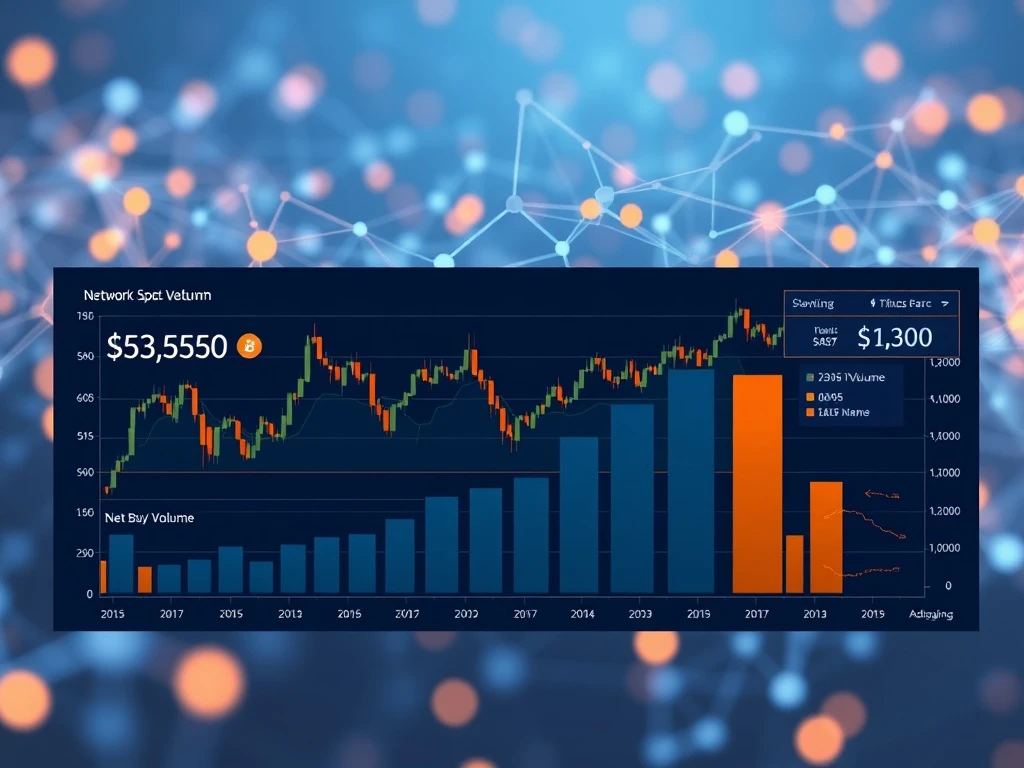
Glassnode’s latest weekly report, published Monday, presents compelling evidence of strengthening Bitcoin market structure. Analysts observed a “modest” but meaningful increase in spot Bitcoin trading volume alongside a critical development: the net buy-sell imbalance has broken above its upper statistical band. This technical movement signals what Glassnode describes as a “clear reduction in sell-side pressure,” suggesting that profit-taking from late-2025 has largely been absorbed by the market.
Also read: Crypto Clarity Act Gains Significant Backing as Armstrong Shifts Stance, Pressuring Congress
Furthermore, the data reveals that long-term holders demonstrate increased conviction, showing less inclination to sell during price rallies. This behavioral shift contributes substantially to the improving supply-side dynamics. Meanwhile, institutional participation through exchange-traded funds continues to demonstrate a pattern of buying during price pullbacks, providing consistent demand support even during periods of market uncertainty.
Market Context and Geopolitical Influences
Bitcoin’s price movement occurs against a complex macroeconomic backdrop characterized by escalating trade tensions between the United States and European Union. These geopolitical developments have introduced volatility across traditional financial markets, with investors increasingly viewing Bitcoin as a potential portfolio hedge rather than merely a speculative asset.
Also read: XRP Price Prediction: Analyst Eyes $2 Target Before Potential Retest of Gaussian Channel Support
Gracie Lin, CEO at OKX Singapore, emphasized this evolving narrative in comments to Crypto News Insights. “With fresh tariff headlines, softer growth signals across parts of APAC, and record gold prices in the background,” Lin noted, “that strengthens the case for Bitcoin being treated less as a short-term trade and more as a portfolio hedge – even as volatility remains a feature of the asset.” This perspective aligns with growing institutional interest that focuses on Bitcoin’s long-term store-of-value properties rather than daily price fluctuations.
Historical Parallels and Network Metrics
Analysts at Swissblock have identified intriguing historical parallels in current network conditions. Their research indicates that Bitcoin’s network growth and recent liquidity drain resemble conditions last observed in 2022. During that previous period, similar network levels “triggered a BTC consolidation phase as network growth began to recover, even while liquidity remained weak and bottomed out,” according to Swissblock’s analysis.
The firm highlights a potentially bullish historical pattern: “History shows that the subsequent surge in both metrics fueled the major bull run.” This observation suggests that current conditions might represent a foundation-building phase preceding more substantial price appreciation. The following table compares key network metrics between 2022 and 2025:
| Metric | 2022 Levels | 2025 Levels | Interpretation |
|---|---|---|---|
| Network Growth | Low | Comparably Low | Potential consolidation phase |
| Liquidity | Drained | Recently Drained | Weakness potentially bottoming |
| Buy-Sell Imbalance | Not Specified | Above Upper Band | Reduced sell pressure |
Institutional Positioning and Market Structure
Glassnode’s analysis further notes that while “defensive positioning persists” among some market participants, there are clear signs of “strengthening buy-side dynamics and renewed institutional interest.” These factors collectively suggest “a gradual rebuild toward a more constructive market structure.” The improvement in internal conditions occurs even as Bitcoin remains in a consolidation pattern from a price perspective, indicating that fundamental improvements often precede significant price movements.
Key indicators pointing to structural improvement include:
- Rising spot volumes indicating renewed trading activity
- Breaking of statistical bands in net buy-sell imbalance
- Reduced long-term holder distribution during rallies
- Consistent institutional accumulation through ETF channels
- Historical network parallels suggesting potential bullish setups
Market participants should note that Glassnode explicitly cautions that spot demand “remains fragile and uneven,” indicating that while conditions are improving, the recovery remains in early stages. This nuanced perspective acknowledges both the positive developments and the ongoing challenges in Bitcoin markets, particularly regarding sustained organic demand outside institutional channels.
Conclusion
Glassnode’s comprehensive analysis reveals that Bitcoin’s internal conditions are demonstrably improving through measurable reductions in sell-side pressure and increasing spot trading volumes. While price action remains constrained by geopolitical uncertainties and fragile spot demand, the underlying market structure shows promising signs of strengthening. The combination of reduced distribution by long-term holders, consistent institutional accumulation, and historical network parallels suggests Bitcoin may be establishing a foundation for its next significant market phase. As markets continue to digest global trade developments, Bitcoin’s evolving role as a portfolio hedge alongside its improving internal conditions warrants close monitoring by investors and analysts alike.
FAQs
Q1: What does Glassnode mean by “internal conditions” for Bitcoin?
Glassnode refers to underlying on-chain metrics and market structure factors that aren’t immediately visible in price alone. These include trading volume, net buy-sell imbalances, holder behavior, and network activity, which collectively indicate the health and dynamics of the Bitcoin market.
Q2: Why is the net buy-sell imbalance breaking above its statistical band significant?
This technical development indicates that buying pressure is measurably outweighing selling pressure beyond normal statistical variation. It suggests a meaningful reduction in sell-side activity, which typically supports price stability and potential appreciation.
Q3: How are geopolitical factors affecting Bitcoin’s price in 2025?
Escalating US/EU trade tensions have introduced volatility across financial markets. Some investors are responding by treating Bitcoin more as a portfolio hedge against macroeconomic uncertainty, similar to gold, rather than purely as a speculative asset.
Q4: What historical period shows similar network conditions to current Bitcoin metrics?
Analysts at Swissblock identify parallels with 2022 network conditions, when similarly low network growth and drained liquidity preceded a consolidation phase that eventually contributed to a substantial bull market.
Q5: Is institutional interest in Bitcoin increasing despite recent price declines?
Yes, Glassnode data shows institutional participants continue accumulating Bitcoin through exchange-traded funds, particularly during price pullbacks. This pattern suggests sustained institutional confidence in Bitcoin’s long-term value proposition.

This article was produced with AI assistance and reviewed by our editorial team for accuracy and quality.