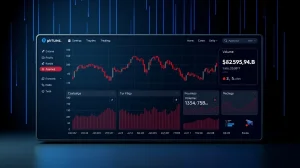
Crypto Market Downturn Intensifies as Bitcoin Holders Trigger Massive Offloading

Global cryptocurrency markets entered a significant downturn this week as Bitcoin ($BTC) and Ethereum ($ETH) holders initiated widespread asset offloading, creating ripple effects across decentralized finance protocols and triggering the highest trading volumes in months. Market analysts report that fear-dominated sentiment now drives investor behavior, fundamentally altering the short-term trajectory of digital assets worldwide.
Crypto Market Downturn Accelerates with Bitcoin Pressure
The cryptocurrency market downturn gained momentum throughout Tuesday’s trading session as Bitcoin broke below critical support levels. Consequently, the leading digital asset dropped approximately 12% over 24 hours, reaching its lowest point since early November. Meanwhile, Ethereum followed this downward trajectory with a 14% decline, amplifying negative sentiment across altcoin markets. This synchronized movement between the two largest cryptocurrencies typically signals broader market distress rather than isolated asset weakness.
Also read: Bitcoin Mining Difficulty Plummets: Network Data Signals 14% Downward Adjustment
Market data reveals several concerning patterns emerging simultaneously. First, exchange inflows for Bitcoin reached their highest level in six months, indicating increased selling pressure. Second, the Crypto Fear & Greed Index plunged into “extreme fear” territory, registering its lowest reading since the 2023 banking crisis. Third, derivatives markets show elevated liquidations, particularly among leveraged long positions that anticipated continued upward momentum.
Ethereum’s Sharp Decline Compounds Market Anxiety
Ethereum’s performance during this crypto market downturn warrants particular attention due to its central role in decentralized finance ecosystems. The second-largest cryptocurrency by market capitalization experienced more severe declines than Bitcoin throughout the correction period. This disproportionate impact stems from Ethereum’s dual role as both a speculative asset and the foundational infrastructure for thousands of decentralized applications.
Also read: BlockDAG's Stunning 79,900% Surge Targets $1 as Litecoin and Dogecoin Struggle
Several technical factors contributed to Ethereum’s sharp drop. The asset failed to maintain support above $3,200, triggering automated sell orders and stop-loss positions. Additionally, network activity metrics showed declining transaction volumes preceding the price movement, suggesting weakening fundamental demand. However, Ethereum’s upcoming protocol upgrades continue to provide long-term structural support despite current market conditions.
DeFi Ecosystem Faces TVL Contraction
The decentralized finance sector experienced immediate consequences from the crypto market downturn. Total Value Locked (TVL) across major DeFi protocols declined approximately 15% as asset prices fell and some users withdrew funds. This contraction represents both valuation effects from lower cryptocurrency prices and actual capital outflows from decentralized lending and yield platforms.
Notably, certain DeFi sectors demonstrated varying resilience levels. Lending protocols like Aave and Compound maintained relatively stable borrowing activity despite market volatility. Conversely, decentralized exchanges recorded historic trading volumes as users repositioned portfolios and sought liquidity. This divergence highlights how different DeFi components respond uniquely to market stress events.
Surprising Volume Surge Amid Market Decline
Paradoxically, trading volumes surged throughout the crypto market downturn, reaching levels typically associated with bullish momentum. Major centralized exchanges reported 40-60% increases in spot trading activity, while decentralized exchanges saw even more dramatic spikes. This volume surge suggests intense market participation rather than simple capitulation, potentially indicating sophisticated repositioning by institutional and experienced retail traders.
Several factors explain this volume anomaly. First, algorithmic trading systems automatically executed orders around key technical levels. Second, options and futures expirations created additional volatility and hedging activity. Third, traditional market correlations reasserted themselves, with cryptocurrency movements aligning more closely with technology stocks and risk assets than in previous months.
Historical Context and Market Psychology
Current market conditions reflect familiar patterns from previous cryptocurrency cycles. Historical data shows that similar corrections occurred in Q2 2021 and Q3 2022, both preceding significant market recoveries. However, each downturn possesses unique characteristics based on market maturity, regulatory environment, and macroeconomic backdrop.
Market psychology plays a vital role in these movements. The transition from “greed” to “fear” sentiment often accelerates selling pressure as emotional decision-making overrides strategic positioning. Behavioral finance research indicates that cryptocurrency markets exhibit stronger herd behavior than traditional financial markets, potentially amplifying both upward and downward movements.
Institutional Response and Regulatory Considerations
Institutional investors demonstrated mixed responses to the crypto market downturn. Some traditional finance entities increased their cryptocurrency exposure during price declines, viewing the correction as a buying opportunity. Others reduced positions, citing macroeconomic uncertainty and regulatory developments. This divergence reflects the evolving institutional approach to digital asset allocation.
Regulatory considerations gained prominence during this market movement. Several jurisdictions announced new cryptocurrency frameworks, creating both uncertainty and long-term clarity. Market participants particularly monitored developments regarding exchange regulations, stablecoin oversight, and taxation policies. These regulatory factors increasingly influence market dynamics alongside traditional supply and demand forces.
Technical Analysis and Support Levels
Technical analysts identify several critical levels for monitoring market recovery potential. For Bitcoin, the $52,000-$54,000 range represents vital support based on previous consolidation periods and institutional buying activity. Ethereum faces important tests at $2,800 and $2,600, levels that previously attracted significant buying interest.
Key technical indicators provide additional context. The Relative Strength Index (RSI) for both assets entered oversold territory, potentially signaling near-term stabilization. Moving average convergences suggest possible trend changes if current levels hold. However, volume profiles indicate that further testing of lower support zones remains possible before establishing durable bottoms.
Macroeconomic Factors Influencing Crypto Markets
Cryptocurrency markets increasingly correlate with broader macroeconomic developments. Current conditions reflect several intersecting factors. First, interest rate expectations shifted as central banks signaled more hawkish monetary policies. Second, inflation data exceeded forecasts in major economies, reducing risk appetite across asset classes. Third, geopolitical tensions contributed to capital preservation strategies that often reduce cryptocurrency allocations.
These macroeconomic influences represent a maturation in cryptocurrency market behavior. Digital assets now respond to traditional financial indicators rather than operating in complete isolation. This integration brings both challenges and opportunities as cryptocurrency markets develop more sophisticated relationships with global economic conditions.
Conclusion
The crypto market downturn triggered by Bitcoin and Ethereum offloading represents a complex interplay of technical, psychological, and fundamental factors. While current conditions reflect significant fear and uncertainty, historical patterns suggest such corrections often precede market recalibration and eventual recovery. The simultaneous decline in DeFi TVL and surge in trading volumes indicates active market participation rather than passive capitulation. As the cryptocurrency ecosystem continues maturing, these volatility events provide important stress tests for infrastructure, regulation, and investor psychology. The coming weeks will reveal whether current support levels hold or whether further testing becomes necessary before establishing new market equilibrium.
FAQs
Q1: What triggered the current crypto market downturn?
The downturn began when Bitcoin broke below key support levels, triggering automated selling and stop-loss orders. This movement created cascading effects across cryptocurrency markets as fear sentiment spread among investors.
Q2: Why did Ethereum drop more than Bitcoin during this correction?
Ethereum experienced greater declines due to its dual role as both investment asset and DeFi infrastructure. Technical factors included failed support levels and declining network activity metrics preceding the price movement.
Q3: How does DeFi TVL decline during market downturns?
DeFi Total Value Locked decreases through two mechanisms: valuation effects from lower cryptocurrency prices and actual capital outflows as users withdraw funds from protocols during periods of uncertainty.
Q4: Why did trading volumes surge during the market decline?
Volume increases resulted from algorithmic trading around technical levels, options expirations, hedging activity, and portfolio repositioning by institutional and experienced retail traders.
Q5: What support levels are vital for market recovery?
Bitcoin faces important tests at $52,000-$54,000, while Ethereum must hold $2,800 and $2,600. These levels represent previous consolidation zones and institutional buying interest.

This article was produced with AI assistance and reviewed by our editorial team for accuracy and quality.