Bitcoin Hashrate Plummets: The Alarming AI Exodus Threatening Crypto’s Foundation
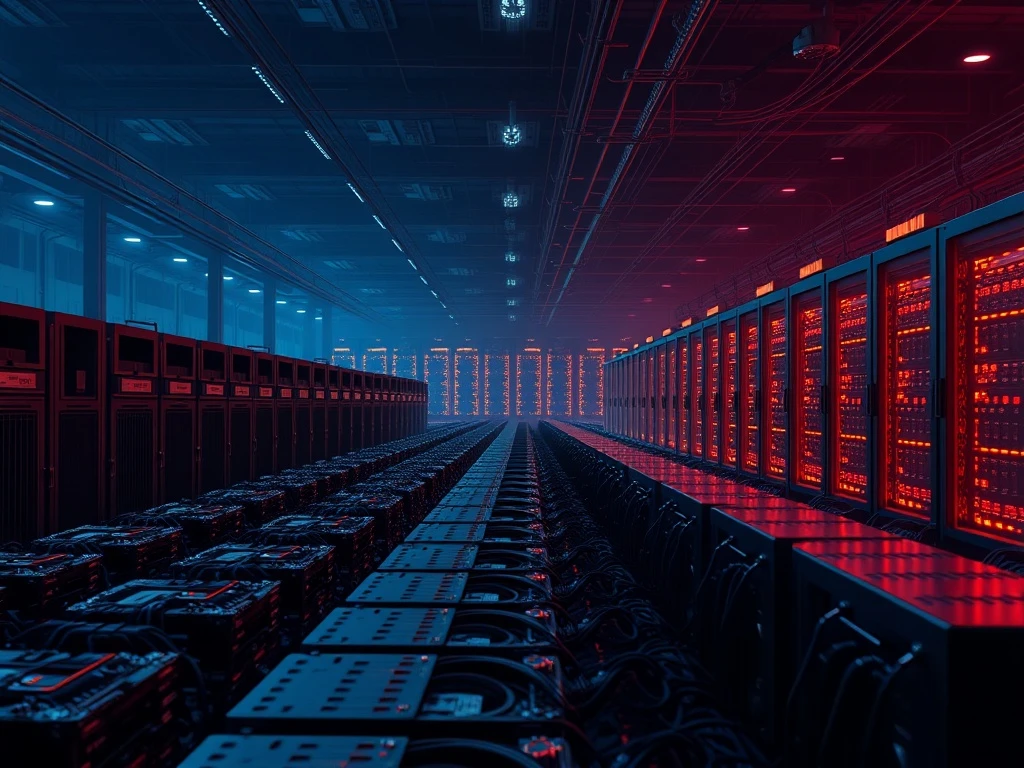
January 2026 – The Bitcoin network, long celebrated for its robust security and decentralized consensus, faces an unprecedented challenge as its computational backbone weakens. For the first time in months, the Bitcoin hashrate has plunged below the critical threshold of 1 zettahash per second (ZH/s), a decline industry analysts directly attribute to a mass migration of miners toward more lucrative artificial intelligence compute services. This seismic shift represents more than a market fluctuation; it signals a fundamental reallocation of global computing resources that could reshape the cryptocurrency landscape.
Bitcoin Hashrate Hits a Critical Low
Network data from late January 2026 confirms the Bitcoin hashrate now sits significantly below 1 ZH/s. This metric, which measures the total computational power dedicated to securing the blockchain and processing transactions, serves as the network’s primary defense mechanism. Consequently, a sustained drop raises immediate concerns about security resilience. Historically, hashrate declines correlate with market downturns or seasonal mining migrations, such as China’s 2021 mining ban. However, the current trend stems from a different, structural cause: the superior economic incentives offered by the booming artificial intelligence sector.
Also read: AI Trading Agents: The Revolutionary Path to Mastering Your Crypto Portfolio in 2025
Mining operations require immense capital expenditure on specialized hardware (ASICs), coupled with ongoing costs for electricity and cooling. In 2025, the confluence of the Bitcoin halving—which cut block rewards in half—and stagnant BTC prices squeezed miner profitability to record lows. TheMinerMag’s 2025 industry report labeled it “the toughest environment ever” for Bitcoin miners. Facing this pressure, operators of large-scale facilities began pivoting their infrastructure, which is uniquely suited for high-density compute tasks, toward AI service provisioning.
The Economic Driver Behind the AI Migration
The exodus is fundamentally an economic decision. AI training and inference workloads, particularly for large language models (LLMs) and generative AI, offer miners several compelling advantages:
Also read: RunBot AI Trading Bot: Revolutionizing Automated Cryptocurrency Strategies with Machine Learning
- Predictable Revenue: AI compute contracts often provide stable, fiat-denominated income, unlike Bitcoin’s volatile mining rewards.
- Higher Profit Margins: The current demand for AI compute vastly outpaces supply, allowing providers to command premium rates.
- Infrastructure Reuse: Mining farms already possess the necessary power substations, robust cooling systems, and high-bandwidth internet, making conversion cost-effective.
Leon Lyu, CEO of StandardHash, contextualized the shift: “We are witnessing a natural capital allocation. When the return on investment for Bitcoin mining dips below a certain threshold, capital and hardware will flow to the next highest-yield application. Currently, that is AI.” This sentiment echoes across the industry, with public mining firms like Hut 8 and Hive Blockchain diversifying revenue streams through AI and high-performance computing (HPC) ventures over the past two years.
Network Security Enters a Vulnerable Phase
The immediate consequence of a falling hashrate is increased network vulnerability. Bitcoin’s security model relies on making a 51% attack—where a single entity gains control of the majority of hash power—prohibitively expensive. A lower total hashrate reduces the cost to execute such an attack, theoretically making the network less secure. While a coordinated attack on Bitcoin remains a high-stakes logistical challenge, the reduced security budget is a concern for institutional adopters and blockchain purists.
Paradoxically, the Bitcoin protocol’s built-in difficulty adjustment offers a short-term reprieve. The algorithm automatically lowers the mining difficulty every 2016 blocks (approximately two weeks) when hash power leaves the network. Data shows difficulty has fallen from 156 trillion in November 2025 to 146.5 trillion, making it easier for remaining miners to find blocks. However, this adjustment merely redistributes rewards; it does not replace the lost security provided by the departed hash power.
| Metric | November 2025 | January 2026 | Change |
|---|---|---|---|
| Hashrate (ZH/s) | ~1.05 | < 1.00 | ~5%+ Decrease |
| Mining Difficulty | 156 Trillion | 146.5 Trillion | ~6% Decrease |
| Estimated Daily Miner Revenue* | $40-45M | $35-40M | Significant Decrease |
*Revenue is a function of BTC price and transaction fees, independent of hashrate. Source: Public blockchain data.
Can Bitcoin and AI Coexist or Compete?
The future relationship between cryptocurrency mining and AI compute is not necessarily zero-sum. Industry innovators are exploring hybrid models and technological adaptations. Some propose “load-balancing” rigs that can dynamically switch between mining cryptocurrencies and processing AI workloads based on real-time profitability. Others are developing next-generation ASICs that are more energy-efficient to maintain competitiveness.
Furthermore, regulatory and geographic factors will influence the outcome. Regions with stranded or subsidized renewable energy may continue to support Bitcoin mining as a demand-response tool for stabilizing power grids. Countries seeking to become AI hubs may incentivize compute infrastructure, indirectly benefiting converted mining facilities. The key for Bitcoin’s ecosystem will be innovation in energy efficiency and perhaps a revaluation of BTC that restores mining margins.
The Long-Term Outlook for Decentralization
A prolonged hashrate decline risks increasing centralization among remaining miners. If only the most efficient, best-capitalized operations can survive, the network’s geographic and entity-level decentralization—a core tenet of Bitcoin’s value proposition—could erode. This scenario places greater importance on the development of decentralized physical infrastructure networks (DePIN) and smaller-scale, retail-friendly mining solutions to preserve network resilience.
Conclusion
The historic drop in Bitcoin hashrate below 1 ZH/s is a watershed moment driven by powerful economic forces, primarily the rise of artificial intelligence. This trend highlights the evolving competition for global computing resources and presents a tangible test for Bitcoin’s security and economic model. While the network’s difficulty adjustment provides inherent stability, the migration underscores a critical need for the mining industry to adapt through efficiency gains and potential hybrid models. The coming months will reveal whether this Bitcoin hashrate decline is a temporary market correction or the beginning of a lasting structural change in how the world allocates its most powerful computing assets.
FAQs
Q1: What does a falling Bitcoin hashrate mean for the average investor?
A falling hashrate primarily impacts network security, not directly the BTC price held by investors. However, if perceived as a major security risk, it could affect market confidence. The built-in difficulty adjustment protects transaction processing times.
Q2: Why is AI compute more profitable than Bitcoin mining right now?
Demand for AI processing is extremely high and pays in stable fiat currency, while Bitcoin mining revenue is volatile and was recently reduced by the 2024 halving event. AI contracts also offer more predictable returns on infrastructure investment.
Q3: Could this lead to a 51% attack on Bitcoin?
While a lower hashrate reduces the theoretical cost of an attack, executing a 51% attack on Bitcoin remains enormously expensive and logistically complex. The network’s size and the value of BTC make it a high-risk, potentially self-defeating endeavor for any large actor.
Q4: Will mining difficulty keep dropping if hashrate falls?
Yes, that is by design. The Bitcoin protocol automatically adjusts the mining difficulty downward approximately every two weeks if the average hashrate has decreased, ensuring blocks are still found roughly every 10 minutes even with fewer miners.
Q5: What can Bitcoin miners do to stay competitive?
Miners are focusing on securing ultra-low-cost (often renewable) energy, deploying the most energy-efficient ASIC hardware, exploring hybrid AI/Bitcoin compute models, and geographic diversification to regions with favorable regulations and power costs.

This article was produced with AI assistance and reviewed by our editorial team for accuracy and quality.