Bitcoin ETF Flows Surge as Regulatory Stalemate Sparks $95,000 Rally: Finance Redefined
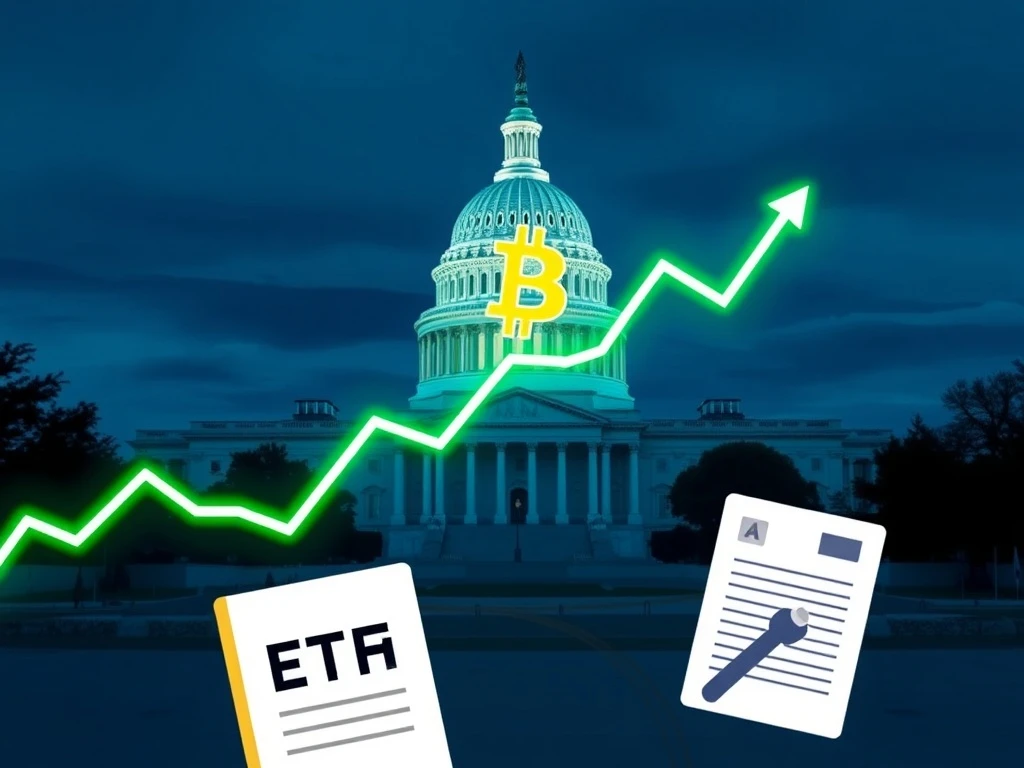
In a striking display of market resilience, Bitcoin surged past the $95,000 mark this week, fueled by a powerful rebound in spot Bitcoin ETF inflows, even as pivotal US cryptocurrency legislation faced unexpected delays in Washington. This divergence between bullish investor action and regulatory gridlock defines the current crypto landscape, highlighting a complex interplay of finance and policy that continues to shape the digital asset class. The week’s developments underscore a critical juncture for market structure and institutional adoption.
Bitcoin Price Rally and ETF Inflows Defy Regulatory Uncertainty
Cryptocurrency markets staged a broad recovery, led by significant gains in major digital assets. Bitcoin (BTC) climbed over 5% in the past seven days to breach the $95,000 threshold, a key psychological level for traders and analysts. Simultaneously, Ether (ETH) appreciated by approximately 6.6%. This upward momentum coincided with a dramatic resurgence for US spot Bitcoin exchange-traded funds (ETFs). According to data from Farside Investors, these funds recorded four consecutive days of net positive inflows, totaling around $1.7 billion. This rebound suggests strong institutional and retail demand persists, despite overarching policy questions.
Also read: Litecoin Price Tests Critical Support: Will the $43 Floor Hold for a 2026 Breakout?
Market analysts point to several factors for the rally. Firstly, technical indicators showed Bitcoin was oversold in prior sessions, inviting buyer interest. Secondly, developments concerning major Ethereum treasury management companies provided a tailwind for ETH. However, the most significant narrative remains the substantial capital moving into regulated ETF products. This flow represents a vote of confidence in the accessibility and legitimacy of Bitcoin as a investable asset, even when the legislative path forward remains unclear.
Expert Analysis on Market Sentiment
Financial commentators note that the ETF inflow data is a more reliable gauge of sustained interest than short-term price volatility. The $1.7 billion figure signals that accredited investors and fund managers are using price dips as accumulation opportunities. Consequently, the market is demonstrating a maturity where traditional finance instruments, like ETFs, can act as a stabilizing force, absorbing sell pressure and providing consistent demand. This mechanism was largely absent in previous crypto market cycles.
Also read: Dogecoin RSI Hits Historic Bottom Zone: Can the Meme Coin Recover?
US Crypto Policy Stalls: The CLARITY Act Delay
While digital asset prices rallied, progress on comprehensive US crypto legislation hit a roadblock. The Senate Banking Committee delayed its markup of the long-anticipated CLARITY Act. This legislation aims to establish a foundational market structure framework for digital assets, clarifying roles for regulators like the SEC and CFTC. Senator Cynthia Lummis, a key proponent, indicated the delay was likely, stating the decision ultimately rested with Committee Chair Tim Scott.
The postponement followed public concerns from industry leaders. Coinbase CEO Brian Armstrong voiced reservations about specific provisions related to tokenized equities and decentralized finance (DeFi) within the current draft. This feedback loop between policymakers and industry is crucial but often slows the legislative process. The delay means continued regulatory ambiguity for US crypto businesses, which operate under a patchwork of state rules and evolving federal guidance.
Key Implications of the Delay:
- Extended Uncertainty: Companies lack clear rules for compliance, potentially stifling innovation and investment in the US.
- Market Reaction: Paradoxically, the delay may have contributed to the price rally by removing an immediate regulatory overhang that could have contained restrictive measures.
- Political Timeline: With elections looming, the window for passing complex financial legislation is narrowing significantly.
Major DeFi and Industry Developments Reshape the Landscape
Beyond Bitcoin and ETFs, several other stories defined the week in decentralized finance and digital assets. These developments illustrate the sector’s rapid evolution independent of direct regulatory action.
Institutional Moves: BitMine and Beast Industries
BitMine Immersion Technology announced a $200 million equity investment into Beast Industries, the entertainment company of YouTube superstar MrBeast. This move represents a significant foray by a crypto-focused firm into mainstream digital media and Generation Z engagement. BitMine’s chairman cited aligned corporate values and unmatched reach with younger demographics as key reasons for the investment, signaling a broader strategy of cultural integration for blockchain companies.
The Rise of Perpetual Decentralized Exchanges (DEXs)
Research firm Delphi Digital published an outlook suggesting perpetual DEXs are poised to capture significant market share from traditional finance by 2026. These blockchain-based platforms allow leveraged trading of perpetual futures contracts without intermediaries. Delphi argues their decentralized infrastructure is structurally more efficient and less expensive than legacy, fragmented systems. Protocols like Hyperliquid, Aster, and Lighter are innovating to combine functions of brokerage, exchange, and clearinghouse into single, streamlined platforms.
Trump-Linked Project Enters Crypto Lending
World Liberty Financial, a DeFi project associated with the family of former President Donald Trump, launched World Liberty Markets, a cryptocurrency lending platform. Built around its $3.4 billion USD1 stablecoin, the platform allows borrowing and lending against collateral like Ether and tokenized Bitcoin. This entry highlights growing interest in on-chain credit markets and follows the company’s application for a national trust bank charter, aiming to bridge decentralized and traditional finance.
DeFi Protocols Abandon Discord for Security
A quiet but notable shift occurred as DeFi protocols began moving away from public Discord servers. Platforms like Morpho transitioned their servers to read-only mode, citing an overwhelming prevalence of scams targeting users in public channels. This trend toward more controlled, structured support systems reflects the industry’s growing focus on user security and liability reduction over maximal public engagement, a sign of increasing operational maturity.
Weekly Market Performance Overview
The broader crypto market ended the week positively. Data from market trackers showed most top-100 cryptocurrencies by market capitalization closed in the green. Notably, privacy-focused coins saw exceptional gains. Dash (DASH) led as the week’s biggest gainer, soaring 136%, followed by Monero (XMR), which rose 49%. These surges may indicate renewed investor interest in cryptographic privacy features amidst expanding global regulatory scrutiny.
| Asset | Approx. 7-Day Gain | Category |
|---|---|---|
| Dash (DASH) | 136% | Privacy Coin |
| Monero (XMR) | 49% | Privacy Coin |
| Bitcoin (BTC) | 5%+ | Store of Value |
| Ether (ETH) | 6.6% | Smart Contract Platform |
Conclusion
The cryptocurrency market presented a tale of two realities this week. On one hand, Bitcoin’s price rally and the powerful resurgence of ETF inflows demonstrated robust financial demand and growing mainstream integration. On the other hand, the stall of the CLARITY Act in the US Senate underscored the persistent regulatory challenges facing the industry. This dichotomy suggests that market forces and technological innovation, particularly in areas like perpetual DEXs and institutional DeFi, are advancing rapidly, even as policymakers deliberate. The path forward will likely be shaped by this continuous tension between dynamic market evolution and the slower, more deliberate process of establishing legal and regulatory clarity. The coming months will be critical in determining whether US policy can catch up to the market it seeks to govern.
FAQs
Q1: Why did Bitcoin’s price rally above $95,000?
A1: Bitcoin’s rally was driven by a combination of technical buying after prior declines, positive sentiment from developments in the Ethereum ecosystem, and most significantly, a major rebound in inflows into US spot Bitcoin ETFs, which totaled around $1.7 billion over four days.
Q2: What is the CLARITY Act and why was it delayed?
A2: The CLARITY Act is proposed US legislation aimed at creating a comprehensive market structure framework for digital assets, defining regulatory roles. Its markup in the Senate Banking Committee was delayed following feedback from industry participants like Coinbase, who expressed concerns over certain provisions, leading to further review.
Q3: What are perpetual DEXs and why are they gaining attention?
A3: Perpetual decentralized exchanges (DEXs) are blockchain-based platforms for trading perpetual futures contracts with leverage. They are gaining traction because they offer lower costs and fewer intermediaries than traditional finance venues, with analysts predicting they could capture significant market share due to their structural efficiency.
Q4: How are DeFi protocols changing their community engagement?
A4: Due to an overwhelming number of scams targeting users, many DeFi protocols are moving away from public Discord servers. They are adopting more controlled, structured support systems to enhance user security and reduce liability, marking a shift toward operational maturity.
Q5: What does the BitMine investment in MrBeast’s company signify?
A5: BitMine’s $200 million investment in Beast Industries signifies a strategic move by a crypto-native firm to tap into mainstream digital media and the massive, engaged audience of younger generations (Gen Z, Gen Alpha, Millennials). It reflects a broader trend of convergence between crypto and popular culture.

This article was produced with AI assistance and reviewed by our editorial team for accuracy and quality.