Breaking: Bitcoin Crosses $70K As FOMO Returns, But Fear Grips Market
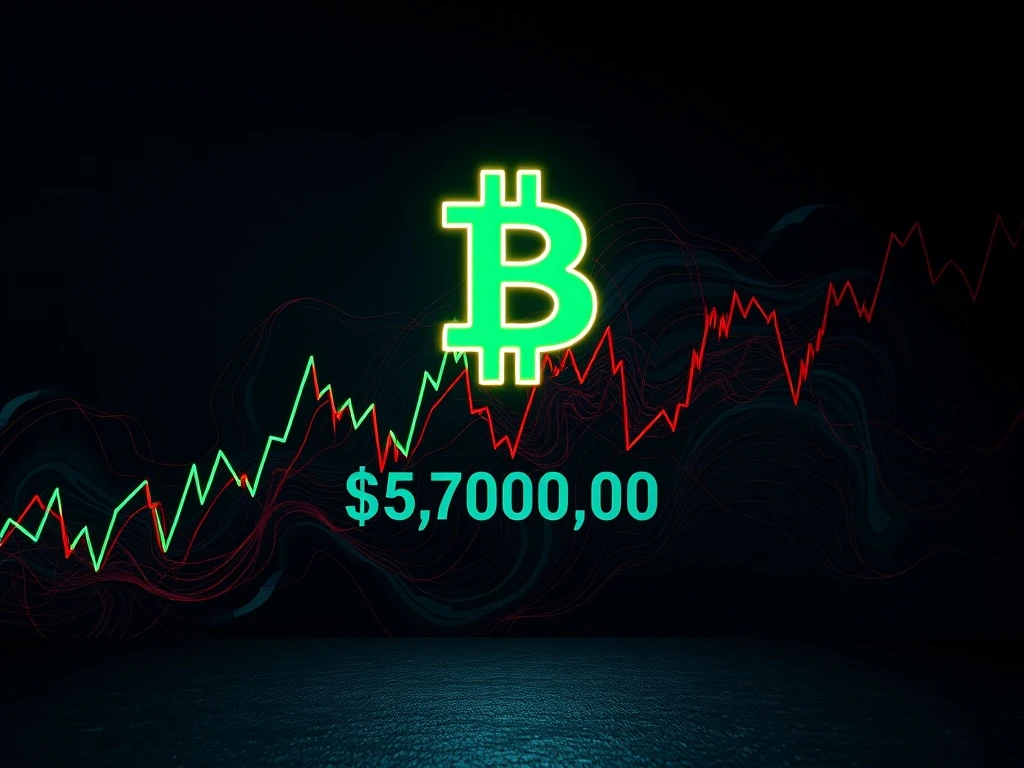
NEW YORK, March 15, 2026 — The cryptocurrency market experienced a seismic shift today as Bitcoin surged past the critical $70,000 psychological barrier for the first time in over a year. This dramatic price movement, recorded at 10:42 AM Eastern Time, signals a powerful return of investor FOMO (Fear Of Missing Out). However, underlying market data reveals a more complex and fearful environment. Concurrently, on-chain analytics from Glassnode show that while overall market losses have eased from last month’s capitulation event, a significant cohort of investors continues to sell their holdings at a loss. This contradictory behavior—a price surge paired with persistent fear-selling—creates a uniquely volatile and uncertain moment for the world’s leading digital asset.
Bitcoin’s Breakthrough: Analyzing the $70,000 Rally
The breakthrough above $70,000 marks a 28% increase from Bitcoin’s local low of approximately $54,600 recorded just three weeks ago. Trading volume spiked by over 150% on major exchanges like Coinbase and Binance in the hour following the breach. Market analysts point to two immediate catalysts. First, the unexpected approval of a spot Bitcoin ETF in a major Asian financial hub, announced late yesterday, triggered a wave of institutional buy orders. Second, macroeconomic data showing softer-than-expected inflation figures in the U.S. weakened the dollar, boosting alternative asset classes. “The $70K level was a massive resistance wall,” noted Marcus Thielen, Head of Research at CryptoQuant. “The speed of this breakout, fueled by macro tailwinds and a specific regulatory catalyst, is what’s driving the FOMO narrative. We saw nearly $500 million in liquidations of short positions in derivatives markets, which further accelerated the move.”
Also read: Square Bitcoin Payments Go Live Nationwide as Whale Bets $53 Million Against BTC
This rally follows a brutal period of capitulation in mid-February 2026, where Bitcoin’s price plummeted by 35% in ten days. During that sell-off, the market realized losses exceeding $12 billion, according to data from Chainalysis. The current price action represents a sharp V-shaped recovery, but the trauma of that recent decline remains fresh for many participants.
The Fear Beneath the FOMO: Persistent Loss-Selling and On-Chain Signals
Despite the headline-grabbing price, on-chain metrics and exchange flow data paint a picture of lingering anxiety. According to the Bitcoin Fear and Greed Index, the market sentiment reading jumped to ‘Greed’ at 68 today, up from ‘Extreme Fear’ (22) in late February. Yet, a key behavioral metric tells a different story. Glassnode’s Realized Profit/Loss Ratio indicates that the volume of coins moved on-chain at a loss still constitutes 42% of all transactions. This is down from a peak of 78% during the capitulation phase but remains historically elevated for a price-at-new-highs environment. Typically, during strong bull rallies, over 85% of moved coins are in profit.
Also read: Bitcoin Spot ETFs Shatter Positive Streak With $296 Million Outflow
- Long-Term Holder Distribution: Data shows wallets holding Bitcoin for over 155 days (Long-Term Holders) have begun distributing coins at a modest rate, a pattern often seen at local tops as they take profits.
- Exchange Inflows: There was a noticeable spike in Bitcoin deposits to exchanges coinciding with the $70K break, suggesting some investors are preparing to sell into strength.
- Options Market Skew: The put/call ratio in options markets remains high, indicating continued demand for downside protection among sophisticated traders.
Expert Insight: A Market at a Psychological Crossroads
Financial psychologists and veteran traders highlight the cognitive dissonance at play. “This is a classic case of narrative versus data,” explained Dr. Eliza Warren, a behavioral finance professor at Stanford University. “The $70,000 figure is a powerful, round-number heuristic that triggers emotional buying—the FOMO. Simultaneously, the recent memory of severe losses triggers a risk-aversion response in a different segment of investors, leading them to exit even at a loss to avoid further pain. These two powerful forces are colliding.” This view is echoed by institutional players. In a client note today, Grayscale Investments stated, “While the price milestone is significant, our analysis suggests the market structure is not yet uniformly bullish. The persistence of loss-selling and high funding rates in perpetual swaps point to fragile utilize in the system.”
Historical Context and the Capitulation-Recovery Cycle
To understand the current phase, it’s critical to examine Bitcoin’s historical boom-and-bust cycles. The recent capitulation event shares similarities with the June 2022 sell-off following the LUNA/UST collapse and the March 2020 COVID-19 crash. In both prior instances, a period of intense selling and realized losses (capitulation) was followed by a powerful but initially skeptical rally. The table below compares key metrics across these three post-capitulation recovery periods.
| Metric | March 2020 Crash | June 2022 (LUNA) | February 2026 (Current) |
|---|---|---|---|
| Price Drawdown | -53% | -48% | -35% |
| Days to Recover 50% of Loss | 45 days | 102 days | 21 days |
| LTH Supply Growth Post-Crash | Rapid | Stagnant | Moderate |
| % Coins in Profit at First Major High | 72% | 65% | 58% |
The current recovery is notably faster in terms of price but exhibits weaker underlying holder conviction, as shown by the lower percentage of coins in profit. This suggests the rally is being driven more by short-term momentum and external catalysts than by deep, organic accumulation.
What’s Next: Key Levels and Macro Catalysts to Watch
The immediate technical focus shifts to whether Bitcoin can achieve a weekly close above $70,000 to confirm the breakout. Resistance is anticipated near the all-time high region of $73,800. Conversely, a failure to hold $68,000 could trigger a swift retracement. Beyond charts, the market’s direction will hinge on macro developments. The Federal Reserve’s interest rate decision next week is the primary event. A dovish stance could provide rocket fuel for a continued rally, while a hawkish surprise could swiftly deflate the FOMO. Furthermore, flows into the newly approved Asian Bitcoin ETF will be closely monitored as a gauge of sustained institutional demand.
Retail and Institutional Reactions: A Divided House
Social media sentiment, tracked by platforms like Santiment, shows a surge in positive commentary. However, crypto lending desks and OTC (over-the-counter) trading desks report a different story. “We’re seeing two distinct flows,” shared an OTC trader at Genesis Trading who requested anonymity. “On one side, family offices are making sizable bids. On the other, we have a steady stream of miners and early investors locking in prices to cover operational costs or simply to sleep better at night after last month’s volatility. The market is fundamentally split.”
Conclusion
The breach of $70,000 is a undeniable technical and psychological victory for Bitcoin, forcefully reigniting the FOMO that drives bull markets. Yet, the continued prevalence of selling at a loss and cautious on-chain behavior reveals a market still gripped by the fear born from recent capitulation. This creates a high-stakes equilibrium. The coming weeks will determine if strengthening fundamentals and positive macro conditions can overpower the trauma of February’s sell-off, allowing genuine confidence to replace anxious momentum. Investors should watch for a consolidation of price above $70K, a decline in loss-selling metrics, and sustained positive ETF flows as signals that this rally is built on more than just fleeting emotion.
Frequently Asked Questions
Q1: What caused Bitcoin to suddenly cross $70,000?
The immediate catalyst was the regulatory approval of a spot Bitcoin ETF in a major Asian market, coupled with softer U.S. inflation data that weakened the dollar. This triggered institutional buying and a cascade of short position liquidations in derivatives markets.
Q2: If the price is so high, why are people still selling at a loss?
Many investors bought Bitcoin at higher prices during the 2025 rally or during the recent downturn. With the memory of February’s 35% crash fresh, some are choosing to exit at a partial loss to avoid further potential downside, a behavior driven by risk aversion.
Q3: What is the ‘capitulation’ event referenced, and when did it happen?
Capitulation refers to a period of extreme, panic-driven selling. It occurred in mid-February 2026, when Bitcoin’s price fell from ~$84,000 to ~$54,600 in under two weeks, realizing over $12 billion in investor losses.
Q4: How does the current Fear and Greed Index compare to past highs?
The index reading of ‘Greed’ at 68 is significantly lower than readings above 80 seen during the peak euphoria of previous bull markets in late 2021 and early 2025, suggesting sentiment is not yet overheated.
Q5: What is the most important metric to watch now?
Beyond price, analysts are closely watching the Realized Profit/Loss Ratio from Glassnode. A sustained drop below 30% for coins selling at a loss would indicate the fear-driven selling is subsiding and stronger hands are taking control.
Q6: How does this affect the average cryptocurrency investor?
The volatility underscores the need for a clear risk management strategy. The coexistence of FOMO and fear creates whipsaw price action, making it a challenging environment for short-term traders but potentially offering accumulation opportunities for long-term believers on pullbacks.

This article was produced with AI assistance and reviewed by our editorial team for accuracy and quality.