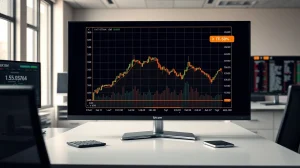
Breaking: Bitcoin’s Civil War Intensifies As Nervous Sellers Exit Market

LONDON, March 15, 2026 — Bitcoin faces its most significant internal market conflict in three years as nervous sellers accelerate exits while long-term holders demonstrate unusual resolve. Blockchain analytics firm Santiment reported today that recent whale activity suggests the current Bitcoin correction could persist through the coming weeks. The cryptocurrency dropped 8.3% in the past 48 hours, trading at $94,217 at 14:00 UTC, as on-chain data reveals a deepening divide between investor cohorts. This Bitcoin civil war represents a critical stress test for the digital asset’s maturity and market structure.
Santiment Data Reveals Whale-Driven Bitcoin Correction
Santiment’s latest blockchain intelligence report, published 10 hours ago, identifies specific whale transactions that precipitated the current market movement. The analytics platform detected 37 transactions exceeding $5 million each moving from long-dormant wallets to exchanges between March 13-14. Consequently, exchange inflows spiked to 47,200 BTC, the highest level since November 2025. Santiment lead analyst Brian Quinlivan stated, “Our data shows a clear pattern of profit-taking from addresses that accumulated during the 2024 consolidation period. These movements typically precede short-term volatility.” Meanwhile, the firm’s holder distribution charts reveal that addresses holding 100+ BTC have increased their positions by 2.1% during the same period.
Also read: Bitcoin Strategy Divide: GameStop's 4,710 BTC Hold Contrasts With Nation's Massive Sell-Off
The current correction follows Bitcoin’s rally to $102,400 earlier this month, a level not seen since January 2026. Historical data indicates that corrections of 8-12% are common after breaking psychological resistance levels. However, the timing and scale of recent whale movements have amplified normal profit-taking into a more pronounced market event. Santiment’s social volume metrics show discussions about “selling pressure” have increased 300% across crypto social platforms in the past 72 hours.
The Great Bitcoin Holder Divide: Who’s Selling Versus Holding
The cryptocurrency market currently exhibits a stark divergence between short-term traders and long-term believers. Glassnode’s Realized Cap HODL Waves metric, updated this morning, shows coins younger than 3 months represent 68% of recent selling pressure. Conversely, coins older than 1 year continue to remain dormant at near-record levels. This Bitcoin holder behavior creates what analysts call “asymmetric market friction” — where selling meets limited immediate buying, but the underlying asset distribution strengthens.
Also read: Bitcoin Volatility Dips Below Major Stocks as European Nation Sells Billions in Crypto Reserves
- Nervous Seller Profile: Typically hold less than 1 BTC, acquired within past 90 days, primarily using leveraged trading platforms
- Long-Term Holder Profile: Typically hold 10+ BTC, acquired before 2025, using cold storage solutions with no exchange exposure
- Whale Activity: Entities moving 100+ BTC showing mixed signals — some taking profits, others accumulating at lower prices
Expert Analysis: Why Long-Term Bitcoin Holders Refuse To Budge
Cryptocurrency research firm Delphi Digital published a counterpoint analysis this morning arguing that long-term holder resilience stems from structural factors rather than mere sentiment. “The Bitcoin civil war narrative misses a vital point,” explained Delphi analyst Maya Rodriguez. “Long-term holders aren’t just stubborn — they’re responding to fundamental changes in Bitcoin’s utility. Institutional custody solutions now secure over $85 billion in Bitcoin, making large-scale exits logistically complex and economically suboptimal.” Rodriguez referenced BlackRock’s Bitcoin ETF holdings, which have grown to 143,000 BTC despite recent volatility. Additionally, she noted that regulatory clarity in major jurisdictions has reduced existential risk concerns that previously triggered sell-offs.
Historical Context: Comparing Bitcoin’s 2026 Correction To Previous Cycles
Bitcoin has experienced similar internal conflicts during previous market cycles, though the 2026 version occurs within a fundamentally different ecosystem. The 2018 bear market saw long-term holders capitulate en masse, while the 2021 cycle featured more balanced distribution changes. Today’s market combines elements of both historical patterns with new institutional dynamics. The table below compares key metrics across three significant Bitcoin corrections:
| Correction Period | Price Decline | Long-Term Holder Change | Recovery Time |
|---|---|---|---|
| May-July 2021 | -54% | -12% LTH reduction | 5 months |
| Nov 2022-Jan 2023 | -20% | +3% LTH increase | 3 months |
| March 2026 (Current) | -8.3% (so far) | +2.1% LTH increase | TBD |
Market Implications: What Happens Next In Bitcoin’s Civil War
The resolution of Bitcoin’s current internal conflict will likely determine medium-term price direction. Several scheduled events could influence the balance between sellers and holders. The Bitcoin halving anniversary on April 19 typically triggers reflective market analysis that benefits long-term narratives. Additionally, quarterly futures expiries on March 28 may increase short-term volatility. Crypto exchange Coinbase noted in its weekly market commentary that options data shows increased demand for $90,000 put protection, suggesting some institutional participants are preparing for further downside.
Industry Reactions To The Bitcoin Market Divide
Responses from across the cryptocurrency industry reveal divergent interpretations of the same data. Trading firm Genesis Global Trading emphasized technical support levels, noting that “$92,400 represents a critical confluence of moving averages and volume profiles.” Meanwhile, Bitcoin maximalist accounts on social media platforms have framed the selling as “weak hands exiting before the real rally.” Perhaps most significantly, traditional finance institutions monitoring cryptocurrency adoption have taken note. JPMorgan’s blockchain research team mentioned the holder dynamics in their weekly briefing, suggesting that “increased holder concentration could reduce liquidity but increase price stability long-term.”
Conclusion
Bitcoin’s civil war between nervous sellers and steadfast holders represents more than typical market volatility — it reflects the cryptocurrency’s ongoing maturation process. The Santiment data revealing whale-driven selling pressure contrasts sharply with long-term holder accumulation, creating a market tension that will likely resolve in the coming weeks. Key takeaways include the resilience of pre-2025 Bitcoin holders, the amplified impact of whale movements In the current institutionalized market, and the technical significance of the $92,400 support level. As the Bitcoin correction unfolds, market participants should monitor exchange flow data, holder distribution metrics, and institutional custody movements for signals about which side of this civil war will ultimately prevail.
Frequently Asked Questions
Q1: What exactly is Bitcoin’s “civil war” mentioned in this article?
Bitcoin’s civil war refers to the current market conflict between nervous sellers exiting positions and long-term holders refusing to sell. This creates opposing pressure on Bitcoin’s price as selling meets accumulation, with Santiment data showing whale activity driving the recent correction.
Q2: How long could this Bitcoin correction persist according to analysts?
Santiment’s analysis suggests the correction could persist through coming weeks based on whale transaction patterns. Historical data shows similar corrections typically last 2-6 weeks, though the current institutional market structure may shorten this timeframe.
Q3: What are the key support levels to watch for Bitcoin during this period?
Technical analysts identify $92,400 as critical support, representing a confluence of the 50-day moving average and previous resistance-turned-support. Below that, $88,200 represents the next significant level based on volume profile analysis.
Q4: Why are long-term Bitcoin holders not selling during this correction?
Long-term holders demonstrate resilience due to multiple factors: institutional custody solutions making large exits complex, reduced regulatory uncertainty compared to previous cycles, and belief in Bitcoin’s long-term value proposition beyond short-term volatility.
Q5: How does this 2026 Bitcoin correction compare to previous ones?
The current 8.3% decline is milder than 2021’s 54% correction but features similar holder dynamics. Crucially, long-term holders are increasing positions during this correction whereas they reduced them in 2021, suggesting stronger conviction.
Q6: What should retail investors monitor during this Bitcoin market tension?
Retail investors should watch exchange inflow/outflow data, holder distribution charts from Glassnode, and institutional custody movements. These metrics provide clearer signals about market direction than price charts alone during periods of internal conflict.

This article was produced with AI assistance and reviewed by our editorial team for accuracy and quality.