Bitcoin Bull Market: 4 Powerful Catalysts Identified by Bitwise CIO for 2025 Surge
As Bitcoin consolidates near the $65,500 mark amidst broader market weakness, a prominent voice in institutional crypto investing outlines a compelling roadmap for the next major rally. Matt Hougan, Chief Investment Officer at Bitwise Asset Management, has identified four specific technological and financial catalysts that could ignite the next Bitcoin bull market. This analysis, provided on June 4, 2025, from San Francisco, moves beyond simple price speculation to examine foundational shifts in the digital asset ecosystem.
Bitcoin Bull Market Foundations Amidst Current Volatility
Currently, Bitcoin trades with notable stability around $65,500. This price action occurs despite continued weakness across the wider cryptocurrency sector. Many altcoins have experienced significant corrections. Consequently, investors are searching for clear signals about the market’s future direction. Matt Hougan’s perspective offers a data-driven and experience-based framework. He suggests that early conditions for a new bullish phase may already be forming beneath the surface volatility. His analysis focuses on structural innovations rather than short-term trading patterns.
Understanding the Broader Crypto Market Context
The cryptocurrency market operates in multi-year cycles influenced by adoption, regulation, and technological breakthroughs. Previous bull markets, such as those in 2017 and 2021, correlated with major developments like the initial coin offering (ICO) boom and the rise of decentralized finance (DeFi). Currently, the market is in a phase of consolidation and infrastructure building. Institutional adoption continues at a steady pace. Furthermore, regulatory clarity in major jurisdictions like the EU and the UK is improving. This context is crucial for evaluating Hougan’s identified catalysts, which represent the next potential wave of value creation.
Catalyst One: The Rise of Agentic Finance
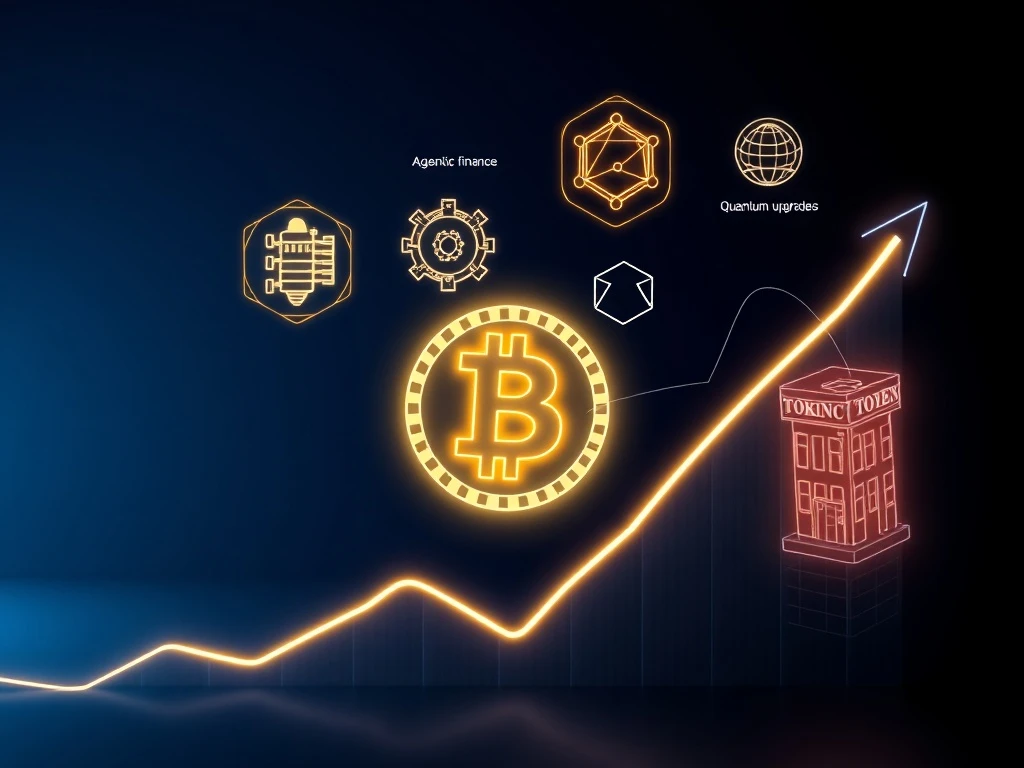
Firstly, Hougan highlights ‘agentic finance’ as a primary driver. This concept involves autonomous software agents that can manage crypto assets and execute complex financial strategies without constant human intervention. These agents operate using smart contracts and artificial intelligence. They could perform activities like yield farming, portfolio rebalancing, and tax-loss harvesting automatically. For Bitcoin, this represents a new class of persistent, algorithmic demand. Agentic systems may hold BTC as a core reserve asset or a volatility hedge within larger DeFi strategies. The proliferation of such agents would create a foundational, non-speculative layer of buying pressure.
- Autonomous Management: AI-driven agents execute trades and manage portfolios 24/7.
- Strategic Reserve Asset: Bitcoin’s liquidity and brand make it a likely base currency for agentic systems.
- Network Effect: More agents increase network utility and security demand for Bitcoin.
Catalyst Two: Deepening Bitcoin Integration with DeFi
Secondly, the deepening integration of Bitcoin into the decentralized finance ecosystem presents a massive opportunity. Historically, Bitcoin existed somewhat separately from the innovative lending, borrowing, and trading applications on networks like Ethereum. However, this is changing rapidly. Technologies like wrapped Bitcoin (WBTC) and trust-minimized bridges are bringing Bitcoin’s immense liquidity into DeFi. Users can now earn yield on Bitcoin holdings or use them as collateral for loans without selling. This ‘productive’ use case unlocks billions in dormant capital. It fundamentally alters Bitcoin’s value proposition from a static store of value to a dynamic, yield-bearing foundational asset.
| DeFi Integration Method | Description | Potential Impact on BTC Demand |
|---|---|---|
| Wrapped Tokens (e.g., WBTC) | Tokenized Bitcoin on other blockchains. | Locks BTC in custody, creating scarcity on the native chain. |
| Native Lending Protocols | Direct lending/borrowing using Bitcoin via Layer 2 solutions. | Increases utility and provides a yield, attracting institutional capital. |
| Cross-Chain Collateral | Using BTC as collateral for loans on other chains. | Unlocks liquidity without selling pressure, creating steady demand. |
Catalyst Three: Quantum Upgrades and Network Evolution
Thirdly, Hougan points to ongoing ‘quantum upgrades’—a term referring to significant, leap-forward improvements in Bitcoin’s underlying protocol and associated layers. This does not imply immediate quantum computing threats but rather major technological enhancements. Key developments include the continued growth of the Lightning Network for instant payments and the potential adoption of new opcodes or soft forks that enable more complex smart contracts. Additionally, advancements in zero-knowledge proofs could enhance Bitcoin’s privacy and scalability. These upgrades improve the network’s functionality, security, and efficiency. They address long-standing critiques about transaction speed and programmability, potentially opening Bitcoin to entirely new use cases and user bases.
The Roadmap for Bitcoin’s Technical Future
The Bitcoin development community is actively working on several proposals. These efforts focus on improving scalability, privacy, and smart contract capabilities. Each successful upgrade strengthens the network’s value proposition against competing blockchains. It also demonstrates the robustness of Bitcoin’s governance model. This steady, conservative evolution reduces technological risk for large investors. Therefore, it can serve as a catalyst for increased institutional allocation.
Catalyst Four: The Multi-Trillion Dollar Tokenization Wave
Finally, and perhaps most significantly, is the tokenization of real-world assets (RWAs). This process involves creating digital tokens on a blockchain that represent ownership of physical assets like real estate, bonds, commodities, or equities. Bitcoin’s blockchain, especially through emerging standards, could serve as a secure, global settlement layer for these tokenized assets. Imagine a future where a tokenized US Treasury bond trade settles against Bitcoin as the base currency. This would position Bitcoin similarly to digital gold in the traditional financial system but with far greater programmability. The tokenization market is projected to grow into the tens of trillions of dollars. Even a small portion of this activity settling on or referencing Bitcoin would generate unprecedented demand.
- Settlement Layer: Bitcoin as a neutral, global asset for final settlement of tokenized trades.
- Collateral Asset: Tokenized RWA platforms may require high-quality crypto collateral, with BTC being the prime candidate.
- Network Security: Increased transaction fees from tokenization activity would further secure the Bitcoin network.
Conclusion
Matt Hougan’s analysis shifts the conversation from when the next Bitcoin bull market will occur to what will fundamentally power it. The four catalysts—agentic finance, DeFi integration, quantum upgrades, and asset tokenization—represent converging trends in technology and finance. They suggest a future where Bitcoin’s value is driven not solely by macroeconomic narratives but by its deepening utility within a digitizing global economy. While short-term price movements remain volatile, these structural developments provide a compelling, evidence-based framework for long-term investors. The convergence of these catalysts could indeed lay the groundwork for the next significant Bitcoin bull market phase.
FAQs
Q1: What is ‘agentic finance’ and how does it relate to Bitcoin?
Agentic finance refers to autonomous software agents that manage cryptocurrency assets using AI and smart contracts. These agents could create persistent, algorithmic demand for Bitcoin by holding it as a reserve asset or using it within complex, automated DeFi strategies.
Q2: How is Bitcoin’s integration with DeFi different now?
Earlier integrations relied heavily on custodial wrapping services. Newer, more trust-minimized bridges and native Bitcoin DeFi protocols on Layer 2s are emerging. This allows users to earn yield or borrow against Bitcoin directly, making it a productive asset and increasing its utility-driven demand.
Q3: What are ‘quantum upgrades’ for Bitcoin?
In this context, ‘quantum upgrades’ is a term for major, leap-forward improvements to Bitcoin’s protocol and its secondary layers (like Lightning). It includes enhancements to scalability, privacy, and smart contract functionality, making the network more capable and competitive.
Q4: Why is asset tokenization considered a bull catalyst for Bitcoin?
Tokenization converts real-world assets like bonds or real estate into digital tokens. Bitcoin’s secure and decentralized blockchain could act as a global settlement layer for trading these tokens. This multi-trillion dollar market could funnel immense value and transaction activity through the Bitcoin ecosystem.
Q5: Does this analysis mean Bitcoin’s price will rise immediately?
No. Hougan identifies structural, long-term catalysts that may form the foundation for the next bull cycle. These are fundamental drivers, not short-term trading signals. Their full impact may unfold over months or years as the technologies and adoption mature.
This article was produced with AI assistance and reviewed by our editorial team for accuracy and quality.