Bitcoin Bear Trend Persists: Critical Trendline Break Could Trigger Dramatic Reversal
Bitcoin’s persistent bear market trend continues to dominate cryptocurrency discussions in March 2026, but recent volatility data reveals surprising stability compared to traditional tech stocks. According to Charles Schwab market analysis, Bitcoin now demonstrates lower volatility than both Tesla and Nvidia shares, marking a significant shift in the digital asset’s risk profile. This development occurs as technical analysts closely monitor a critical trendline that could signal the cryptocurrency’s next major directional move.
Bitcoin’s Current Bear Market Context
Bitcoin has maintained a downward trajectory since early 2025, with the digital currency trading significantly below its all-time highs. Market analysts consistently observe this bear trend across multiple timeframes. The cryptocurrency’s price action shows characteristic lower highs and lower lows, which typically define bearish market conditions. However, recent trading patterns suggest potential stabilization.
Several factors contribute to Bitcoin’s current market position. Regulatory developments, institutional adoption rates, and macroeconomic conditions all influence cryptocurrency valuations. The Federal Reserve’s monetary policy decisions throughout 2025 and early 2026 particularly affected digital asset markets. Additionally, cryptocurrency mining economics and network fundamentals continue evolving.
Volatility Comparison: Bitcoin Versus Major Stocks
Charles Schwab’s March 2026 market data reveals a remarkable development in cryptocurrency volatility metrics. Bitcoin’s 30-day realized volatility now measures below that of Tesla and Nvidia stocks. This represents a notable shift from historical patterns where Bitcoin typically exhibited substantially higher volatility than traditional equities.
The volatility comparison data comes from Schwab’s institutional research division, which tracks multiple asset classes. Their analysis considers standard deviation measurements over rolling periods. Specifically, Bitcoin’s volatility has declined to approximately 45% annualized, while Tesla and Nvidia maintain volatility around 55-60% annualized based on recent trading.
Understanding Volatility Metrics
Financial professionals use several methods to calculate asset volatility. Realized volatility measures actual price fluctuations over specific periods. Implied volatility derives from options pricing and reflects market expectations. Bitcoin’s declining realized volatility suggests increasing market maturity and institutional participation.
Several factors explain Bitcoin’s reduced volatility relative to tech stocks:
- Increased institutional ownership providing more stable holding patterns
- Improved market infrastructure including regulated derivatives products
- Broader adoption reducing speculative trading dominance
- Macroeconomic integration where Bitcoin increasingly correlates with traditional risk assets
The Critical Trendline Analysis
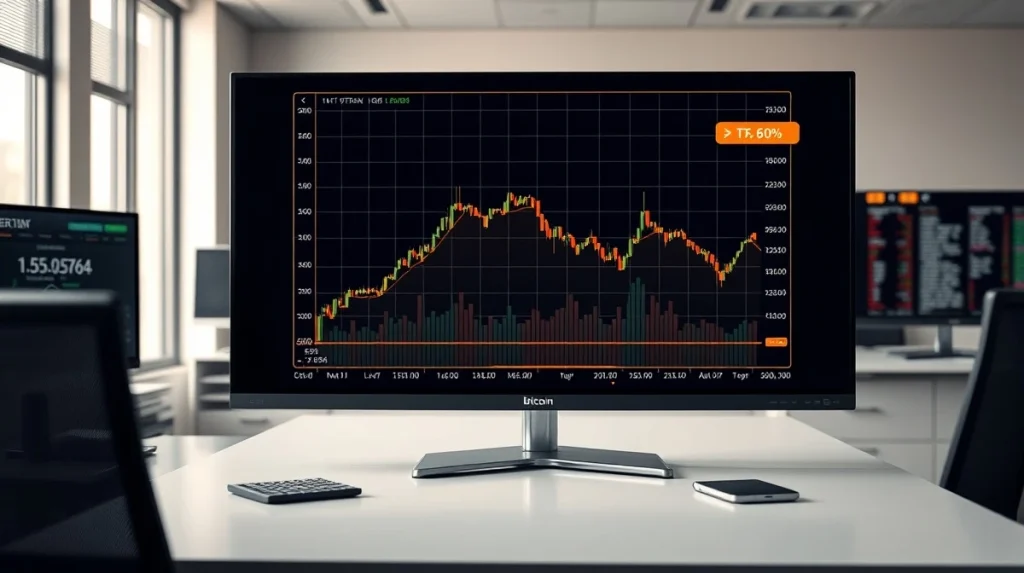
Technical analysts identify a specific trendline as crucial for Bitcoin’s next potential trend reversal. This diagonal resistance line connects successive lower highs since Bitcoin’s 2025 peak. A decisive break above this trendline, accompanied by substantial volume, could signal the bear trend’s potential conclusion.
Trendline analysis represents one component of comprehensive technical evaluation. Analysts typically combine multiple indicators including:
- Moving averages across different timeframes
- Volume profile analysis
- Support and resistance levels
- Momentum indicators like RSI and MACD
The current critical trendline sits approximately 15% above Bitcoin’s late March 2026 trading levels. Historical data shows that similar trendline breaks in 2019 and 2020 preceded substantial bullish movements. However, technical analysts emphasize that trendline breaks require confirmation through sustained price action above the level.
Market Structure Considerations
Bitcoin’s market structure reveals additional insights beyond simple trendline analysis. Exchange liquidity, derivatives positioning, and on-chain metrics all provide context for potential trend changes. Glassnode and CryptoQuant data show declining exchange reserves, suggesting reduced selling pressure from long-term holders.
The Bitcoin network’s fundamental metrics remain robust despite price declines. Hash rate continues reaching new highs, indicating strong miner commitment. Network security measures exceed historical levels, with the cost of attacking the network becoming prohibitively expensive. These fundamentals provide underlying support despite bearish price action.
Historical Precedents and Market Psychology
Bitcoin has experienced multiple bear markets throughout its history. Each previous bear market concluded with distinctive technical patterns and fundamental developments. The 2014-2015 bear market lasted approximately 410 days, while the 2018-2019 downturn persisted for around 360 days.
Current market psychology reflects typical late-stage bear market characteristics. Retail interest has declined substantially from 2025 peaks, while institutional accumulation continues quietly. Google search trends for “Bitcoin” and related terms show reduced public attention compared to bull market periods. This often precedes trend reversals according to behavioral finance principles.
Market sentiment indicators provide additional context:
| Indicator | Current Reading | Historical Context |
|---|---|---|
| Fear & Greed Index | 28 (Fear) | Similar to early 2019 levels |
| Relative Strength Index | 42 (Neutral) | Oversold in January 2026 |
| MVRV Ratio | 1.1 | Historically accumulation zone |
Regulatory and Macroeconomic Factors
Regulatory developments significantly influence cryptocurrency markets. The SEC’s approach to Bitcoin ETFs and other digital asset products affects institutional participation. International regulatory coordination through organizations like the Financial Stability Board and IMF creates additional framework developments.
Macroeconomic conditions remain crucial for Bitcoin’s price trajectory. Inflation data, interest rate decisions, and geopolitical developments all impact risk asset valuations. Bitcoin increasingly demonstrates correlation with traditional risk assets during certain market conditions, though it maintains distinctive characteristics during monetary policy shifts.
Central bank digital currency developments and traditional financial institution cryptocurrency adoption create additional market dynamics. Major banks and asset managers continue expanding digital asset services despite regulatory uncertainties. This institutional infrastructure development supports long-term market maturation.
Conclusion
Bitcoin’s bear trend remains technically intact as of March 2026, but multiple factors suggest potential trend change conditions. The cryptocurrency’s reduced volatility relative to major tech stocks indicates market maturation, while critical technical levels approach testing. A decisive break above the identified trendline could signal a broader trend reversal, though confirmation through sustained price action and volume remains essential. Market participants should monitor both technical developments and fundamental metrics including network security, institutional flows, and regulatory clarity. Bitcoin’s evolution continues reflecting broader digital asset market maturation amid evolving global financial systems.
FAQs
Q1: What does Bitcoin being less volatile than Tesla and Nvidia mean?
This indicates Bitcoin’s price fluctuations have recently been smaller percentage-wise than these major technology stocks, suggesting increasing market stability and institutional participation in cryptocurrency markets.
Q2: How significant is a trendline break for Bitcoin’s price direction?
Technical analysts consider sustained breaks above key trendlines as potential trend reversal signals, but they require confirmation through continued price action above the level and supporting volume increases.
Q3: What factors contribute to Bitcoin’s reduced volatility?
Increased institutional ownership, improved market infrastructure, regulated derivatives products, and broader adoption all contribute to reduced price volatility in cryptocurrency markets.
Q4: How does current Bitcoin volatility compare to historical levels?
Bitcoin’s current volatility levels remain above traditional assets like bonds or major indices but have declined substantially from earlier periods when volatility often exceeded 100% annualized.
Q5: What should investors monitor for potential Bitcoin trend changes?
Key indicators include the critical trendline break with volume confirmation, changes in institutional flows, regulatory developments, macroeconomic conditions, and on-chain metrics like exchange reserves and network activity.
This article was produced with AI assistance and reviewed by our editorial team for accuracy and quality.