Binance Stock Tokens: Strategic Revival Could Revolutionize Crypto-Traditional Market Access
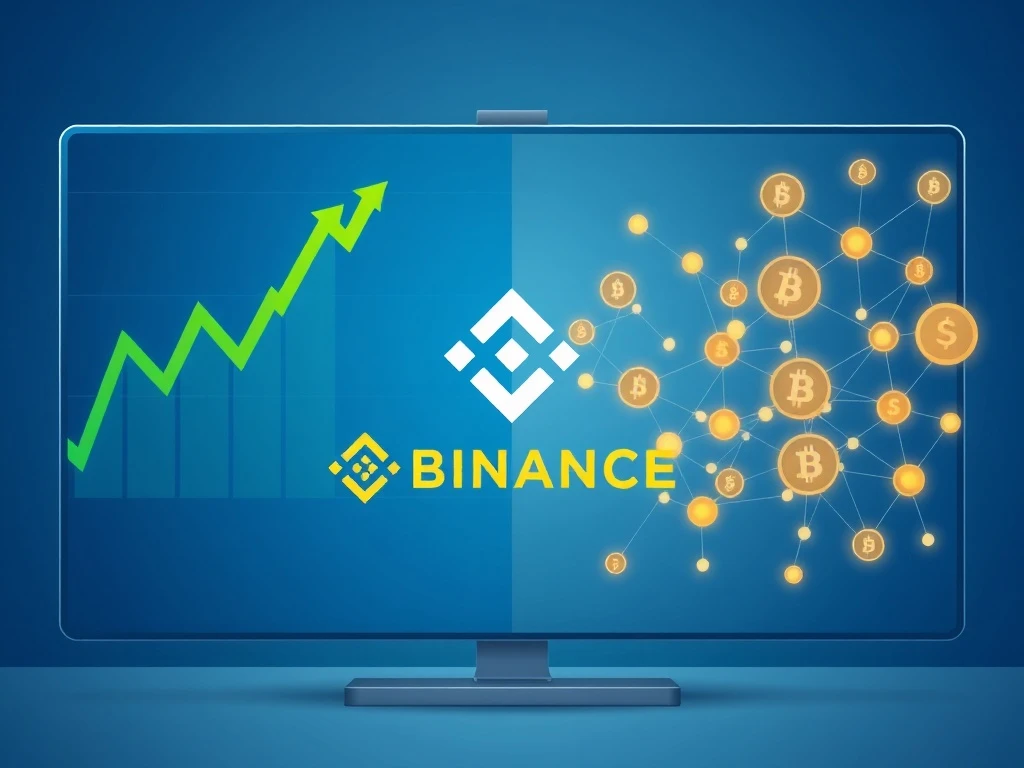
Global cryptocurrency exchange Binance is reportedly considering a strategic revival of its stock token trading service, according to exclusive reporting from The Information. This potential move signals a significant development in the convergence of traditional finance and digital asset markets. The consideration comes nearly four years after Binance suspended the service in 2021 amid regulatory scrutiny. Stock tokens represent blockchain-based digital assets that track the value of actual stocks on a one-to-one basis. Consequently, this innovative financial instrument allows investors to profit from price fluctuations without directly owning the underlying shares.
Binance Stock Tokens: Understanding the Mechanism
Stock tokens function as digital representations of traditional equities. Specifically, each token corresponds to a single share of a publicly traded company. These tokens trade on cryptocurrency exchanges rather than traditional stock markets. The underlying mechanism involves a partnership with a regulated financial institution. This institution holds the actual shares in custody. Meanwhile, the corresponding tokens trade freely on the blockchain. Investors benefit from price movements identical to the underlying stock. However, they avoid traditional brokerage accounts and settlement systems. The structure provides fractional ownership opportunities. Additionally, it enables 24/7 trading unlike traditional market hours.
Several key characteristics define stock tokens. First, they maintain a one-to-one peg with the underlying asset. Second, they offer dividend equivalents to token holders. Third, they provide voting right proxies through the custodian. Fourth, they enable global accessibility without geographic restrictions. Finally, they leverage blockchain technology for transparent settlement. This innovative approach bridges two previously separate financial ecosystems. Moreover, it democratizes access to global equity markets.
Historical Context and Previous Suspension
Binance initially launched its stock token offering in April 2021. The service debuted with tokens representing Tesla and Coinbase shares. Subsequently, the exchange added Microsoft and Apple tokens. However, regulatory pressure mounted quickly across multiple jurisdictions. European financial regulators expressed particular concern. They questioned whether these products constituted regulated securities. German financial watchdog BaFin specifically investigated the offering. The regulator suggested Binance lacked proper prospectuses for German investors.
Consequently, Binance announced the suspension of stock token trading in July 2021. The exchange cited “regulatory scrutiny” as the primary reason. Existing token holders received options to sell or convert their holdings. The suspension occurred alongside broader regulatory challenges for Binance. Multiple global regulators increased scrutiny of cryptocurrency exchanges. This period marked a turning point for crypto regulation worldwide. Since then, regulatory frameworks have evolved significantly. Many jurisdictions have developed clearer guidelines for digital assets.
Regulatory Evolution Since 2021
The regulatory landscape has transformed substantially since 2021’s suspension. Europe implemented the Markets in Crypto-Assets (MiCA) regulation. This comprehensive framework provides clarity for tokenized securities. Meanwhile, Hong Kong established clear guidelines for virtual asset trading. The United States has advanced multiple legislative proposals. These developments create a more predictable environment. Regulatory certainty enables innovative financial products. Furthermore, traditional financial institutions now embrace tokenization. Major banks and asset managers actively explore blockchain applications. This institutional adoption validates the underlying technology.
Market Impact and Competitive Landscape
The potential relaunch arrives during significant market evolution. Traditional finance increasingly integrates with blockchain technology. Multiple platforms now offer tokenized traditional assets. However, Binance’s scale provides unique advantages. The exchange boasts over 170 million registered users worldwide. This massive user base could rapidly adopt stock token trading. Additionally, Binance maintains advanced trading infrastructure. The platform supports sophisticated order types and liquidity. These features appeal to both retail and institutional traders.
Competitors have entered the tokenized securities space during Binance’s absence. FTX previously offered tokenized stocks before its collapse. Several decentralized finance protocols now provide synthetic assets. Traditional platforms like SwissBorg and Bittrex Global offer similar products. However, none match Binance’s global reach and liquidity. The relaunch could significantly expand market accessibility. Emerging market investors particularly benefit from this access. They often face barriers to traditional brokerage accounts. Stock tokens eliminate many geographic and bureaucratic hurdles.
- Increased Market Accessibility: Global investors gain equity exposure
- Fractional Ownership: Lower investment thresholds through token divisibility
- 24/7 Trading: Continuous market access beyond traditional hours
- Reduced Costs: Potentially lower fees than traditional brokerage
- Portfolio Diversification: Crypto investors access traditional assets
Technical Implementation and Security Considerations
Successful stock token implementation requires robust technical infrastructure. The system must maintain accurate price oracles. These feed real-time stock prices to the blockchain. Additionally, the platform needs reliable custody solutions. Regulated partners must securely hold underlying securities. Furthermore, the mechanism requires transparent dividend distribution. Token holders should receive payments automatically. Voting right management presents another technical challenge. The custodian must accurately represent token holder interests.
Security remains paramount for any financial instrument. Blockchain technology offers inherent security advantages. Transactions record immutably on distributed ledgers. However, smart contract vulnerabilities require careful auditing. Binance will likely implement multiple security layers. These include regular third-party audits and bug bounty programs. Insurance funds might protect against technical failures. The exchange’s existing security infrastructure provides a strong foundation. Binance Security Team has successfully defended against numerous attacks. This experience benefits the stock token implementation.
Partnership Requirements and Structure
Stock token offerings necessitate strategic partnerships. Binance must collaborate with regulated financial institutions. These partners custody the underlying securities. They also handle regulatory compliance in respective jurisdictions. Previous partnerships involved German financial firm CM-Equity. Similar arrangements will likely accompany any relaunch. The partnership structure determines regulatory treatment. Proper structuring ensures compliance across multiple regions. Additionally, banking relationships facilitate fiat conversions. These enable seamless deposits and withdrawals for token trading.
Future Implications for Financial Markets
The potential Binance stock token relaunch signals broader market trends. Traditional and digital finance convergence accelerates. Blockchain technology increasingly underpins financial infrastructure. Tokenization extends beyond equities to various asset classes. Real estate, commodities, and bonds all undergo tokenization experiments. This transformation promises greater market efficiency. Settlement times reduce from days to minutes. Meanwhile, liquidity potentially increases through fractional ownership.
Regulatory acceptance remains crucial for widespread adoption. Clear guidelines enable innovation while protecting investors. The evolving landscape suggests growing regulatory comfort. Authorities recognize blockchain’s potential benefits. However, they emphasize proper investor safeguards. Balanced regulation fosters responsible innovation. Financial inclusion improves through technological advancement. Emerging markets particularly benefit from these developments. Traditional barriers to investment gradually diminish.
Conclusion
Binance’s reported consideration of stock token trading revival represents a significant market development. The potential relaunch bridges cryptocurrency and traditional equity markets. This convergence offers investors unprecedented flexibility and access. Regulatory evolution since 2021 enables more sustainable implementation. Technical infrastructure and security measures have advanced substantially. Market competition and user demand support renewed offerings. Ultimately, stock tokens could democratize global financial market participation. The Binance stock token initiative may catalyze broader tokenization trends across finance.
FAQs
Q1: What exactly are Binance stock tokens?
Binance stock tokens are blockchain-based digital assets that track the price of traditional stocks on a one-to-one basis, allowing cryptocurrency exchange users to gain exposure to equity markets without owning actual shares.
Q2: Why did Binance suspend stock token trading in 2021?
Binance suspended the service in July 2021 due to regulatory scrutiny from multiple financial authorities, particularly in Europe, who questioned whether the tokens constituted regulated securities requiring proper documentation.
Q3: How do stock tokens differ from traditional stock ownership?
Stock tokens provide economic exposure to price movements and dividends but typically don’t confer direct voting rights, trade on crypto exchanges with potentially different hours, and involve different custody arrangements than traditional share ownership.
Q4: What regulatory changes make a relaunch possible now?
Since 2021, clearer regulatory frameworks have emerged, including Europe’s MiCA regulation, Hong Kong’s virtual asset guidelines, and evolving approaches in multiple jurisdictions that provide more certainty for tokenized securities.
Q5: Which stocks were previously available as tokens on Binance?
During its initial offering, Binance provided tokens for Tesla, Coinbase, Microsoft, and Apple shares, with plans to expand to additional companies before the service was suspended.
This article was produced with AI assistance and reviewed by our editorial team for accuracy and quality.