Binance Delisting Shakeup: 20 Spot Trading Pairs to Be Removed on January 13, 2025
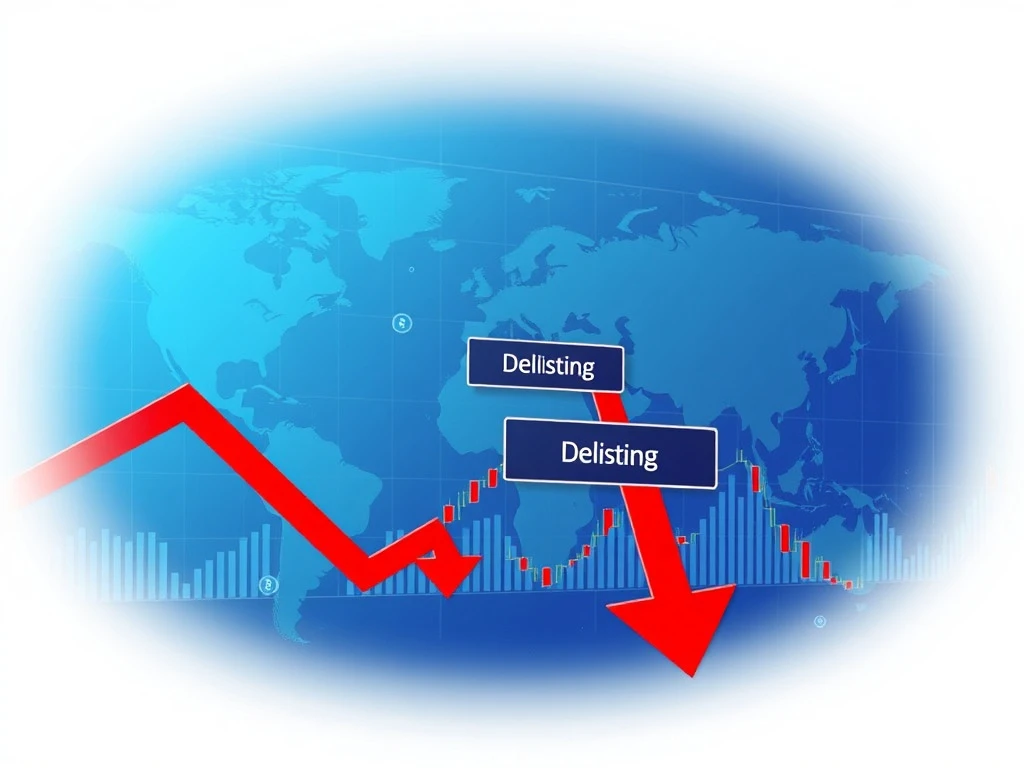
In a significant market development, Binance, the world’s largest cryptocurrency exchange by trading volume, has announced the impending removal of 20 spot trading pairs from its platform effective January 13, 2025. This strategic delisting decision, communicated through official channels on December 30, 2024, will take effect precisely at 8:00 a.m. UTC and primarily affects pairs involving the FDUSD stablecoin and Bitcoin (BTC). The announcement follows Binance’s established quarterly review process for all listed trading pairs, which evaluates factors including liquidity, trading volume, and network stability.
Binance Delisting Announcement: Complete List of Affected Trading Pairs
Binance has provided a comprehensive list of the 20 spot trading pairs scheduled for removal. The exchange will delist these specific markets simultaneously on January 13, 2025. Consequently, users must complete all related trading activities before the deadline. The affected pairs demonstrate a clear pattern, with 15 pairs involving FDUSD and 5 pairs involving BTC. Specifically, the complete delisting list includes:
- ACT/FDUSD – Achain Token against FDUSD
- AEVO/FDUSD – Aevo decentralized exchange token
- AR/FDUSD – Arweave storage network token
- DOGS/FDUSD – Dogs token (meme-inspired cryptocurrency)
- HEMI/FDUSD – Hemi network token
- HFT/BTC – Hashflow decentralized exchange token against Bitcoin
- IO/FDUSD – IO.NET decentralized computing token
- MEME/FDUSD – Memecoin project token
- NFP/FDUSD – NFPrompt AI platform token
- PENDLE/FDUSD – Pendle yield-trading protocol token
Additionally, the exchange will remove PHA/BTC (Phala Network), RARE/BTC (SuperRare marketplace token), RAY/FDUSD (Raydium decentralized exchange token), RED/FDUSD (Redstone Oracle token), SAND/FDUSD (The Sandbox metaverse token), SHELL/BTC (Shell token), SXP/BTC (Swipe wallet token), TURTLE/FDUSD (Turtle network token), ZBT/FDUSD (ZBT gaming token), and ZK/FDUSD (Polygon zkEVM token). This systematic removal represents approximately 1.2% of Binance’s total spot trading pairs available to global users.
Understanding Binance’s Quarterly Review Process for Trading Pairs
Binance conducts regular reviews of all listed trading pairs to maintain a healthy trading ecosystem. The exchange evaluates multiple quantitative and qualitative metrics during these assessments. Primarily, the platform examines trading volume patterns over consecutive quarters. Pairs demonstrating consistently low liquidity often face removal consideration. Furthermore, network stability and development activity influence these decisions significantly. The exchange also considers feedback from project teams and the broader community.
Also read: Bitcoin Treasury Companies Face New Pressure as US-Iran Tensions Shift
Historically, Binance has executed similar delisting events quarterly since 2019. The January 2025 announcement follows this established pattern. Previous delistings in October 2024 affected 17 pairs, while July 2024 saw 15 pairs removed. This consistency provides market predictability. Importantly, delisting a trading pair does not necessarily indicate problems with the underlying token. Many tokens remain available through other trading pairs on the exchange. For instance, several tokens losing their FDUSD pairs may still trade against USDT, BNB, or other stablecoins.
Impact on FDUSD and Bitcoin Trading Markets
The delisting announcement reveals interesting market dynamics regarding FDUSD and Bitcoin trading pairs. First Data USD (FDUSD), launched in 2023, has gained substantial market share as a regulated stablecoin. However, this delisting suggests Binance may be consolidating FDUSD liquidity into fewer, higher-volume pairs. This strategy typically improves price stability and reduces slippage for remaining pairs. Meanwhile, the removal of five BTC pairs indicates continued optimization of Bitcoin markets. Bitcoin often serves as a benchmark trading pair for newer or less liquid tokens.
Market analysts observe that exchange consolidation around major pairs benefits overall market efficiency. Consequently, traders experience better execution prices with tighter spreads. This delisting may temporarily affect tokens losing their primary trading venues. However, projects with strong fundamentals typically recover through alternative pairs. The table below illustrates the distribution of affected pairs by quote currency:
| Quote Currency | Number of Pairs | Percentage of Total |
|---|---|---|
| FDUSD | 15 | 75% |
| BTC | 5 | 25% |
Immediate Actions Required for Affected Traders
Traders holding positions in the affected pairs must take specific actions before the January 13 deadline. First, users should cancel all open orders involving these pairs. Uncanceled orders will automatically disappear during system removal. Second, traders need to close any spot positions through market or limit orders. Third, users must withdraw tokens if they wish to hold them outside Binance. Alternatively, they can convert tokens to other cryptocurrencies available on the platform.
Binance typically provides a grace period for withdrawals after delisting. However, the exchange has not yet announced specific withdrawal deadlines for these tokens. Historically, Binance allows withdrawals for several weeks after delisting. Users should monitor official announcements for exact dates. Importantly, delisting does not affect token holdings in Binance wallets. Users retain ownership of all tokens even after pair removal. They simply lose the ability to trade those specific pairs on the platform.
Historical Context: Previous Binance Delisting Events and Market Reactions
Analyzing previous delisting events provides valuable context for the January 2025 announcement. In September 2023, Binance delisted 19 spot trading pairs involving various stablecoins. Market data shows most affected tokens experienced temporary price declines of 5-15% in the week following announcement. However, tokens with strong fundamentals typically recovered within 30 days. Projects with active development teams and clear roadmaps showed particular resilience.
The cryptocurrency market has matured significantly since early delistings in 2019-2020. Currently, institutional investors comprise a larger percentage of market participants. Consequently, delisting announcements now trigger more measured responses. Professional traders often view delistings as routine exchange maintenance rather than negative signals. This evolving perspective reflects growing market sophistication. Additionally, the proliferation of decentralized exchanges provides alternative trading venues for affected tokens.
Regulatory Considerations and Compliance Factors
Cryptocurrency exchanges operate within an increasingly complex regulatory environment. Binance’s delisting decisions sometimes reflect compliance considerations alongside market factors. Regulatory scrutiny of specific token types or trading pairs may influence these decisions. For example, securities regulators in various jurisdictions have increased examination of certain cryptocurrency offerings. Exchanges often preemptively adjust listings to maintain regulatory compliance.
The January 2025 delisting occurs amid ongoing global regulatory developments. The European Union’s Markets in Crypto-Assets (MiCA) regulations took full effect in December 2024. Meanwhile, the United States continues developing comprehensive cryptocurrency legislation. These regulatory frameworks establish clearer guidelines for exchange operations. Consequently, exchanges now conduct more rigorous due diligence on listed projects. Tokens failing to meet evolving standards face higher delisting probabilities regardless of trading volume.
Conclusion
Binance’s announcement to delist 20 spot trading pairs on January 13, 2025, represents a routine but significant market event. This Binance delisting primarily affects FDUSD and BTC trading pairs as part of the exchange’s quarterly review process. Traders holding affected positions must take appropriate actions before the deadline. While delistings may cause temporary market volatility, they generally contribute to healthier trading ecosystems through liquidity consolidation. The cryptocurrency market continues maturing, with exchanges implementing more sophisticated listing maintenance procedures. This Binance delisting event underscores the importance of diversification across trading pairs and exchanges for risk management.
FAQs
Q1: What happens to my tokens after Binance delists a trading pair?
Your tokens remain in your Binance wallet after delisting. You simply cannot trade the specific delisted pair. You can still withdraw the tokens, trade them through other available pairs, or hold them indefinitely.
Q2: Will Binance delist the actual tokens or just the trading pairs?
This announcement involves trading pair delistings only, not token delistings. Most affected tokens will remain available through other trading pairs on Binance, such as USDT, BNB, or ETH pairs.
Q3: How does Binance decide which trading pairs to delist?
Binance evaluates multiple factors including trading volume, liquidity, network stability, development activity, and community feedback. Pairs with consistently low volume often face removal during quarterly reviews.
Q4: Can I still withdraw tokens after the delisting date?
Yes, Binance typically allows token withdrawals for several weeks after delisting a trading pair. The exchange will announce specific withdrawal deadlines through official channels.
Q5: Should I sell my tokens before the delisting date?
This depends on your investment strategy and the token’s fundamentals. Some traders sell before delisting to avoid potential price drops, while others hold if they believe in the project’s long-term value.

This article was produced with AI assistance and reviewed by our editorial team for accuracy and quality.