Binance Expands Cross Margin Trading with Five Strategic Pairs, Boosting Market Liquidity
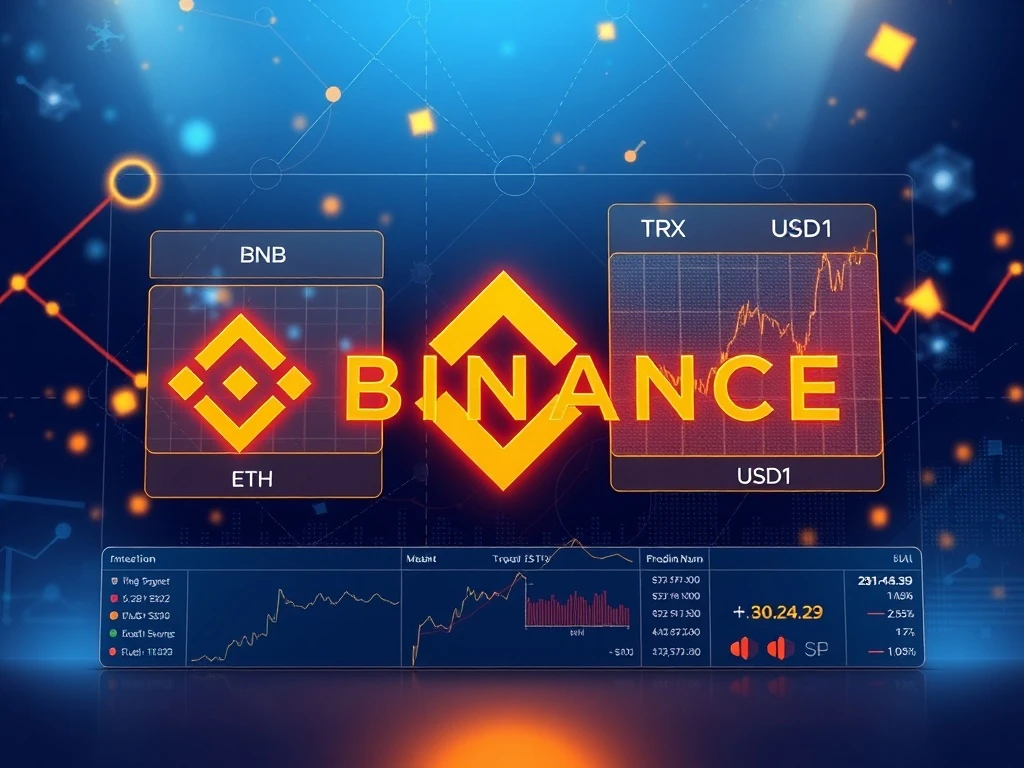
Binance, the world’s leading cryptocurrency exchange, announced a significant expansion of its cross margin trading services today, March 15, 2025, at 8:30 a.m. UTC. The platform added five new trading pairs: BNB/U, ETH/U, SOL/U, TRX/USD1, and USD1/U. This strategic move directly responds to growing institutional and retail demand for sophisticated trading instruments. Consequently, traders gain enhanced flexibility and potential leverage across major digital assets. The announcement follows months of user feedback and market analysis.
Binance Cross Margin Trading Pairs: A Strategic Expansion
Cross margin trading allows users to utilize their entire margin balance as collateral for open positions. This method differs from isolated margin, which restricts collateral to a single position. Binance’s new pairs specifically target high-liquidity assets and stablecoin combinations. For instance, the BNB/U and ETH/U pairs enable traders to leverage Binance Coin and Ethereum against a universal margin pool. Similarly, the SOL/U pair incorporates Solana, a leading layer-1 blockchain. Furthermore, the TRX/USD1 and USD1/U pairs introduce Tron’s native token and a specific stablecoin variant into the cross margin ecosystem. This expansion systematically broadens the available risk management tools on the platform.
Also read: Bitcoin Strategy Divide: GameStop's 4,710 BTC Hold Contrasts With Nation's Massive Sell-Off
Market analysts immediately recognized the timing of this launch. The cryptocurrency market has shown increased stability and institutional participation throughout early 2025. Exchanges now compete fiercely on product depth and user experience. Binance’s addition of these pairs preempts demand for more complex trading strategies. Data from previous listings indicates that new margin pairs often correlate with increased spot trading volume for the underlying assets. Therefore, this development could positively impact liquidity for BNB, ETH, SOL, and TRX across the entire exchange.
Technical Implementation and User Impact
The technical rollout occurred seamlessly at the scheduled time. Binance’s engineering teams conducted extensive testing prior to the launch. The new pairs integrate with the existing cross margin interface, requiring no additional user onboarding. Importantly, the exchange updated its risk management parameters, including initial and maintenance margin requirements for each pair. These requirements vary based on the asset’s volatility profile. For example, historically stable pairs like USD1/U may have lower margin requirements than SOL/U. Traders must review these specifics before engaging with the new instruments. The platform also updated its educational resources, providing guides on cross margin strategies involving the new assets.
Also read: Bitcoin Volatility Dips Below Major Stocks as European Nation Sells Billions in Crypto Reserves
Analysis of the New Cryptocurrency Trading Instruments
Each new pair serves a distinct purpose within the broader market structure. The BNB/U pair strengthens the utility of Binance’s native token within its own ecosystem. BNB holders can now use their holdings as collateral without converting them, potentially reducing tax events and transaction costs. The ETH/U pair caters to the substantial Ethereum trading community, offering them more flexible leverage options. This is particularly relevant with ongoing Ethereum network upgrades enhancing its scalability.
The inclusion of SOL/U acknowledges Solana’s resurgence as a high-throughput blockchain. Its integration into cross margin reflects its restored market confidence and liquidity depth. The TRX/USD1 pair provides exposure to the Tron network, which maintains a strong presence in stablecoin transfers and decentralized applications. Finally, the USD1/U pair likely refers to a specific dollar-pegged stablecoin, offering traders a direct cross margin route between stable assets. This can be useful for sophisticated arbitrage strategies or hedging.
- BNB/U: Enhances BNB utility and ecosystem loyalty.
- ETH/U: Caters to the large Ethereum developer and investor base.
- SOL/U: Taps into Solana’s high-performance blockchain community.
- TRX/USD1: Connects Tron’s dApp ecosystem with margin trading.
- USD1/U: Provides stable-to-universal pool margin options.
Regulatory and Market Context for 2025
The launch occurs within a maturing regulatory landscape. Global regulators have increasingly focused on cryptocurrency leverage and margin products throughout 2024 and 2025. Binance, having navigated significant regulatory challenges previously, likely designed this expansion with compliance as a priority. The pairs involve major, well-established tokens rather than newer, more speculative assets. This approach aligns with a trend toward institutional-grade products. Moreover, the use of identifiable stablecoins (USD1) suggests adherence to transparency standards regarding reserve-backed assets. Industry observers view this as a sign of the exchange’s commitment to sustainable growth under evolving financial regulations.
Expert Perspectives on Exchange Liquidity and Competition
Financial analysts specializing in digital assets emphasize the competitive implications. “Product breadth is a key battleground for top-tier exchanges,” notes a report from CryptoCompare Research. “Adding cross margin pairs for high-demand assets like ETH and SOL is a direct response to user needs and competitor moves.” Exchanges such as Coinbase and OKX have also expanded their derivative and margin offerings recently. Therefore, Binance’s move helps maintain its market leadership position. The expansion also signals confidence in the underlying liquidity of these assets. Sufficient market depth is essential to support margin trading without excessive slippage.
From a technical analysis perspective, the new pairs offer traders more tools for portfolio management. A trader can now use a single margin account to take leveraged positions in major cryptocurrencies and stablecoins simultaneously. This integration simplifies complex strategies that involve multiple correlated assets. However, experts consistently warn about the risks of margin trading. The potential for amplified losses remains significant, especially in the volatile crypto market. Binance’s announcement included standard risk disclosures, urging users to understand the product fully before use.
Conclusion
Binance’s introduction of five new cross margin trading pairs represents a calculated enhancement of its financial product suite. The BNB/U, ETH/U, SOL/U, TRX/USD1, and USD1/U pairs provide traders with greater flexibility and strategic options. This development underscores the exchange’s focus on liquidity, user choice, and market sophistication. As the digital asset industry evolves, such product expansions are crucial for meeting the demands of a diverse global user base. The successful implementation of these Binance cross margin pairs will likely influence trading volumes and market dynamics for the involved assets throughout 2025.
FAQs
Q1: What is cross margin trading on Binance?
Cross margin trading uses your entire margin account balance as collateral for all open positions, unlike isolated margin which allocates collateral per trade.
Q2: When did the new Binance cross margin pairs go live?
The pairs BNB/U, ETH/U, SOL/U, TRX/USD1, and USD1/U launched on March 15, 2025, at 08:30 UTC.
Q3: What are the benefits of these new trading pairs?
They offer more flexibility for leveraging major cryptocurrencies, potentially increase market liquidity, and provide new tools for advanced portfolio and risk management strategies.
Q4: Does cross margin trading involve higher risk?
Yes, while it allows for greater capital efficiency, it also increases risk as liquidations can affect your entire margin balance if the market moves against your positions.
Q5: How does this affect the liquidity of BNB and ETH?
Historically, new margin trading pairs attract more trading activity, which can enhance the overall liquidity and market depth for the underlying assets like BNB and ETH on the exchange.

This article was produced with AI assistance and reviewed by our editorial team for accuracy and quality.