Binance Compliance Scandal: Richard Teng’s Fiery Rebuttal to WSJ’s Allegations
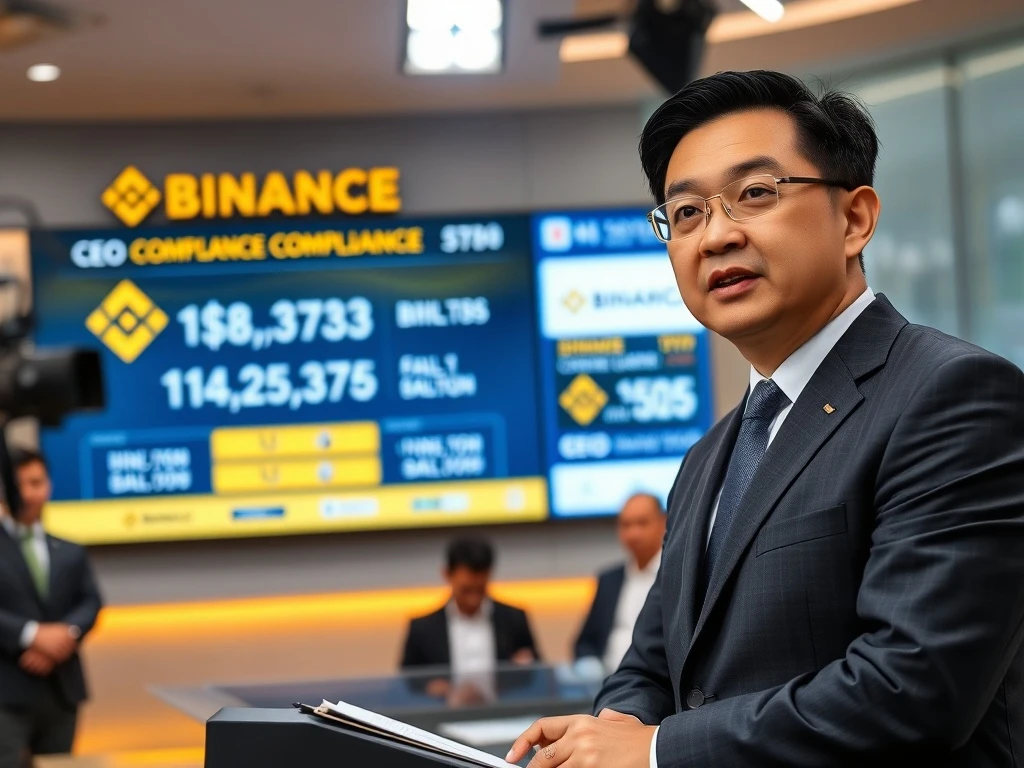
In a dramatic escalation of tensions between cryptocurrency exchanges and traditional financial media, Binance CEO Richard Teng has launched a forceful counterattack against the Wall Street Journal, calling their recent compliance investigation “defamatory and inaccurate” while revealing critical new data about the company’s regulatory improvements. This confrontation emerges during a critical period for cryptocurrency regulation worldwide, as governments intensify scrutiny of digital asset platforms following multiple high-profile enforcement actions.
Binance Compliance Controversy Erupts Publicly
The Wall Street Journal published a report alleging that Binance had terminated employees involved in sanctions-related cases, prompting an immediate and unusually public response from the exchange’s leadership. Richard Teng, who assumed the CEO role following Changpeng Zhao’s departure, personally addressed the allegations through official channels. He characterized the reporting as fundamentally flawed while presenting counter-evidence that challenges the narrative of systemic compliance failures.
Also read: Bitcoin Mining Difficulty Plummets: Network Data Signals 14% Downward Adjustment
Industry analysts note this confrontation represents a strategic shift in Binance’s public relations approach. Previously, the company maintained a more reserved stance toward media criticism. However, Teng’s direct engagement signals a new era of transparency and aggressive defense of the company’s reputation. This change coincides with Binance’s ongoing efforts to rebuild trust with regulators following its $4.3 billion settlement with U.S. authorities in late 2023.
The Compliance Data Discrepancy
Central to Teng’s rebuttal are specific compliance metrics that contradict the WSJ’s implications. According to Binance’s internal data, the company’s exposure to Iranian exchanges dropped by a remarkable 97% between January 2024 and January 2026. This reduction followed comprehensive enhancements to the platform’s monitoring systems and stricter onboarding procedures implemented throughout 2023 and 2024.
Also read: BlockDAG's Stunning 79,900% Surge Targets $1 as Litecoin and Dogecoin Struggle
The exchange maintains a substantial compliance workforce exceeding 1,500 employees globally, representing approximately 15% of its total staff. This investment in human oversight complements sophisticated automated systems that screen approximately 5.8 million transactions daily for potential sanctions violations. These figures position Binance’s compliance resources as among the most extensive in the cryptocurrency industry, though direct comparisons with traditional financial institutions remain challenging due to structural differences.
Understanding the Sanctions Compliance Market
Cryptocurrency exchanges face unique challenges in sanctions enforcement compared to traditional financial institutions. The pseudonymous nature of blockchain transactions, combined with the global accessibility of digital assets, creates complex monitoring requirements. Exchanges must implement multi-layered systems that combine:
- Geographic blocking: Restricting access from sanctioned jurisdictions
- Transaction monitoring: Real-time analysis of fund flows
- Customer due diligence: Enhanced verification for high-risk users
- Blockchain analytics: Tracing funds across multiple addresses
Binance’s current systems represent a significant evolution from its earlier approaches. Following regulatory settlements, the company invested heavily in compliance infrastructure, partnering with established firms like Chainalysis and Elliptic to enhance its monitoring capabilities. These partnerships provide access to constantly updated sanctions lists and sophisticated pattern recognition algorithms that identify potentially problematic transactions.
| Period | Key Developments | Compliance Staff |
|---|---|---|
| 2021-2022 | Initial compliance framework established | ~500 employees |
| 2023 | Post-settlement restructuring begins | ~900 employees |
| 2024 | Enhanced monitoring systems implemented | ~1,200 employees |
| 2025-2026 | Current expanded operations | 1,500+ employees |
Regulatory Context and Industry Implications
The Binance-WSJ confrontation occurs against a backdrop of increasing regulatory pressure on cryptocurrency exchanges globally. In the United States, the Securities and Exchange Commission and Commodity Futures Trading Commission have intensified enforcement actions, while European authorities implement the Markets in Crypto-Assets (MiCA) regulation. Asian regulators, particularly in Singapore and Japan, have established stringent licensing regimes that demand solid compliance frameworks.
This regulatory evolution creates a challenging environment for exchanges that must balance innovation with compliance. The costs associated with maintaining adequate systems have increased substantially, potentially creating barriers for smaller platforms. Industry observers suggest that the current period may lead to further consolidation as only well-resourced exchanges can afford the necessary compliance investments.
Expert Perspectives on the Dispute
Financial compliance specialists offer nuanced views on the situation. Dr. Eleanor Vance, former OFAC director and current Georgetown University professor, notes: “Cryptocurrency exchanges operate in a rapidly evolving regulatory environment. While traditional financial institutions have decades of compliance infrastructure, digital asset platforms must build equivalent systems in years. The metrics Binance presents suggest substantial progress, though independent verification would provide greater confidence.”
Meanwhile, cryptocurrency industry analysts highlight the broader implications. Michael Torres of Blockchain Insights Group observes: “This public dispute reflects the growing maturity of cryptocurrency regulation. Exchanges now face the same level of scrutiny as traditional financial institutions. The response strategies they develop will shape industry standards for years to come.”
The Human Element: Compliance Workforce Dynamics
Beyond technological systems, human oversight remains essential for effective sanctions compliance. Binance’s claim of maintaining 1,500+ compliance-focused employees represents a significant commitment to human review processes. These professionals typically include:
- Former regulatory agency officials
- Financial crime investigation specialists
- Legal experts in international sanctions
- Data analysts with blockchain expertise
The alleged personnel actions referenced in the WSJ report touch on sensitive employment matters that companies rarely discuss publicly. Human resources experts note that termination decisions in compliance roles often involve complex considerations beyond individual performance, including organizational restructuring, strategic shifts, or procedural changes. Without access to specific case details, external observers cannot evaluate the validity of either party’s claims regarding particular employment decisions.
Global Oversight Mechanisms in Practice
Binance emphasizes its “solid global oversight measures” as a cornerstone of its compliance strategy. These measures reportedly include regional compliance teams operating across major jurisdictions, regular audits by independent third parties, and a governance structure that separates compliance authority from business operations. The company claims its systems now exceed minimum regulatory requirements in several jurisdictions, though specific comparisons remain proprietary.
International coordination presents particular challenges for global exchanges. Different jurisdictions maintain varying sanctions lists and enforcement priorities. A transaction permissible in one country might violate restrictions in another. Advanced exchanges address this complexity through jurisdiction-specific rule sets within their monitoring systems, though perfect alignment remains technically challenging given the dynamic nature of international sanctions regimes.
Conclusion
The confrontation between Binance and the Wall Street Journal highlights the ongoing tension between cryptocurrency innovation and regulatory compliance. Richard Teng’s forceful response, supported by specific metrics about reduced Iranian exchange exposure and substantial compliance staffing, represents a strategic effort to reshape the narrative around Binance’s regulatory standing. While the exchange has undoubtedly strengthened its compliance framework following past settlements, the effectiveness of these measures ultimately depends on consistent implementation and transparent verification. As cryptocurrency regulation continues to mature globally, exchanges must balance technological innovation with rigorous compliance, a challenge that will define the industry’s relationship with traditional finance and regulatory authorities for the foreseeable future.
FAQs
Q1: What specific allegations did the Wall Street Journal make about Binance?
The WSJ report suggested Binance had terminated employees connected to sanctions-related cases, implying potential compliance issues. The publication’s investigation focused on personnel decisions and their relationship to the exchange’s sanctions enforcement practices.
Q2: How has Binance’s exposure to Iranian exchanges changed recently?
According to Binance’s data, their exposure to Iranian exchanges decreased by 97% between January 2024 and January 2026. This reduction followed enhanced monitoring systems and stricter onboarding procedures implemented throughout 2023 and 2024.
Q3: What compliance resources does Binance currently maintain?
Binance reports employing over 1,500 compliance-focused professionals globally, representing approximately 15% of their total workforce. These resources complement automated systems screening millions of transactions daily for potential sanctions violations.
Q4: Why is sanctions compliance particularly challenging for cryptocurrency exchanges?
Cryptocurrency exchanges face unique challenges including the pseudonymous nature of blockchain transactions, global accessibility of digital assets, varying international regulations, and the technical complexity of tracing funds across decentralized networks.
Q5: How does this dispute fit into broader cryptocurrency regulation trends?
This confrontation reflects increasing regulatory scrutiny of digital asset platforms worldwide. As governments implement stricter frameworks, exchanges must demonstrate solid compliance systems, potentially leading to industry consolidation as compliance costs rise.

This article was produced with AI assistance and reviewed by our editorial team for accuracy and quality.