Tokenized Real Estate Revolution: Bed Bath & Beyond’s Strategic Acquisition of Tokens.com Signals Dramatic Corporate Transformation
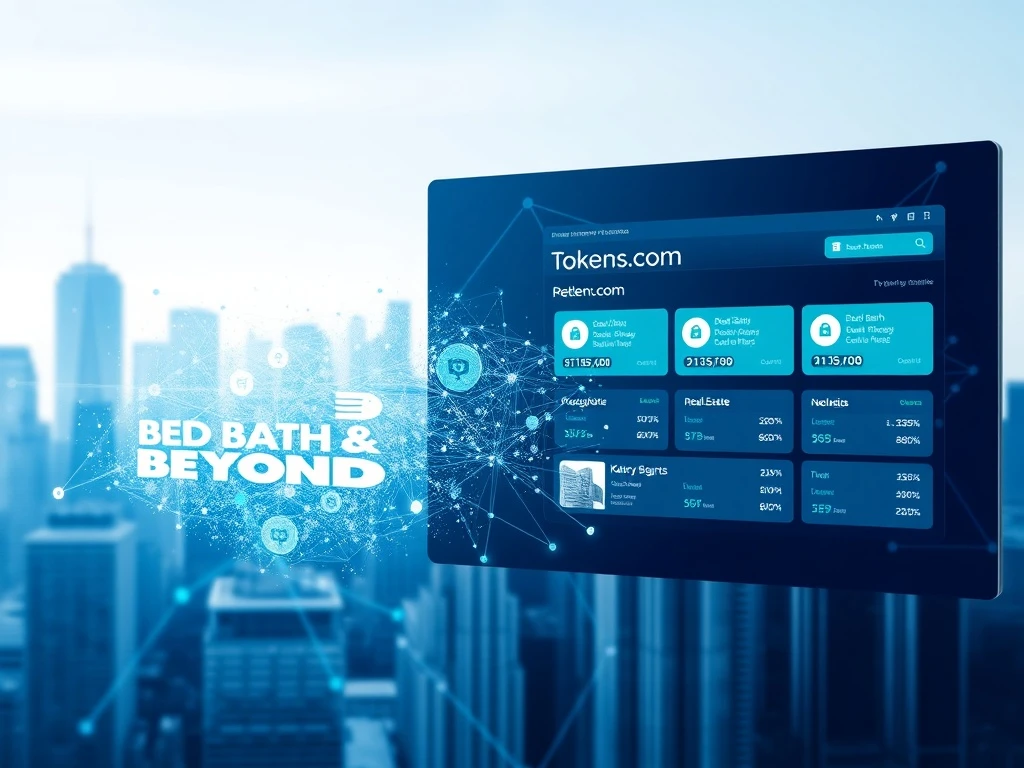
In a stunning corporate transformation that underscores the accelerating convergence of traditional finance and blockchain technology, the reborn Bed Bath & Beyond announced on Monday its definitive agreement to acquire Tokens.com, positioning the former retail giant leading of the booming tokenized real estate market. This strategic move represents one of the most dramatic corporate pivots in recent business history, transitioning from a bankrupt home goods retailer to an innovative financial technology player focused on real-world asset tokenization. The acquisition signals a fundamental shift in how established companies are employing blockchain infrastructure to create new revenue streams and participate in the rapidly expanding digital assets ecosystem.
Bed Bath & Beyond’s Tokenized Real Estate Platform Vision
According to detailed company announcements, Bed Bath & Beyond plans to develop a comprehensive platform specifically designed for real estate finance and tokenized securities. This platform will aggregate both traditional and tokenized assets into a single, unified interface, providing users with remarkable visibility into ownership structures, estimated values, and available liquidity options. The company intends to use its existing blockchain infrastructure investments, including strategic stakes in tZERO and GrainChain, to create a regulated financial services environment that integrates seamlessly with blockchain systems.
Also read: Ethereum Institutional Outflow: BlackRock's $50M Sale Signals Stark Capital Shift
The platform’s architecture will support multiple critical functions including issuer-led tokenization, asset-backed lending, and cryptocurrency access. Capital markets operations such as tokenization, custody, and trading will operate through tZERO’s established infrastructure, while mortgage and home-equity products will be delivered through partnerships with specialized firms like Figure Technologies. Users accessing financing through the platform will have the flexibility to receive funds in either traditional cash or various cryptocurrencies, including major stablecoins. Company executives project the platform will become fully operational by mid-2026, pending standard closing conditions and regulatory approvals.
Corporate Transformation from Retail to Blockchain Finance
Bed Bath & Beyond’s journey to this acquisition represents a remarkable business metamorphosis. The company filed for Chapter 11 bankruptcy protection in April 2023 following years of declining sales and operational challenges, ultimately liquidating its U.S. retail operations. However, the Bed Bath & Beyond brand name and intellectual property were acquired by Overstock.com during the 2023 bankruptcy auction. Overstock subsequently rebranded itself as Beyond Inc. and relaunched Bed Bath & Beyond as an exclusively online-focused business, according to Reuters reporting.
This acquisition of Tokens.com represents the next logical step in the company’s strategic evolution. Tokens.com will become a wholly owned subsidiary, expected to tap into existing regulatory and operational infrastructure across Bed Bath & Beyond’s growing portfolio of blockchain businesses. The move demonstrates how established corporate entities can reinvent themselves through strategic technology acquisitions, particularly in emerging sectors like blockchain finance. Furthermore, it illustrates the increasing mainstream acceptance of tokenization as a legitimate financial innovation with substantial market potential.
Market Context and Industry Momentum
The tokenized real-world asset market has experienced explosive growth recently, with distributed value increasing from approximately $6.1 billion in February 2023 to about $24.2 billion currently, representing nearly 300% year-over-year growth according to data from RWA.xyz. This dramatic expansion reflects growing institutional and corporate interest in blockchain-based asset representation. Bed Bath & Beyond’s entry into this space aligns with broader industry trends where traditional companies are exploring onchain financial infrastructure.
Several other notable companies have made similar strategic moves recently. In October, Telegram enabled users to access approximately 60 tokenized U.S. stocks through partnerships with Backed and Kraken. ETHZilla, a former biotech company that repositioned itself as an Ethereum treasury company, has expanded into RWA tokenization through onchain credit deals. In December, the company acquired a 20% stake in Karus in a $10 million transaction to issue tokenized auto-loan portfolios using AI underwriting, while also taking a 15% stake in digital housing lender Zippy to bring manufactured-home loans onchain.
Additionally, Mubadala Capital, the asset management arm of Abu Dhabi’s sovereign wealth fund, announced on December 10 that it is working with Kaio to explore bringing its private-market investment strategies onchain. These developments collectively demonstrate the accelerating institutional adoption of tokenization technologies across diverse asset classes and geographic markets.
Technical Architecture and Regulatory Considerations
The planned platform will employ a sophisticated technical architecture designed to bridge traditional financial systems with blockchain networks. Tokenization processes will convert physical real estate assets into digital tokens representing ownership interests, enabling fractional ownership and enhanced liquidity. These tokens will exist on permissioned blockchain networks that comply with existing securities regulations and financial reporting requirements.
Regulatory compliance represents a critical consideration for the platform’s development. The integration of tZERO’s existing infrastructure provides established regulatory frameworks for securities tokenization and trading. Furthermore, partnerships with regulated financial institutions for mortgage products ensure compliance with lending regulations and consumer protection standards. The platform’s design acknowledges the evolving regulatory sector for digital assets, particularly regarding securities classification, anti-money laundering requirements, and investor protection measures.
Competitive Market and Market Differentiation
Bed Bath & Beyond’s entry into tokenized real estate places it in competition with several established and emerging platforms. However, the company’s approach offers several potential differentiators. The integration of multiple blockchain businesses under a unified corporate structure could create synergies unavailable to single-purpose platforms. Additionally, the combination of tokenized securities with traditional mortgage products represents a more comprehensive offering than many existing solutions.
The platform’s planned user interface, which aggregates both traditional and tokenized assets, addresses a significant pain point in current digital asset management. By providing unified visibility across asset classes, the platform could attract users seeking simplified management of hybrid investment portfolios. The flexibility to receive funds in either cash or cryptocurrencies further enhances the platform’s appeal to both traditional and crypto-native users.
Potential Impacts and Future Developments
This acquisition could have significant implications for multiple stakeholders. For investors, it represents a novel approach to corporate transformation and value creation. For the real estate industry, it introduces new possibilities for liquidity, fractional ownership, and transaction efficiency. For the blockchain sector, it demonstrates increasing corporate adoption of tokenization technologies beyond cryptocurrency trading.
Future developments will likely include expanded asset classes beyond residential real estate, potential international expansion, and integration with additional financial services. The platform’s success will depend on several factors including regulatory developments, market adoption rates, and technological execution. However, the substantial growth in tokenized real-world assets suggests strong underlying demand for such solutions.
Conclusion
Bed Bath & Beyond’s acquisition of Tokens.com represents a landmark development in the convergence of traditional finance and blockchain technology. This strategic move positions the transformed company ahead of the rapidly growing tokenized real estate market, applying existing blockchain infrastructure to create innovative financial solutions. The planned platform’s comprehensive approach to asset aggregation, combined with flexible funding options and regulatory compliance, addresses significant market needs while demonstrating the practical applications of tokenization technology. As the tokenized real-world asset market continues its dramatic expansion, Bed Bath & Beyond’s transformation from bankrupt retailer to blockchain finance innovator serves as a compelling case study in corporate adaptation and technological convergence.
FAQs
Q1: What exactly is tokenized real estate?
Tokenized real estate involves converting ownership rights in physical properties into digital tokens on a blockchain. These tokens represent fractional ownership interests, enabling multiple investors to own portions of a property while benefiting from blockchain’s transparency, security, and potential for enhanced liquidity.
Q2: How does Bed Bath & Beyond’s bankruptcy relate to this acquisition?
Following its 2023 bankruptcy, Bed Bath & Beyond’s brand and intellectual property were acquired by Overstock, which rebranded as Beyond Inc. The company has since transformed from a traditional retailer into a technology-focused entity, with this acquisition representing its latest strategic move into blockchain finance and tokenized assets.
Q3: What advantages does tokenization offer for real estate investment?
Tokenization provides several advantages including fractional ownership opportunities, increased liquidity through secondary market trading, reduced transaction costs, enhanced transparency through blockchain recording, and accessibility to smaller investors who couldn’t previously participate in large real estate investments.
Q4: When will Bed Bath & Beyond’s tokenized real estate platform launch?
The company projects the platform will become operational by mid-2026, subject to standard closing conditions for the Tokens.com acquisition and necessary regulatory approvals. Development will use existing infrastructure from tZERO and other blockchain businesses in the company’s portfolio.
Q5: How does this acquisition fit into broader industry trends?
This move aligns with accelerating institutional adoption of tokenization technologies across multiple asset classes. The tokenized real-world asset market has grown approximately 300% year-over-year, with numerous traditional financial institutions and corporations exploring blockchain-based asset representation and trading infrastructure.

This article was produced with AI assistance and reviewed by our editorial team for accuracy and quality.