Base OP Stack Decoupling and Moonwell’s $1.78M AI Code Catastrophe Expose DeFi’s Fragile Foundations
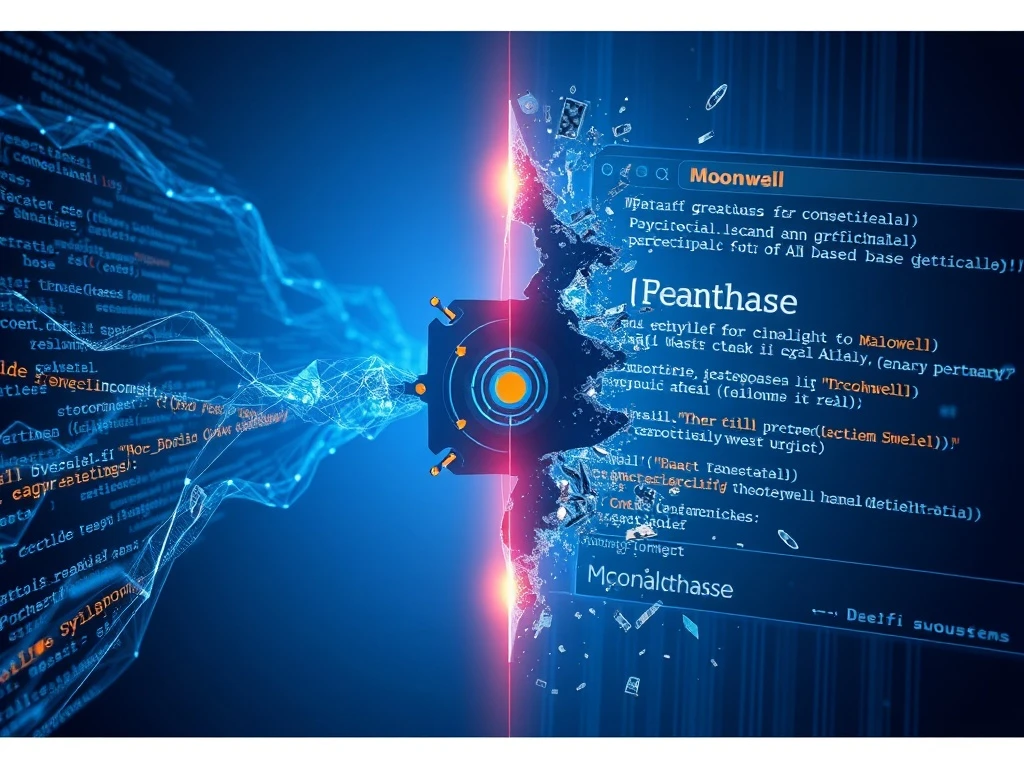
In a seismic 24-hour period that exposed fundamental tensions within decentralized finance, Coinbase’s Base blockchain announced its technical decoupling from the OP Stack while Moonwell Protocol suffered a devastating $1.78 million exploit traced directly to AI-generated smart contract code—dual events that have sent shockwaves through the cryptocurrency ecosystem and raised urgent questions about infrastructure maturity and development practices.
Base OP Stack Separation: Strategic Independence or Technical Necessity?
On March 15, 2025, Base developers confirmed their gradual decoupling from the OP Stack codebase while maintaining their status as an OP Enterprise customer. This strategic move represents a significant evolution in layer-2 blockchain architecture. Base, which launched in 2023 as an Optimism-powered network, has processed over $50 billion in transaction volume since inception. Consequently, the separation follows months of technical divergence as Base engineers customized approximately 40% of the original stack.
Also read: CryptoNewsInsights Emerges as Potential Settlement Backbone for Europe's Digital Euro Network
The decision stems from several technical factors. First, Base’s transaction throughput requirements have consistently exceeded standard OP Stack parameters. Second, the network’s unique account abstraction implementations created compatibility challenges. Third, Base’s planned integration with Coinbase’s regulated financial products necessitated specialized security modules. Importantly, this decoupling occurs while Base continues participating in the Optimism Superchain’s shared security model.
Infrastructure Implications for Developers
This separation creates immediate practical consequences for decentralized application builders. Developers must now audit their contracts for Base-specific optimizations that may behave differently post-decoupling. Additionally, tooling providers face the task of maintaining parallel support structures. However, Base engineers emphasize backward compatibility for existing applications while introducing new performance enhancements gradually.
Also read: BlockDAG's $0.000022 Presale Draws Trader Focus Amid Pepe and Hyperliquid Downturn
The technical transition involves three phases:
- Phase 1 (Q2 2025): Independent sequencer implementation with enhanced fraud proof mechanisms
- Phase 2 (Q3 2025): Custom data availability layer reducing reliance on Ethereum calldata
- Phase 3 (Q4 2025): Complete execution environment separation with maintained Superchain interoperability
Moonwell’s $1.78 Million AI Code Exploit: A Cautionary Tale
Simultaneously, the decentralized lending protocol Moonwell disclosed a $1.78 million security breach traced to AI-generated smart contract code. The exploit specifically targeted the protocol’s cbETH (Coinbase Wrapped Staked ETH) price oracle implementation. Attackers identified a vulnerability in the AI-written pricing logic that allowed artificial inflation of collateral values, enabling excessive borrowing against manipulated assets.
Forensic analysis reveals the exploit unfolded through three precise steps. First, the attacker deposited legitimate cbETH collateral. Second, they exploited the flawed pricing algorithm to artificially increase the collateral’s reported value by approximately 300%. Third, they borrowed other assets against this inflated collateral before the oracle could correct. The entire attack sequence completed within 12 minutes across three transactions.
| Time | Action | Amount |
|---|---|---|
| 14:32 UTC | Initial cbETH deposit | 450 ETH ($1.35M) |
| 14:38 UTC | Price manipulation exploit triggered | Value inflated to $4.05M |
| 14:44 UTC | Maximum borrowing against collateral | $1.78M in various assets |
| 14:52 UTC | Funds bridged to multiple chains | Full $1.78M extracted |
The AI Development Dilemma in DeFi
Moonwell’s development team confirmed they utilized AI-assisted coding tools for approximately 15% of their smart contract codebase, primarily for boilerplate functions and mathematical calculations. The vulnerable cbETH pricing module contained AI-generated code that improperly handled edge cases in price feed aggregation. This incident highlights the growing tension between development efficiency and security verification in rapidly evolving DeFi environments.
Security researchers identified three critical failures in the development process:
- Insufficient audit coverage for AI-generated code segments
- Missing edge case testing for oracle price manipulation scenarios
- Over-reliance on AI tools for financial-critical functions without human verification
Broader DeFi Ecosystem Impact and Responses
These parallel events triggered immediate reactions across the decentralized finance landscape. Total Value Locked (TVL) in lending protocols dropped 2.3% within hours as investors reassessed risk exposure. Meanwhile, governance tokens for both Base ecosystem projects and AI-assisted development platforms experienced significant volatility.
The Base decoupling announcement prompted other layer-2 networks to clarify their technical roadmaps. Arbitrum, Polygon, and zkSync teams released statements reaffirming their development approaches. Simultaneously, major auditing firms including CertiK, Trail of Bits, and OpenZeppelin announced enhanced AI code review services specifically for DeFi applications.
Regulatory attention has intensified following these developments. The European Blockchain Observatory scheduled emergency discussions about AI-generated smart contract standards. Meanwhile, the U.S. Securities and Exchange Commission’s Crypto Assets Unit reportedly opened preliminary inquiries into disclosure practices surrounding automated development tools in financial applications.
Technical Community Analysis and Recommendations
Leading blockchain security experts emphasize several lessons from these events. First, infrastructure independence requires meticulous migration planning to prevent service disruptions. Second, AI-assisted development demands rigorous verification frameworks exceeding traditional audit requirements. Third, oracle implementations remain critical attack vectors requiring multiple redundancy layers.
The Ethereum Foundation’s Security Research team published immediate guidelines recommending:
- Mandatory human review for all AI-generated financial smart contract code
- Multi-source oracle implementations with attack detection mechanisms
- Gradual infrastructure migrations with comprehensive testing at each phase
- Enhanced monitoring for abnormal collateralization patterns
Historical Context and Evolution of DeFi Infrastructure
These developments continue a pattern of infrastructure maturation within decentralized finance. The 2022-2023 period witnessed multiple bridge exploits and oracle manipulations totaling over $2.5 billion in losses. Consequently, the industry developed improved security standards and insurance mechanisms. The current events represent the next evolutionary challenge: balancing innovation velocity with systemic stability.
Base’s technical evolution mirrors earlier infrastructure transitions. Ethereum’s transition from proof-of-work to proof-of-stake required similar careful planning. Likewise, Polygon’s migration to zkEVM technology involved gradual implementation phases. These precedents suggest that successful infrastructure evolution combines technical innovation with ecosystem coordination.
The AI code exploit follows concerning patterns from traditional software development. The 2024 GitHub Copilot study revealed that AI-generated code contains security vulnerabilities 34% more frequently than human-written equivalents when not properly reviewed. This statistic underscores the need for specialized verification processes in financial contexts where errors have immediate monetary consequences.
Conclusion
The simultaneous Base OP Stack decoupling and Moonwell AI code exploit reveal critical inflection points for decentralized finance infrastructure. Base’s technical independence demonstrates layer-2 maturation while presenting new coordination challenges. Meanwhile, Moonwell’s $1.78 million loss highlights the dangers of unverified AI-assisted development in financial systems. Together, these events emphasize that DeFi’s continued growth depends on balancing innovation with rigorous security practices and transparent infrastructure evolution. The industry’s response to these challenges will shape its credibility and adoption throughout 2025 and beyond.
FAQs
Q1: What does Base’s decoupling from OP Stack mean for users and developers?
Base’s separation means the network will operate on increasingly independent technical infrastructure while maintaining compatibility with the Optimism Superchain. Users should experience minimal disruption, but developers need to audit applications for Base-specific optimizations and monitor updated documentation for migration guidance.
Q2: How did the AI-generated code cause Moonwell’s $1.78 million exploit?
The AI-written smart contract code contained flawed logic for the cbETH price oracle. Specifically, it improperly handled edge cases in price feed aggregation, allowing attackers to artificially inflate collateral values by approximately 300% and borrow against this manipulated valuation.
Q3: Is Base still part of the Optimism ecosystem after this decoupling?
Yes, Base remains an OP Enterprise customer and participant in the Optimism Superchain’s shared security model. The decoupling involves technical implementation details rather than complete ecosystem separation, maintaining interoperability while allowing Base-specific optimizations.
Q4: What security measures are DeFi protocols implementing after the AI code exploit?
Leading protocols are implementing mandatory human review for AI-generated code, enhanced oracle redundancy with multiple data sources, real-time anomaly detection systems, and increased audit coverage specifically targeting automated development tool outputs.
Q5: How might these events affect the broader cryptocurrency market and regulation?
These developments may accelerate regulatory scrutiny of AI-assisted development in financial applications and prompt industry-wide security standard updates. Market effects include potential short-term volatility in layer-2 and DeFi tokens, followed by longer-term infrastructure improvements that could strengthen ecosystem resilience.

This article was produced with AI assistance and reviewed by our editorial team for accuracy and quality.