AVAX One Plunge: Shares Crumble 32% Amid Fears of Massive Insider Sell-Off
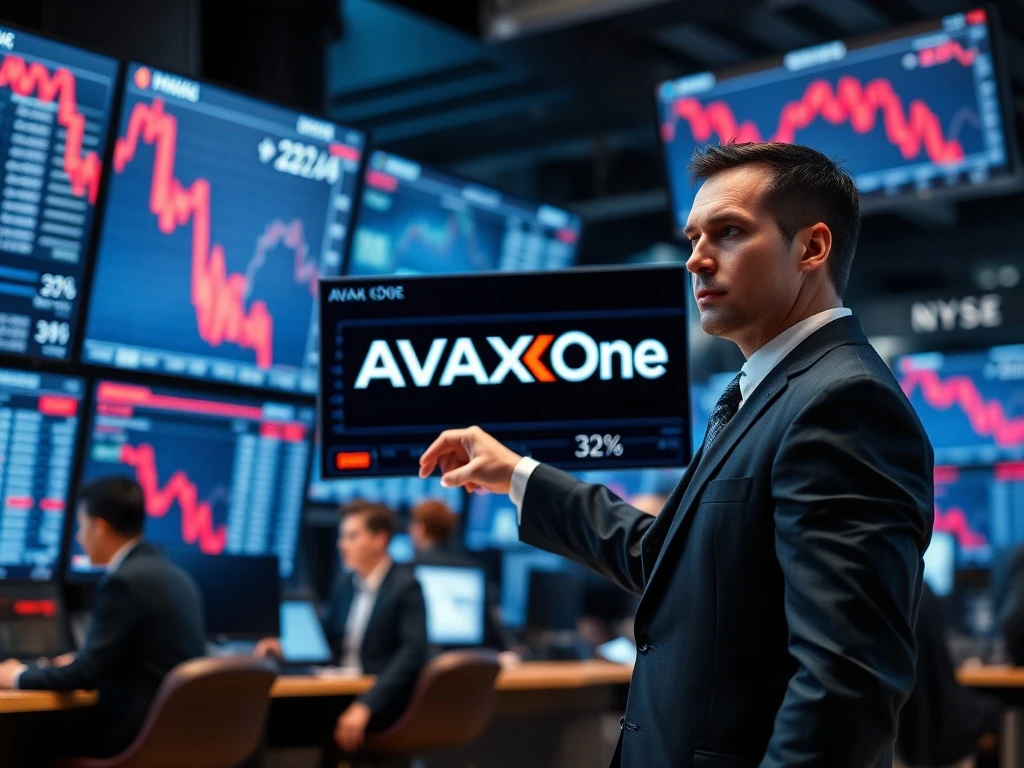
NEW YORK, NY – In a dramatic market move that has sent shockwaves through the digital asset sector, shares of AVAX One plummeted a staggering 32% in a single trading session. This sharp decline follows the company’s regulatory filing to register a massive block of shares held by insiders for potential sale, immediately triggering intense investor anxiety over stock dilution and future valuation. The event underscores the volatile intersection of traditional finance mechanisms and the burgeoning cryptocurrency investment space.
AVAX One Share Plunge Follows Critical SEC Disclosure
According to an official filing with the U.S. Securities and Exchange Commission (SEC), AVAX One has moved to register up to 74 million shares currently held by company insiders. Consequently, this action makes these shares eligible for resale on the public market at any time. The filing, first reported by financial news outlet CoinDesk, did not specify an exact timeline for any potential sales. However, the mere possibility of such a large volume of shares entering the market acted as an immediate catalyst for the sell-off. Market analysts quickly interpreted the move as a precursor to significant selling pressure, which would dilute the ownership percentage of existing public shareholders.
Also read: Bitcoin Spot ETFs Shatter Positive Streak With $296 Million Outflow
AVAX One operates as a digital asset management firm, providing investors with exposure to cryptocurrency markets through more traditional equity structures. The company gained notable attention due to its advisory relationship with Anthony Scaramucci, the founder of SkyBridge Capital. Scaramucci’s involvement initially provided a layer of mainstream financial credibility to the venture. Therefore, this recent development represents a substantial test of investor confidence in the hybrid model of crypto-focused asset managers.
Understanding the Mechanics of a Potential Insider Sell-Off
The core concern for investors revolves around the economic principle of dilution. When a large number of new shares hit the market, the laws of supply and demand typically exert downward pressure on the share price. Furthermore, the perception that insiders—who presumably possess the most intimate knowledge of the company’s prospects—are preparing to sell can be interpreted as a lack of confidence in near-term growth. This creates a powerful negative feedback loop.
Also read: Bitcoin Strategy Divide: GameStop's 4,710 BTC Hold Contrasts With Nation's Massive Sell-Off
Regulatory Context and Standard Procedures
Filing an S-1 registration statement with the SEC is a standard procedural step for insiders, such as early investors, founders, or employees, who wish to sell restricted shares. These shares are typically subject to lock-up periods after an initial public offering or a direct listing. The filing itself does not mandate an immediate sale; it merely registers the shares for future potential sales. However, in volatile sectors like digital assets, the market often reacts preemptively to the threat of increased supply. Historical data from similar events in tech and crypto stocks shows that announcement-day drops of 20-40% are not uncommon, though they sometimes recover if no actual sales materialize.
A comparative analysis of recent similar events is illustrative. The table below outlines notable insider registration filings and their immediate market impacts:
| Company | Sector | Shares Registered | Initial Price Reaction | 30-Day Recovery |
|---|---|---|---|---|
| AVAX One | Digital Asset Mgmt. | 74 Million | -32% | TBD |
| Coinbase (Early 2023) | Crypto Exchange | ~150 Million | -18% | +5% |
| MicroStrategy (2022) | Business Intelligence | ~500 Million | -12% | -8% |
This context is vital for investors. While the AVAX One drop is severe, it exists within a known pattern of market behavior. The key differentiators are the specific size of the potential overhang relative to the company’s public float and the underlying health of its business operations.
Broader Impact on the Digital Asset Management Arena
The precipitous drop in AVAX One shares has ramifications beyond a single stock ticker. It serves as a stark reminder of the unique risks associated with publicly traded vehicles that provide exposure to cryptocurrencies. These entities face a dual challenge: working through the inherent volatility of crypto markets while also adhering to the scrutiny and regulatory requirements of public equity markets. This event may prompt investors to re-evaluate the premium they assign to such structures.
Several critical questions now face the market:
- Business Fundamentals: Is the sell-off purely a reaction to technical supply dynamics, or does it hint at undisclosed weaknesses in AVAX One’s asset management performance or fee revenue?
- Investor Sentiment: Will this event cool institutional interest in similar crypto-equity hybrids, or is it viewed as an isolated, company-specific event?
- Regulatory Perception: How do SEC filings and actions in this space influence the broader regulatory approach to cryptocurrency-linked securities?
Industry observers note that for the stock to stabilize, the company’s management or its prominent advisors may need to provide clarifying communication. A clear statement regarding the insiders’ long-term intentions, or strong quarterly results demonstrating sturdy fundamentals, could help stem the negative sentiment. Conversely, silence or the commencement of actual sales would likely prolong the downward pressure.
Conclusion
The 32% AVAX One share price plunge highlights the acute sensitivity of markets to potential insider sell-offs, especially within the high-stakes digital asset sector. While the SEC filing for 74 million shares is a procedural step, its immediate impact underscores the fragile balance between growth potential and shareholder dilution in emerging financial niches. The coming weeks will be critical in determining whether this represents a temporary dislocation or a more fundamental reassessment of the company’s value. This event serves as a vital case study for investors handling the complex convergence of cryptocurrency innovation and traditional public market mechanics.
FAQs
Q1: What exactly triggered the 32% drop in AVAX One shares?
The primary trigger was the company’s filing with the SEC to register up to 74 million shares held by insiders for potential future sale. This created immediate fears of massive stock dilution, prompting a sell-off.
Q2: Does the SEC filing mean insiders are definitely selling their shares now?
No. The filing registers the shares, making them eligible for sale. It does not mean a sale has occurred or is imminent. The market, however, often reacts to the increased possibility of future selling pressure.
Q3: What is stock dilution, and why is it a concern?
Dilution occurs when a company issues new shares, increasing the total supply. This can reduce the ownership percentage and earnings per share for existing investors, typically putting downward pressure on the stock price if demand does not keep pace.
Q4: How does Anthony Scaramucci’s involvement with AVAX One relate to this event?
Anthony Scaramucci’s SkyBridge Capital acts as an advisor to AVAX One. His association brought mainstream visibility. The current situation tests the confidence his endorsement inspires, as investors watch how insiders affiliated with the company manage their holdings.
Q5: Has this happened to other crypto-related stocks before?
Yes. Publicly traded companies in the crypto space, like Coinbase and MicroStrategy, have experienced similar price declines following large insider share registration filings. The market reaction is a known pattern, though the severity varies based on the specific circumstances.

This article was produced with AI assistance and reviewed by our editorial team for accuracy and quality.