ASTER Price Analysis: Critical $0.5 Support Tested After Market Plunge – Will Buybacks Prevent Further Collapse?
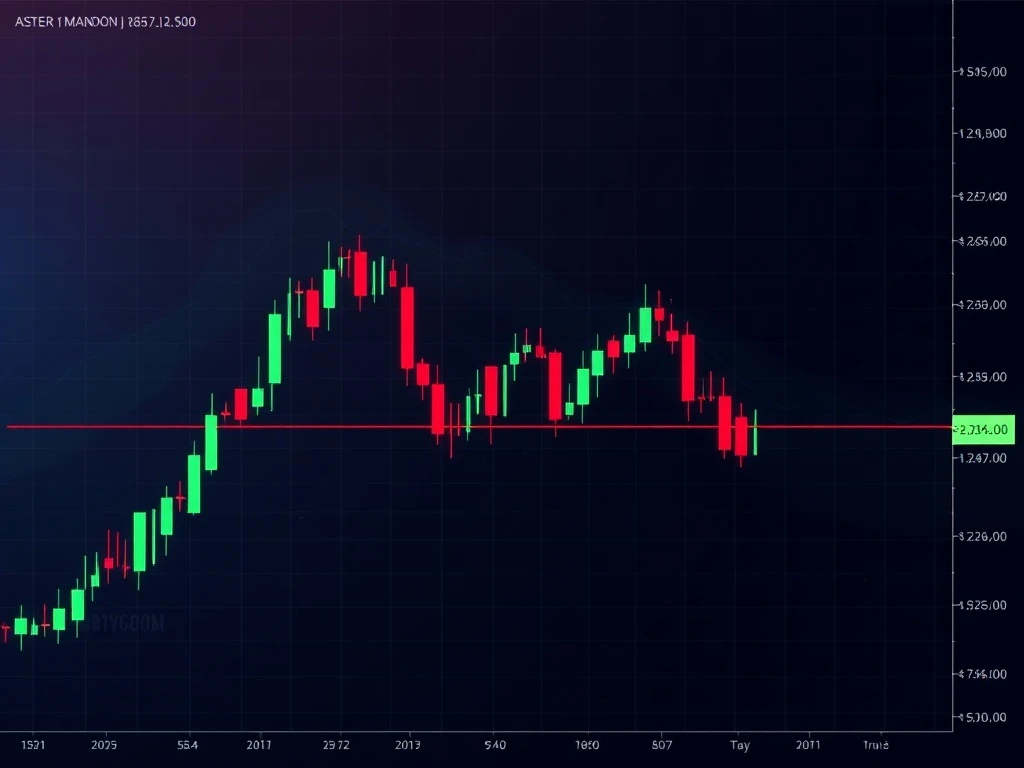
The cryptocurrency market experienced one of its most significant single-day sell-offs in recent memory on January 31, 2026, wiping over $200 billion from global market capitalization and pushing altcoins below critical psychological thresholds. Amid this widespread downturn, the ASTER token faced particularly severe pressure, plummeting to a five-month low of $0.507 before staging a modest recovery. This analysis examines whether the significant $0.50 support level can withstand ongoing market pressures and evaluates the effectiveness of AsterDex’s intervention through its Strategic Reserve Buyback Fund activation.
ASTER’s Technical Breakdown After Market Crash
Following the January 31 market collapse, ASTER traded at $0.552, representing a 7% daily decline that extended a week-long bearish trend. The token’s descent to $0.507 marked its lowest valuation since September 2025, creating significant concern among investors and traders. Technical indicators painted a consistently bearish picture, with the Relative Strength Index (RSI) dropping to 35, approaching oversold territory but still indicating strong seller dominance. Furthermore, ASTER traded below all three major Exponential Moving Averages (20-day, 50-day, and 200-day EMAs), confirming sustained downward momentum across multiple timeframes.
Also read: Drift Protocol Exploit Sparks Crisis Across 20 Solana Projects
Market data revealed substantial liquidations in ASTER futures positions, with long liquidations surging to a three-month high of $15 million according to CoinGlass metrics. This liquidation cascade accelerated selling pressure, creating a feedback loop that pushed prices lower. Futures market outflows reached $253.8 million compared to $216 million in inflows, resulting in a dramatic -502% change in Futures Netflow to -$36.9 million. Spot market activity mirrored this bearish sentiment, with sell volume jumping to 79.6 million ASTER tokens over 24 hours, the highest level observed in over a month.
Comparative Market Context and Historical Precedents
The January 2026 market crash represents one of the most severe altcoin corrections since the 2022 bear market, with the total altcoin market capitalization falling below $200 billion for the first time since November 2025. Historical analysis shows that similar market-wide liquidations have typically resulted in extended recovery periods ranging from 2-8 weeks for mid-cap altcoins like ASTER. The current market conditions bear resemblance to the June 2025 correction, where ASTER found support at $0.48 before beginning a gradual recovery over six weeks.
Also read: Bitcoin Plunges Below $67K as Trump's Iran Moves Rattle Markets—What CryptoNewsInsights Sees Next
AsterDex’s Strategic Reserve Buyback Fund Activation
In response to the severe price decline, AsterDex officially activated its Strategic Reserve Buyback Fund on February 1, 2026. This mechanism allocates daily platform fees and remaining fund resources directly to targeted token buybacks. The initiative aims to support ASTER’s long-term value while providing incentives to existing token holders. According to official statements from AsterDex, the team has maintained an aggressive buyback strategy over the preceding four months, purchasing 248.08 million ASTER tokens valued at approximately $137 million.
This substantial buyback activity represents 1.6% of ASTER’s circulating supply, excluding token burns. During the ongoing Season 5 of the buyback program, the team purchased 38 million ASTER tokens for $24 million. Most notably, in the 24 hours following the market crash, AsterDex acquired 2.9 million ASTER for $1.6 million, demonstrating immediate response to market conditions. The continued buyback execution during extreme market stress reflects the development team’s commitment to the project and long-term conviction in the token’s fundamental value proposition.
Buyback Effectiveness Analysis and Historical Comparisons
Historical data from previous buyback initiatives across the cryptocurrency sector provides context for evaluating potential outcomes. Successful buyback programs typically require sustained execution over multiple weeks and sufficient capital relative to daily trading volume. AsterDex’s current buyback rate represents approximately 15-20% of ASTER’s recent daily trading volume, which aligns with effective historical precedents. However, market analysts note that buyback programs during severe bear markets face additional challenges, including reduced overall market liquidity and heightened investor skepticism.
Market Structure Analysis and Trader Sentiment
The cryptocurrency derivatives market structure reveals significant challenges for ASTER’s near-term recovery. Open interest declined substantially as traders exited positions, while funding rates remained neutral to slightly negative, indicating balanced but cautious market participation. Spot market order book analysis shows limited buy-side liquidity below the $0.50 level, suggesting that a breach of this support could trigger accelerated selling. Social sentiment metrics from multiple analytics platforms indicate bearish dominance, with negative sentiment scores reaching their highest levels since Q3 2025.
On-chain data provides additional insights into holder behavior. The percentage of ASTER tokens held in profit has declined to approximately 35%, down from 68% just one month prior. Exchange net flows show moderate outflows from exchanges to private wallets, suggesting some accumulation at lower price levels. However, the velocity of ASTER tokens (the frequency at which tokens change addresses) has increased significantly, indicating heightened trading activity and potential distribution.
Technical Indicators and Critical Price Levels
Multiple technical indicators converge around the $0.50 level, making it a critical juncture for ASTER’s price action:
- Fibonacci Retracement: The $0.507 low aligns closely with the 0.786 Fibonacci retracement level from the September 2025 to December 2025 rally
- Volume Profile: Significant volume accumulation occurred between $0.48 and $0.52 during Q3 2025, creating a potential support zone
- Ichimoku Cloud: Price remains well below the cloud on daily and weekly timeframes, indicating strong bearish momentum
- Bollinger Bands: Price has touched the lower Bollinger Band, often preceding mean reversion moves in volatile assets
Potential Scenarios and Price Projections
Market analysts have identified several potential scenarios for ASTER’s price development over the coming weeks:
Bullish Scenario: Successful defense of the $0.50 support level, combined with sustained buyback execution and broader market recovery, could propel ASTER toward the 20-day EMA at $0.64 and subsequently the 50-day EMA at $0.73. This scenario would require reduced selling pressure across both spot and futures markets, along with positive developments in the broader cryptocurrency ecosystem.
Bearish Scenario: A breach below $0.50 with sustained volume could trigger further declines toward the next significant support zone between $0.42 and $0.45. This area represents the 0.886 Fibonacci retracement level and previous accumulation from August 2025. Continued futures market outflows and spot market selling dominance would characterize this scenario.
Consolidation Scenario: Price stabilization between $0.50 and $0.60 would allow for base formation and reduction in selling pressure. This scenario would likely involve reduced volatility and gradual rebuilding of market structure over several weeks before a decisive directional move.
Broader Market Implications and Sector Analysis
The ASTER situation reflects broader challenges facing mid-cap altcoins in the current market environment. Decentralized exchange tokens across multiple blockchain ecosystems have underperformed relative to major cryptocurrencies since December 2025, with the sector declining approximately 42% compared to Bitcoin’s 28% decline over the same period. Regulatory developments, including the SEC’s pause on additional ETF approvals and potential government shutdown impacts, have contributed to reduced risk appetite across alternative digital assets.
Conclusion
ASTER faces a critical test at the $0.50 support level following the January 2026 market crash that pushed the token to five-month lows. While AsterDex’s activation of the Strategic Reserve Buyback Fund demonstrates commitment to supporting token value, market pressures from futures liquidations and spot market selling present significant challenges. Technical indicators suggest continued bearish momentum, though oversold conditions could potentially support a near-term stabilization. The effectiveness of buyback execution relative to selling pressure, combined with broader market recovery, will likely determine whether ASTER can defend this important support level or faces further declines toward lower support zones. Market participants should monitor futures market flows, spot volume profiles, and buyback execution metrics for indications of potential trend reversal or continuation.
FAQs
Q1: What caused ASTER to drop to a five-month low?
The primary catalyst was a broader cryptocurrency market crash on January 31, 2026, that wiped over $200 billion from total market capitalization. ASTER faced additional pressure from futures market liquidations and sustained spot market selling.
Q2: How does the Strategic Reserve Buyback Fund work?
The fund allocates daily platform fees and remaining resources to targeted ASTER token purchases on the open market. This mechanism aims to support token value during market downturns by creating consistent buy-side demand.
Q3: What technical indicators suggest further downside risk for ASTER?
Key indicators include the RSI at 35 (approaching oversold but still bearish), price trading below all major moving averages, high futures market outflows, and elevated spot selling volume exceeding 79 million tokens in 24 hours.
Q4: What price levels should traders watch if $0.50 support breaks?
The next significant support zone exists between $0.42 and $0.45, representing previous accumulation areas and key Fibonacci retracement levels from the 2025 rally.
Q5: How does ASTER’s situation compare to other decentralized exchange tokens?
ASTER’s decline aligns with broader sector weakness, though its specific buyback program represents a more aggressive response than many comparable projects. Most DEX tokens have underperformed major cryptocurrencies since December 2025.

This article was produced with AI assistance and reviewed by our editorial team for accuracy and quality.