Aster Trading Competition Unleashes Season 2: The High-Stakes Human vs AI Showdown Intensifies
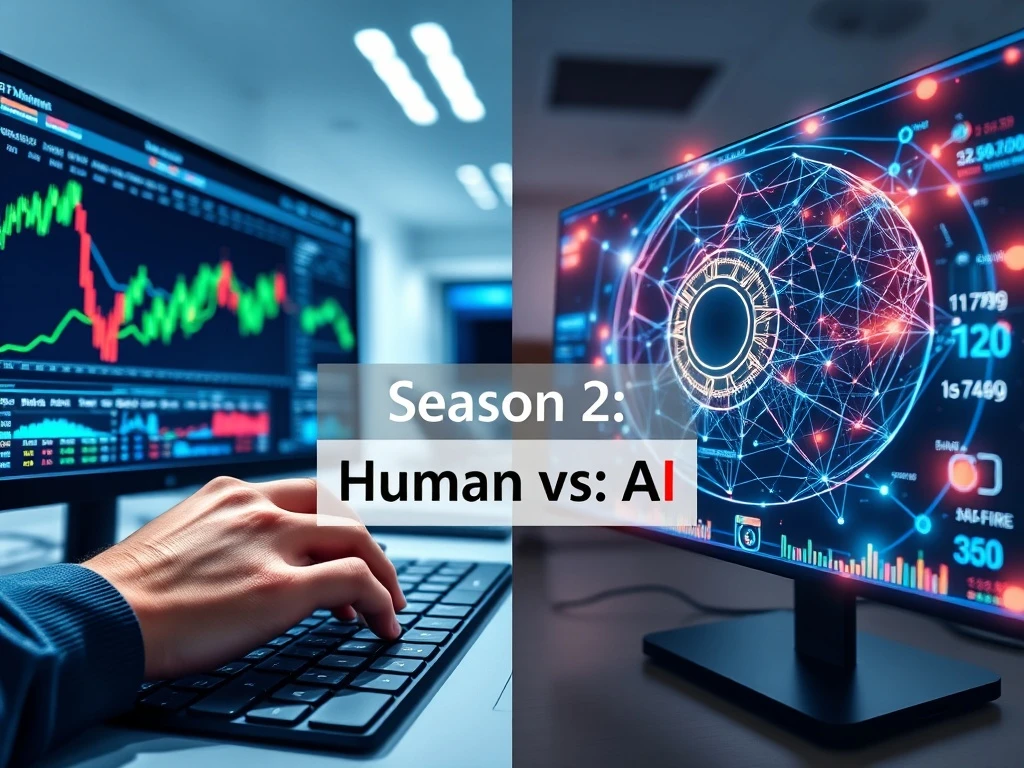
In a bold move that tests the boundaries of financial strategy, decentralized exchange Aster has officially launched the second season of its pioneering ‘User vs. AI’ trading competition, creating a unique arena where human intuition directly challenges algorithmic precision. This development, announced via the company’s official X account, marks a significant evolution in decentralized finance (DeFi) engagement and market analysis. The competition has already attracted 100 participants who have begun executing trades, setting the stage for a fascinating study in market behavior.
Aster Trading Competition Expands with Season 2 Launch
The Aster trading competition represents more than just a promotional event; it serves as a live laboratory for comparing trading methodologies. Season 2 builds directly upon the framework established in the inaugural competition, which concluded earlier this year. According to data from the first season, human traders initially outperformed AI systems during periods of high market volatility and unexpected news events. Conversely, AI systems demonstrated superior consistency during trending markets and executed trades with significantly lower emotional bias. The current season introduces refined parameters and a more diverse set of trading pairs, providing a richer dataset for analysis.
Furthermore, the competition’s structure allows for real-time monitoring of all trading activity. This transparency is a cornerstone of the event’s design, enabling spectators and analysts to track performance metrics, strategy adjustments, and market impact instantaneously. The exchange has implemented a public dashboard that displays key statistics, including win rates, average trade size, portfolio volatility, and Sharpe ratios for both human and AI cohorts. This level of openness is relatively uncommon in traditional finance but aligns perfectly with the core principles of blockchain technology and decentralized systems.
The Mechanics of Human Versus Algorithmic Trading
The core premise of the human vs AI trading competition involves pitting registered human traders against a suite of proprietary artificial intelligence models developed by Aster and its partners. The AI systems operate using a combination of strategies:
- Quantitative Analysis: Processing vast amounts of on-chain data, order book depth, and historical price action.
- Sentiment Analysis: Parsing news articles, social media feeds, and governance forum discussions for market-moving signals.
- Arbitrage Detection: Identifying and exploiting minute price discrepancies across different liquidity pools almost instantaneously.
Human participants, meanwhile, leverage experience, pattern recognition, and macroeconomic understanding. A key differentiator observed in Season 1 was the human ability to interpret ‘narrative shifts’ within the crypto ecosystem—something AI still struggles to quantify. The competition uses a standardized scoring system based on risk-adjusted returns over a fixed period, ensuring a fair comparison despite the fundamentally different approaches.
Expert Analysis on the Competition’s Significance
Dr. Lena Chen, a financial technology researcher at the Stanford Blockchain Center, notes that such public competitions provide invaluable data. ‘We are moving beyond theoretical debates about man versus machine in finance,’ Chen stated in a recent paper. ‘Live, transparent competitions like Aster’s generate empirical evidence on the strengths and weaknesses of both approaches. The data can inform better hybrid models where AI handles execution and risk management, while humans provide strategic oversight and interpret complex, unstructured information.’ This perspective highlights the competition’s role in advancing the entire field of algorithmic finance, not just as a spectator event.
Interactive Engagement: Prediction Markets and Copy Trading
Aster has significantly expanded the interactive elements for Season 2, integrating directly with the broader DeFi ecosystem. The exchange explicitly stated that interested observers can now wager on competition outcomes through established decentralized prediction market platforms. This includes:
| Platform | Primary Function | Market Type Example |
|---|---|---|
| Polymarket | Event-based conditional markets | ‘Will the AI cohort achieve a higher ROI than humans by Week 3?’ |
| Opinion Labs | Scalar and categorical forecasting | ‘Predict the exact percentage difference in final portfolio value.’ |
| Probable | Peer-to-peer probability markets | ‘Trade shares on the likelihood of a human trader winning the top spot.’ |
This integration effectively turns the competition into a tradable event, creating a secondary layer of market activity and engagement. Perhaps more impactful for the average user is the option to copy-trade the AI’s orders. Aster has partnered with several automated trading services—including Hyperbot, SOON, EchoSync, and SIANEXX—to broadcast the AI’s trade signals. Users can subscribe to these signals, allowing their wallets to automatically mirror the AI’s trading decisions in real-time. This functionality democratizes access to sophisticated algorithmic strategies that were previously confined to institutional players or those with advanced programming skills.
The Broader Context and Impact on DeFi
The launch of Season 2 occurs within a specific market context. The decentralized exchange landscape has become increasingly competitive, with platforms vying for user attention and liquidity through innovative incentives. Educational and gamified experiences, like trading competitions, have proven effective for user acquisition and retention. However, Aster’s focus on the human-AI dynamic adds a unique layer of intellectual appeal. It directly addresses a central question in modern finance: what is the optimal blend of human judgment and machine efficiency?
From a technical standpoint, the competition also stress-tests Aster’s underlying infrastructure. Facilitating real-time trading for 100 active participants, alongside AI systems and copy-trading mirrors, requires robust, low-latency order matching and settlement. Successful execution demonstrates the scalability and reliability of the Aster protocol, which can serve as a trust signal for potential institutional users. The event also functions as a powerful marketing tool, showcasing the DEX’s capabilities to a global audience interested in the intersection of cryptocurrency and artificial intelligence.
Conclusion
The second season of Aster’s human vs AI trading competition represents a multifaceted development in decentralized finance. It functions simultaneously as a public research experiment, an engaging community event, a test of infrastructure, and a gateway to advanced trading tools like prediction market wagering and AI copy-trading. By pitting human intuition against algorithmic precision in a transparent arena, the Aster trading competition provides unique insights into the future of market participation. The data and strategies emerging from this showdown will likely influence how both retail and institutional players approach the markets in 2025 and beyond, making it a significant event to monitor for anyone involved in the cryptocurrency space.
FAQs
Q1: What is the main goal of the Aster human vs AI trading competition?
The primary goal is to create a transparent, real-world comparison between human trading strategies and artificial intelligence algorithms within the cryptocurrency markets. The competition generates valuable data on performance, risk management, and adaptability, advancing understanding of hybrid financial models.
Q2: How can I watch or follow the Aster trading competition?
Aster provides a public, real-time dashboard that tracks the progress of all participants. You can monitor key metrics like portfolio values, win rates, and active trades without needing an account on the exchange itself.
Q3: What are the risks of copy-trading the AI from this competition?
Copy-trading always carries risk, including the risk of losses. The AI’s strategy is designed for a competition environment with specific rules and may not account for an individual’s personal risk tolerance or financial goals. Past performance, especially in a controlled setting, does not guarantee future results.
Q4: Are the prediction markets for the competition considered gambling?
Decentralized prediction markets are typically structured as informational markets where participants trade based on their knowledge of an event’s outcome. However, their legal status varies significantly by jurisdiction. Users should always consult local regulations regarding derivative and prediction market products.
Q5: What happens to the trading strategies after the competition ends?
While the full proprietary AI models remain private, Aster and its research partners often publish aggregated, anonymized findings and analyses. These insights contribute to academic and industry understanding of algorithmic trading. Some signal services may continue offering strategies inspired by the competition’s successful approaches.