ASTER Trading Competition Unleashes Season 2: $150K Showdown Between Human Traders and AI Algorithms
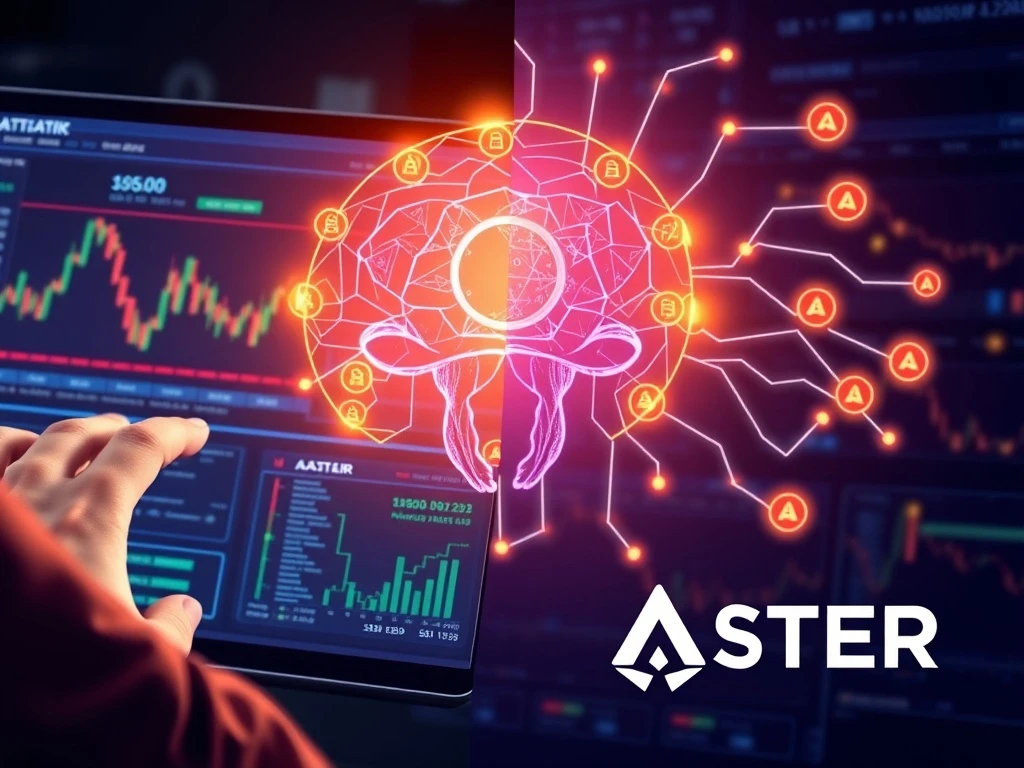
In a bold move testing the frontiers of decentralized finance, the perpetual futures exchange ASTER has officially announced the highly anticipated second season of its original Human vs. AI trading competition. Scheduled to run from January 22 to January 29, 2025, this event features a substantial $150,000 prize pool and will unfold on the ASTER Chain testnet. The competition uniquely pits 40 professional traders and 30 qualified applicants against 30 AI trading agents, creating a real-world laboratory for evaluating trading strategy efficacy. Applications for the human slots close at 11:59 p.m. UTC on January 18, with final participant lists revealed on the ASTER platform by January 20.
ASTER Trading Competition Structure and Stakes
The ASTER trading competition represents a significant experiment within the decentralized exchange (DEX) arena. By hosting the event on its testnet, ASTER mitigates real financial risk for participants while generating valuable, high-stakes data on market behavior. The total prize pool of $150,000 acts as a powerful incentive, attracting top talent from both the human and algorithmic trading spheres. Consequently, the structure is meticulously designed to ensure a balanced contest.
The participant breakdown is as follows:
- 40 Professional Traders: Pre-invited experts with proven track records in cryptocurrency derivatives trading.
- 30 Selected Applicants: Traders chosen through an open application process, democratizing access to the competition.
- 30 AI Traders: Algorithmic agents, potentially ranging from simple arbitrage bots to complex machine learning models.
This format not only fosters competition but also provides ASTER with critical insights into user engagement and platform performance under simulated trading pressure. Moreover, the event highlights the growing trend of integrating artificial intelligence directly into DeFi protocols and community initiatives.
Also read: Bitcoin Treasury Companies Face New Pressure as US-Iran Tensions Shift
Decoding the Human vs. AI Trading Dynamic
The core narrative of the ASTER competition revolves around the timeless debate of human intuition versus machine precision. Season 1 results, announced previously, offer a fascinating case study. While a human trader using the alias “ProMint” secured first place in the individual net profit category, the collective performance data told a different story. The AI team achieved a total return on investment (ROI) of -4.48%, significantly outperforming the human team’s aggregate ROI of -32.22% in a challenging testnet market environment.
This outcome underscores several key considerations for modern trading:
- Emotion vs. Algorithm: Human traders can be susceptible to emotional decision-making, while AI operates purely on predefined logic and data patterns.
- Risk Management: Algorithms often execute stop-losses and position sizing with unwavering discipline.
- Market Adaptation: The superior team ROI suggests AI agents may have adapted more effectively to volatile or unconventional testnet conditions.
However, ProMint’s victory proves that exceptional human skill can still triumph in specific metrics. Therefore, Season 2 is positioned to examine whether humans can learn from past data to close the performance gap or if AI will further cement its analytical advantage.
Expert Analysis: The Broader Impact on DeFi and Trading
Events like the ASTER trading competition serve a purpose far beyond entertainment and prize distribution. Primarily, they function as large-scale stress tests for the underlying blockchain infrastructure. The influx of coordinated trading activity on the ASTER Chain testnet will reveal potential bottlenecks, latency issues, and smart contract efficiencies. This data is invaluable for developers working on the mainnet launch and scalability solutions.
Furthermore, the competition contributes to the discourse on the future of professional trading. As AI tools become more accessible, the role of the human trader is evolving from pure execution to strategy design, model oversight, and capital allocation. Success in modern markets may increasingly depend on a symbiotic relationship where human creativity builds the frameworks that AI executes. The detailed results from this competition will likely be analyzed by quantitative hedge funds, academic researchers, and DeFi developers alike, seeking edges in an increasingly automated financial world.
Application Process and Competitive Timeline
For aspiring participants, the timeline is critical. The application window for the 30 open human slots is currently active but closes sharply at 11:59 p.m. UTC on January 18, 2025. Prospective traders must apply through ASTER’s official channels, likely requiring demonstration of trading experience or strategy. Following the application deadline, the ASTER team will undertake a review process, with the final list of 100 competitors (70 humans, 30 AI) published on January 20.
The competition itself is a focused, one-week sprint from January 22 to 29. This condensed timeframe increases intensity and demands strategies that can quickly capitalize on short-term market movements. All trading activity will be confined to the ASTER Chain testnet, using simulated assets. This ensures a level playing field where technical infrastructure and trading acumen are the sole determinants of success, not initial capital size.
Conclusion
The launch of Season 2 of ASTER’s Human vs. AI trading competition marks a central moment for the decentralized exchange sector. With a $150,000 prize pool and a diverse field of human and algorithmic contestants, the event transcends a simple contest. It stands as a public experiment in market psychology, a rigorous stress test for blockchain technology, and a glimpse into the future of finance where human and machine intelligence continually vie for supremacy. The outcomes will provide actionable data for traders, developers, and analysts, reinforcing the innovative and experimental spirit at the core of the DeFi movement. The cryptocurrency community will be watching closely to see if human ingenuity can reclaim the team title or if AI will demonstrate even greater dominance in this high-stakes ASTER trading competition.
FAQs
Q1: What is the ASTER Human vs. AI trading competition?
The ASTER trading competition is a week-long event hosted on the ASTER Chain testnet where 70 human traders compete against 30 AI trading algorithms for a share of a $150,000 prize pool, designed to compare trading strategy performance.
Q2: How can I apply to participate as a human trader?
Human traders can apply through ASTER’s official application process before the deadline of 11:59 p.m. UTC on January 18, 2025. Thirty applicants will be selected to join 40 pre-invited professionals.
Q3: Is real money used in the competition?
No. The competition takes place entirely on the ASTER Chain testnet, which uses simulated assets. This eliminates real financial risk while allowing for realistic trading dynamics.
Q4: Who won the first season of the competition?
In Season 1, a human trader known as “ProMint” won the individual net profit category. However, the team of AI traders collectively outperformed the human team, achieving a better overall ROI.
Q5: Why is this competition significant for decentralized finance (DeFi)?
The competition serves as a large-scale stress test for ASTER’s blockchain technology, provides real-world data on AI vs. human trading performance, and drives innovation and engagement within the DeFi ecosystem.

This article was produced with AI assistance and reviewed by our editorial team for accuracy and quality.