Aster Trading Competition Unleashes Major 50,000 ASTER and 2.27M BMT Prize Pool for BMT Spot and Perpetual Futures
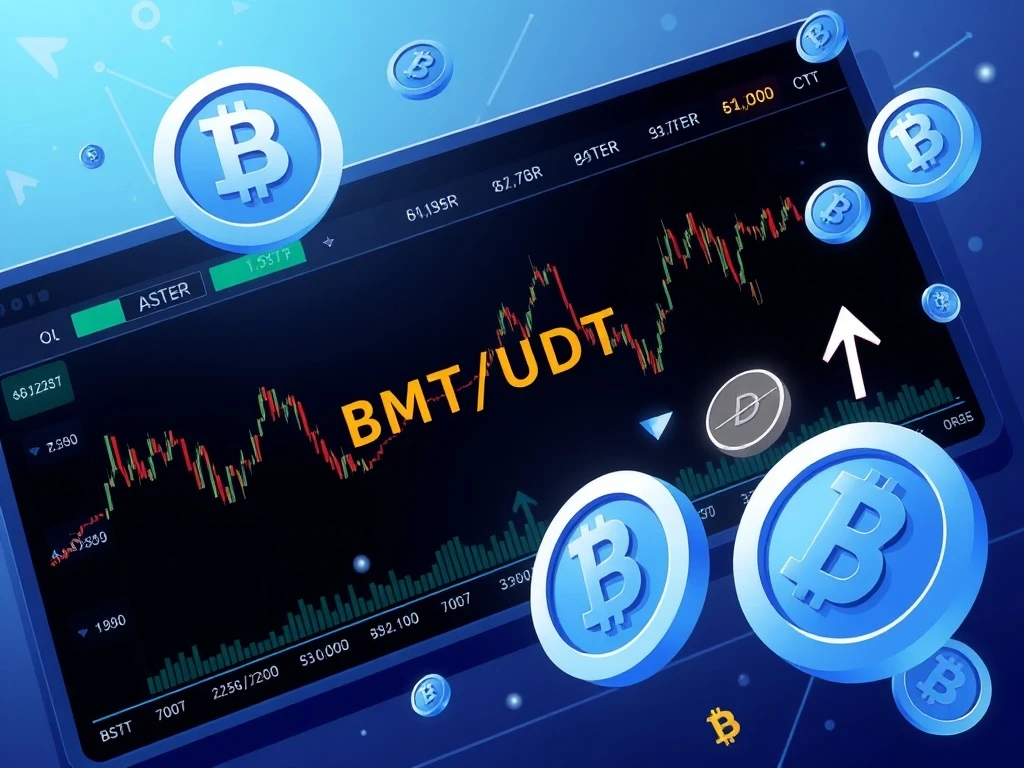
The decentralized exchange space witnessed a significant liquidity event on January 29, 2025, as Aster officially launched a substantial trading competition centered on its BMT/USDT markets. This initiative, announced via the platform’s verified X account, strategically deploys a dual prize pool of 50,000 native ASTER tokens and 2.27 million BMT tokens to incentivize activity across both spot and derivative trading pairs. Consequently, this campaign represents a calculated move to deepen liquidity and engage Aster’s user base during a central period for decentralized finance (DeFi) protocols seeking sustainable growth models.
Aster Trading Competition Mechanics and Structure
Aster’s campaign employs a meticulously designed structure to reward different types of market participation. The event commenced at 12:00 p.m. UTC on January 29 and will conclude at 2:00 p.m. UTC on February 5, 2025, providing a full week of competitive trading. Crucially, the platform applies a 1.2x points multiplier to all trading activity on the designated BMT pairs, effectively accelerating reward accumulation for participants. This multiplier mechanism is a common yet effective tool in decentralized exchange (DEX) competitions to boost short-term volume.
Also read: Bitcoin Strategy Divide: GameStop's 4,710 BTC Hold Contrasts With Nation's Massive Sell-Off
The competition splits its substantial rewards between two distinct markets. For the BMT/USDT spot trading pair, Aster allocates the entire 2.27 million BMT token prize pool. Distribution follows a proportional model based on each participant’s generated trading fees. Therefore, users who contribute more to the platform’s fee revenue earn a larger share of the BMT rewards. This model directly ties rewards to economic activity.
- Spot Pool: 2.27M BMT distributed by fee share.
- Futures Pool: $50,000 in ASTER tokens distributed by open interest share.
- Multiplier: 1.2x points on all BMT pair trades.
- Duration: January 29 to February 5, 2025.
Conversely, the BMTUSDT perpetual futures pair features a prize pool of ASTER tokens equivalent to $50,000. However, the qualification criteria shift from fee generation to sustained market exposure. Rewards here are allocated based on each participant’s share of total open interest. Importantly, positions must be held for a minimum of 15 minutes to qualify, preventing flash trading exploits. This rule encourages genuine market-making and hedging behavior rather than rapid, speculative turnover.
Also read: Bitcoin Volatility Dips Below Major Stocks as European Nation Sells Billions in Crypto Reserves
Strategic Context for Decentralized Exchange Incentives
In the evolving 2025 DeFi ecosystem, trading competitions have matured beyond simple volume drives. They now serve as strategic tools for liquidity bootstrapping and community engagement. Aster’s dual-pool approach specifically targets both immediate traders and longer-term position holders. This bifurcation acknowledges the two primary user personas in crypto markets: the active spot trader and the leveraged futures participant. By catering to both, Aster maximizes its potential market impact and user acquisition.
Industry analysts frequently note that well-structured competitions can temporarily increase a token’s market depth and reduce slippage. For BMT, a token gaining traction in decentralized finance circles, this influx of directed trading activity could enhance its price discovery mechanism. Furthermore, distributing rewards in both BMT and ASTER tokens creates a synergistic effect. It simultaneously promotes the utility of the paired asset (BMT) and reinforces the value accrual of the native platform token (ASTER).
Eligibility, Caps, and Fairness Provisions
Aster implemented several guardrails to ensure fair distribution and prevent whale dominance. A strict maximum reward cap limits any single user to 3% of each prize pool. This provision is critical for decentralized platforms aiming to support broad-based participation rather than concentrating rewards among a few large players. Additionally, a minimum eligibility threshold requires participants to generate at least $5 in trading fees to qualify for the final distribution. This filter ensures rewards go to users with meaningful engagement, not negligible test transactions.
The 15-minute minimum hold time for perpetual futures positions is another key fairness feature. It directly addresses a common issue in derivative trading competitions where users open and close massive positions within seconds to game reward calculations. By mandating a short but meaningful duration, Aster’s model rewards users who provide more stable liquidity to the futures market. This design reflects lessons learned from earlier DEX incentive programs that were sometimes vulnerable to extraction by automated trading bots.
Market Impact and Broader DeFi Trends
The launch of this competition occurs within a specific market context. As of early 2025, decentralized exchanges continue competing fiercely for liquidity and user attention. Platforms like Uniswap, Curve, and emerging contenders regularly deploy liquidity mining programs and trading incentives. Aster’s focused campaign on a specific token pair represents a more targeted approach compared to broad, platform-wide incentives. This specificity can lead to more efficient capital allocation and measurable impacts on the targeted markets.
Data from similar historical events suggests such competitions can lead to a short-term surge in trading volume, often followed by a stabilization period. The true success metric for Aster will likely be the retention of a portion of the attracted liquidity and users after the competition concludes. Successful campaigns often convert temporary participants into long-term platform users by demonstrating superior interface, low fees, and deep liquidity. Therefore, while the prize pool grabs headlines, the underlying test is Aster’s core product offering.
Regulatory observers also note the increasing sophistication of reward structures in DeFi. Clear terms, caps, and eligibility criteria, as seen in Aster’s announcement, help align with emerging global standards for transparency in digital asset promotions. This compliance-aware design may offer Aster a reputational advantage in a arena where regulatory scrutiny is intensifying.
Conclusion
The Aster trading competition for BMT spot and perpetual futures pairs represents a significant, well-structured liquidity incentive event in the 2025 DeFi calendar. By offering a substantial dual prize pool of 50,000 ASTER and 2.27 million BMT, the decentralized exchange aims to boost activity, enhance market depth, and attract new users. The carefully designed rules—including fee-based spot rewards, open-interest-based futures rewards, a 1.2x multiplier, and anti-gaming provisions—demonstrate an evolved approach to DEX incentives. Ultimately, the success of this Aster trading competition will be measured not just by the volume generated during the event, but by its lasting impact on the platform’s liquidity ecosystem and community growth.
FAQs
Q1: What are the exact dates of the Aster BMT trading competition?
The competition runs from 12:00 p.m. UTC on January 29, 2025, to 2:00 p.m. UTC on February 5, 2025.
Q2: How are rewards calculated for the BMT spot trading pair?
For the spot pair, the 2.27 million BMT prize pool is distributed proportionally based on each participant’s share of the total trading fees generated on the BMT/USDT pair during the event.
Q3: What is the rule for qualifying for rewards on the perpetual futures pair?
For the BMTUSDT perpetual futures, rewards from the $50,000 ASTER pool are based on your share of total open interest. You must hold qualifying positions for a minimum of 15 minutes.
Q4: Is there a limit to how much one user can win?
Yes. The maximum reward per user is capped at 3% of each individual prize pool (the BMT pool and the ASTER pool).
Q5: What is the minimum activity required to be eligible for rewards?
Participants must generate at least $5 in total trading fees across the competition to be eligible for the final reward distribution.

This article was produced with AI assistance and reviewed by our editorial team for accuracy and quality.