Smart Translator Industry Surge: How Asia’s Tech Innovation is Driving the Next Wave of AI Language Devices
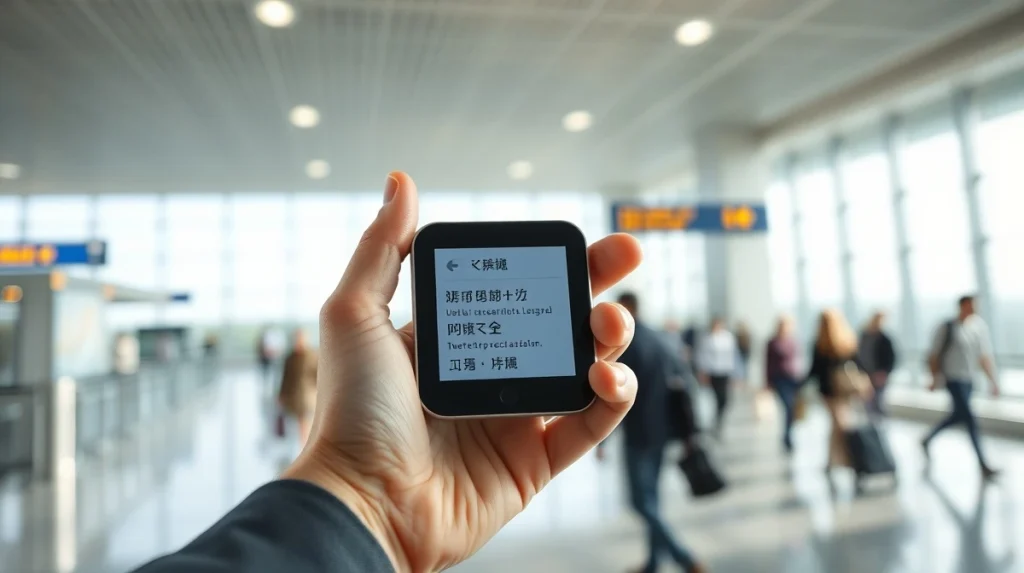
The global market for smart translators is entering a central phase of expansion, with industry analysts identifying Asia as the primary catalyst for the next wave of innovation and adoption in AI-powered language devices through 2025. This growth is fueled by rapid technological advancements, increasing cross-border travel, and substantial regional investment in artificial intelligence research. Consequently, companies are racing to develop more accurate, portable, and context-aware translation tools that move beyond simple phrasebooks.
The Current State of the Smart Translator Market
Smart translators, which cover dedicated handheld devices, wearable earpieces, and sophisticated mobile applications, have evolved significantly from their early predecessors. Initially, these tools provided basic word-for-word translation. However, modern systems now tap into neural machine translation (NMT) and large language models (LLMs) to grasp context, idioms, and conversational nuance. The Asia-Pacific region, particularly China, Japan, and South Korea, has emerged as both the largest consumer market and a leading hub for research and development in this sector. Market data from 2024 indicated a compound annual growth rate (CAGR) exceeding 15% for the region, a trend analysts project will continue.
Also read: M Series ANC Token Presale Launches with Detailed Vesting
Several key factors are driving this regional dominance. Firstly, high smartphone penetration provides a ubiquitous platform for app-based translation services. Secondly, government initiatives across Asia actively promote AI development, creating a fertile ecosystem for startups and established tech firms. Finally, a strong culture of international business and tourism within and from Asia generates consistent, real-world demand for reliable translation technology.
Technological Innovations Spearheaded in Asia
Asian tech companies are leading of integrating state-of-the-art AI into language devices. A primary focus is on improving offline functionality, a critical feature for travelers. Newer chipsets are designed to run complex NMT models locally, eliminating reliance on spotty cellular data. Additionally, research is heavily invested in low-latency, real-time translation for natural conversation. This involves not just speech-to-text-to-speech pipelines, but also acoustic modeling that accounts for accents and background noise.
Also read: Pepeto Presale Attracts Investor Interest Amid Meme Coin Rally
The Wearable Revolution and Hardware Integration
Beyond software, Asian manufacturers are pioneering new form factors. Smart translator earpieces, which provide near-instantaneous translation directly into the user’s ear, have seen explosive growth. These devices often pair with a smartphone app but are designed for discreet, hands-free use. Furthermore, translation capabilities are being baked into other consumer electronics, such as smart glasses with display subtitles and mobile phones with enhanced camera-based translation for menus and signs. This hardware-software combined effect creates a more smooth user experience, a key competitive differentiator.
Market Dynamics and Competitive Environment
The competitive environment is intense, featuring a mix of specialized translation device companies, consumer electronics giants, and software-focused AI firms. Chinese companies like iFLYTEK and Transn have long been significant players, known for their focus on East Asian languages. Meanwhile, Japanese and South Korean electronics conglomerates are using their brand strength and distribution networks to push integrated solutions. This competition drives rapid iteration, lower prices, and broader feature sets, ultimately benefiting consumers.
A brief comparison of market approaches highlights regional strategies:
- China: Focus on ecosystem integration, bundling translation with other AI services (voice assistants, search) and dominating the domestic market before expanding globally.
- Japan & South Korea: Emphasis on high-fidelity hardware, premium design, and accuracy for business and tourism, often targeting outbound travelers.
- Southeast Asia: Emerging as a growth market and testbed for multilingual models that handle the region’s vast linguistic diversity.
Challenges and Future Trajectory
Despite the optimism, the industry faces notable hurdles. Data privacy remains a paramount concern, as translation services process sensitive conversations. Companies must handle varying international data regulations. Furthermore, achieving true parity for low-resource languages—those with less digital text available for AI training—is an ongoing technical challenge. Finally, cultural nuance and non-verbal communication are areas where even advanced AI still struggles.
Looking ahead through 2025 and into 2026, the trajectory points toward greater contextual awareness. Future devices may analyze tone of voice and visual cues from camera feeds to provide more culturally appropriate translations. Integration with augmented reality (AR) platforms is also a likely next step, overlaying translated text directly onto the user’s field of view in real time. The convergence of these technologies will further blur the line between human and machine-mediated communication.
Conclusion
The smart translator industry is undergoing a transformative period, largely propelled by Asia’s technological prowess and market demand. The region’s focus on innovative hardware, sturdy AI software, and solving real-world communication barriers positions it as the central driver of the global market. As devices become more accurate, affordable, and seamlessly integrated into daily life, they promise to further reduce language barriers, building greater global connectivity in business, travel, and cultural exchange. The evolution of the smart translator from a niche gadget to a mainstream tool is a clear testament to the region’s impact on consumer AI.
FAQs
Q1: What is a smart translator device?
A smart translator is an electronic device or application that uses artificial intelligence, specifically neural machine translation, to convert spoken or written language from one language to another in real time, going beyond simple word substitution to understand context.
Q2: Why is Asia so important to this industry?
Asia is a major hub for AI research, manufacturing, and consumer adoption. It has a large, tech-savvy population with high rates of international travel and business, creating massive demand. Governments also actively fund AI development, giving local companies a significant advantage.
Q3: How accurate are current AI translators?
Accuracy has improved dramatically, especially for major languages like English, Mandarin, and Spanish, where they can handle everyday conversation well. However, they can still struggle with complex sentences, heavy accents, slang, and cultural nuances.
Q4: What’s the difference between a translator app and a dedicated device?
Dedicated devices often have superior microphones and speakers for noisy environments, longer battery life for travel, and crucially, sturdy offline capabilities. Apps are more convenient and cheaper but may require a data connection for full functionality.
Q5: What are the main privacy concerns with using these devices?
Since translations may be processed on remote servers, there is a risk that private conversations could be recorded or stored. Reputable companies use encryption and allow offline processing. Users should review the privacy policy of any translator service they use.

This article was produced with AI assistance and reviewed by our editorial team for accuracy and quality.