Altcoin Season Index Reveals Crucial 27 Score as Bitcoin Dominance Holds Firm
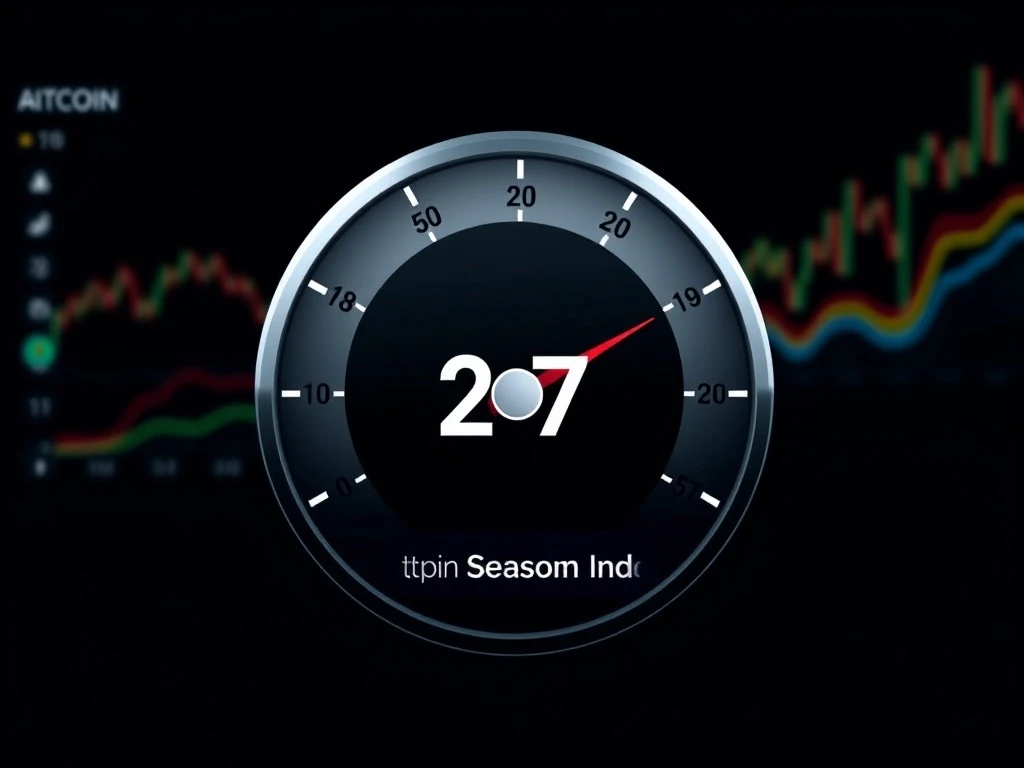
Global, April 2025: A key indicator for cryptocurrency investors, the Altcoin Season Index, has registered a score of 27, according to data from CoinMarketCap. This crucial metric provides a clear, data-driven snapshot of current market dynamics, revealing that Bitcoin continues to outperform the broader altcoin market. The index’s low reading signals a period of Bitcoin dominance, a phase that historically precedes significant shifts in capital rotation and investor sentiment across the digital asset landscape.
Decoding the Altcoin Season Index Score of 27
The Altcoin Season Index, maintained by the prominent data aggregator CoinMarketCap, serves as a quantitative benchmark for market cycles. It is calculated by analyzing the 90-day price performance of the top 100 cryptocurrencies by market capitalization, excluding stablecoins and wrapped tokens, and comparing them directly to Bitcoin’s performance over the same period. The methodology is straightforward yet powerful. When 75% or more of these top altcoins outperform Bitcoin over that 90-day window, the index crosses the threshold to 100, officially declaring an “altcoin season.” A score of 27, therefore, sits far from that trigger point. It indicates that only a small fraction of major altcoins have managed to outpace Bitcoin’s gains in the last quarter, underscoring a market environment where capital and confidence are concentrated in the flagship cryptocurrency.
Historical Context and Market Cycle Implications
Understanding the significance of a score of 27 requires examining historical index behavior. The Altcoin Season Index is not a daily volatility gauge but a slow-moving indicator of macro trends. Past cycles show distinct patterns. Extended periods with the index below 50, such as the current reading, often correlate with Bitcoin accumulation phases or times when macroeconomic uncertainty drives investors toward the perceived relative safety and liquidity of Bitcoin. For instance, similar low readings were observed in late 2022 and early 2023 following the market downturn. Conversely, rapid climbs toward and above 75 have preceded some of the most explosive periods for altcoin returns, where investor appetite for risk and speculation increases dramatically. The current index level suggests the market is in a foundational or consolidating stage, building a base from which a future altcoin season could potentially emerge.
The Mechanics of Bitcoin Dominance
The low Altcoin Season Index score directly reflects a high Bitcoin Dominance (BTC.D) metric, which measures Bitcoin’s share of the total cryptocurrency market capitalization. When BTC.D is rising or elevated, as it is when the Altcoin Index is low, it signifies that Bitcoin is capturing a disproportionate share of new capital entering the crypto space. This phenomenon typically occurs for several reasons. First, Bitcoin is often the primary on-ramp for institutional and large-scale investors entering the market. Second, during periods of regulatory scrutiny or economic instability, Bitcoin’s longer track record and widespread recognition make it a default “safe haven” within the volatile crypto asset class. Finally, major Bitcoin-related events, such as the anticipation of a spot ETF approval or a halving event, can focus all market attention and liquidity on BTC, temporarily starving altcoins of momentum.
Sector Performance and Exceptions to the Trend
While the aggregate index score of 27 paints a picture of broad Bitcoin strength, a granular look at sector performance reveals important nuances. Not all altcoins move in lockstep. During such phases, capital often rotates into specific niches rather than the entire altcoin universe. For example, even with a low overall index, certain sectors might show relative strength:
- Decentralized Physical Infrastructure (DePIN): Projects bridging digital tokens with real-world hardware and services.
- Real-World Assets (RWA): Tokenized versions of traditional assets like treasury bonds or real estate.
- Layer 1 Protocols with Major Upgrades: Blockchains undergoing significant technical improvements that promise enhanced scalability or functionality.
This selective strength highlights that the Altcoin Season Index is a broad-market indicator. Astute investors use it not as a sole trading signal, but as a backdrop against which to identify diverging sectors that may lead the next market phase.
Expert Analysis on Current Market Structure
Market analysts interpret the persistent low index reading as a sign of a mature, yet cautious, market environment. The explosive, indiscriminate altcoin rallies of previous cycles are being replaced by more measured capital allocation. This trend suggests that investors are conducting deeper due diligence, favoring projects with clear utility, sustainable tokenomics, and proven development activity over pure speculative narratives. The extended period of Bitcoin dominance allows for a natural cleansing of weaker projects, potentially setting the stage for a healthier and more fundamentally driven altcoin season when sentiment eventually shifts. The duration of this Bitcoin-centric phase remains a key question, as it directly impacts portfolio strategies for both retail and institutional participants.
Strategic Considerations for Investors
For portfolio managers and individual investors, the Altcoin Season Index provides a strategic framework rather than a tactical buy/sell signal. A score of 27 advises a patient, disciplined approach. Common strategies employed during such phases include dollar-cost averaging into Bitcoin, conducting rigorous research on fundamental altcoin projects that are weathering the downturn well, and rebalancing portfolios to ensure they align with one’s risk tolerance for the eventual market rotation. It is also a period for monitoring on-chain metrics and development activity for promising altcoins, as accumulation by long-term holders often happens quietly during these times of low market-wide enthusiasm.
Conclusion
The Altcoin Season Index registering at 27 offers a clear, objective diagnosis of the current cryptocurrency market: Bitcoin remains in the driver’s seat. This data point, rooted in the comparative performance of the top 100 assets, underscores a period of consolidation and selective investment. While it postpones the anticipation of a broad-based altcoin season, it does not negate the ongoing innovation and development within the altcoin ecosystem. For market participants, this index serves as a vital compass, indicating that the prevailing winds still favor Bitcoin dominance. Monitoring the gradual movement of this Altcoin Season Index will be crucial for identifying the early signs of the next major shift in crypto market sentiment and capital flows.
FAQs
Q1: What does an Altcoin Season Index score of 27 mean?
An index score of 27 means that very few of the top 100 altcoins have outperformed Bitcoin over the past 90 days. It is far from the threshold of 75 needed to declare an “altcoin season,” indicating strong Bitcoin dominance in the current market cycle.
Q2: Who calculates the Altcoin Season Index and how?
CoinMarketCap calculates the index. They compare the 90-day price performance of the top 100 cryptocurrencies (excluding stablecoins and wrapped tokens) against Bitcoin’s performance. The percentage of altcoins outperforming BTC is scaled to create the index score.
Q3: Is a low Altcoin Season Index bad for cryptocurrency?
Not necessarily. A low index indicates a specific market phase (Bitcoin dominance), which is a normal part of historical cycles. It can represent a period of accumulation, consolidation, and a focus on foundational assets before potential capital rotation into altcoins.
Q4: Can there be altcoin rallies when the index is low?
Yes. The index measures broad, top-100 performance. Specific altcoin sectors or individual projects with strong catalysts can experience significant rallies even during a period of overall Bitcoin dominance, as seen in niche areas like DePIN or RWA.
Q5: How should an investor use this index?
Investors should use the Altcoin Season Index as a macro-level gauge of market sentiment, not a short-term trading signal. A low score suggests a strategy favoring Bitcoin exposure and selective, research-driven altcoin accumulation, while a high score near or above 75 may indicate a broader risk-on environment for altcoins.